Straight Seam Welded Steel Pipe,Steel Profiles,Portable Container Houses,Cold-Rolled Seamless Steel Pipe,Hot-Rolled Seamless Steel Pipe,Spirally Welded Steel Pipe
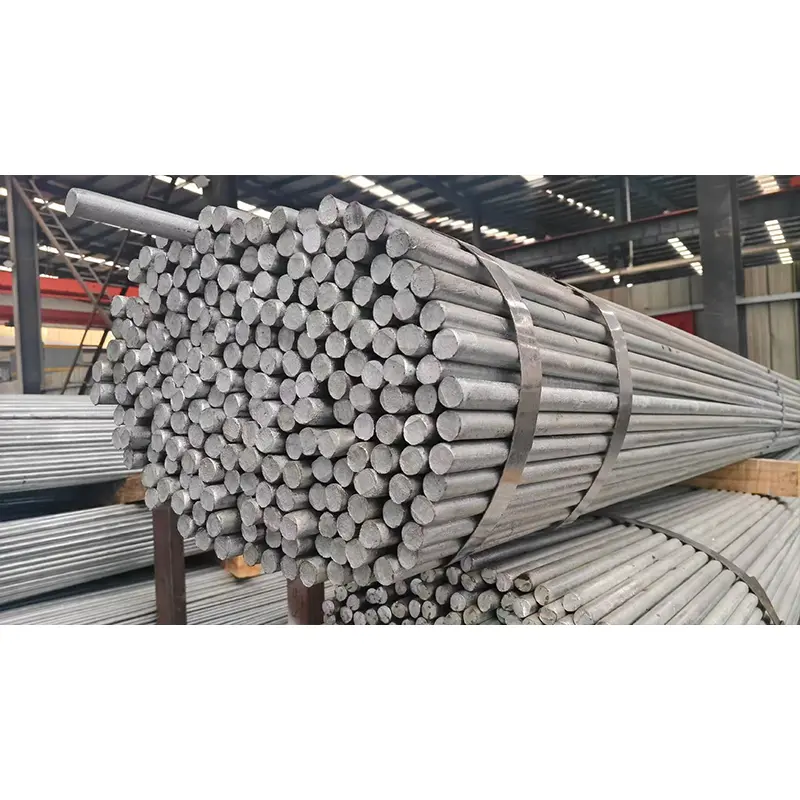
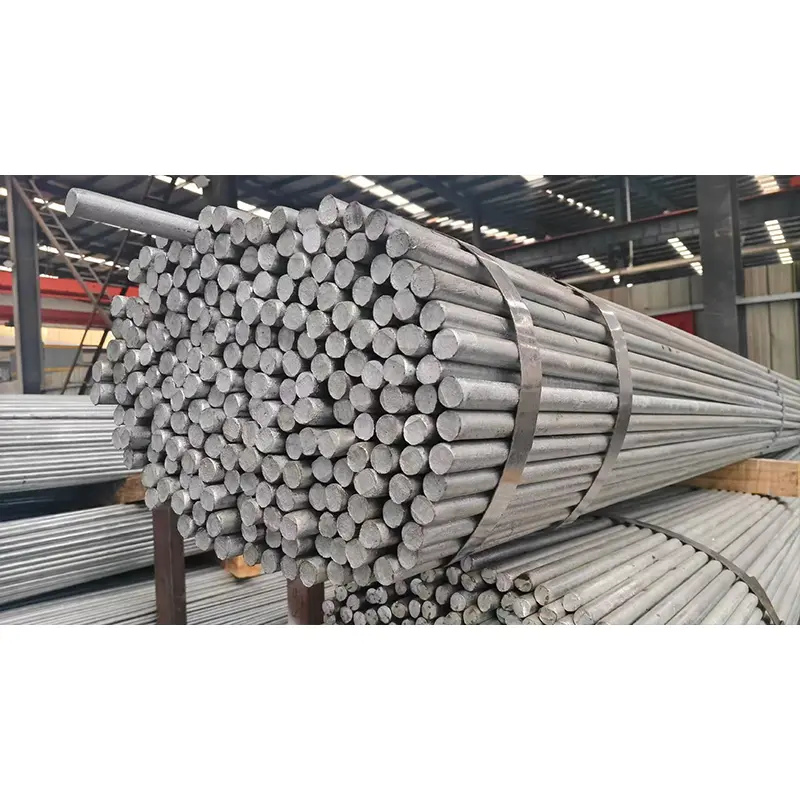 Galvanized Round Steel Bar supplied by Tianjin YuJie Steel Pipe Trading Co., Ltd." style="max-width:100%;height:auto;">
When a structure is built to last, every component matters. A support post that quietly does its job for decades without flaking, rusting, or bending out of shape is not just a piece of metal; it is the difference between a project that holds strong and one that demands constant repair. The galvanized round steel bar from Tianjin YuJie Steel Pipe Trading Co., Ltd. is exactly that kind of dependable component. It brings together the mechanical toughness of solid carbon steel with a tightly bonded zinc coating that shields the core from moisture, chemicals, and daily wear. Whether you are assembling fencing, forming anchor bolts, machining shafts, building greenhouse frames, or fabricating industrial equipment, this round bar is designed to keep its shape, its surface quality, and its load-bearing capacity through season after season of use.
Contractors and engineers often ask for a material that can be cut, drilled, welded, and installed without unexpected failures. That is where this product performs best. The round profile gives it a natural resistance to stress concentrations compared with flat or angle sections. The hot-dip galvanizing process produces a metallurgical bond that ordinary paint or electroplating cannot match. This means scratches, minor impacts, and cut ends remain protected longer because the nearby zinc sacrifices itself to protect the exposed steel. For anyone who has watched a bright new steel bar turn brown after one wet winter, the value of this protection is immediate and easy to understand.
Tianjin YuJie Steel Pipe Trading Co., Ltd. has spent years refining the sourcing and supply of steel materials for demanding markets. The galvanized round steel bar is one of the core products in the company’s inventory, selected for projects that range from simple DIY upgrades to heavy infrastructure work. The company does not simply buy and resell; it works closely with mills and galvanizing lines to verify raw material chemistry, dimensional accuracy, coating thickness, and final surface finish. Each batch arrives with inspection records and can be supported by third-party testing when the project requires it.
The foundation of any galvanized round steel bar is the base steel itself. This bar typically starts as low-carbon structural steel such as Q235B, SS400, A36, or S235JR. These grades are chosen because they combine good weldability with enough strength to handle structural, mechanical, and agricultural applications. The raw steel is hot rolled into a round shape and then, depending on the required finish, may be drawn or turned to achieve tighter dimensional tolerance. The result is a solid bar with a smooth, uniform cross-section that is easy to cut, thread, bend, and join.
After the base steel reaches the correct diameter and straightness, it moves to the galvanizing stage. Hot-dip galvanizing involves cleaning the surface to remove mill scale, rust, and oil, then immersing the bar in molten zinc at around 450°C. The zinc reacts with the iron in the steel to form several intermetallic layers. These layers are harder than the base steel in some cases and provide a thick, abrasion-resistant shell. Once the bar is withdrawn from the kettle, the outer layer is relatively pure zinc that cools to form the familiar spangled or matte grey surface. This is not a thin film; it is typically several times thicker than the coating produced by electro-galvanizing, and it covers the entire surface including ends and small recesses when the process is managed correctly.
Because the bar is round, it dips and drains evenly during galvanizing, reducing the risk of trapped air pockets or uneven build-up that can affect coating quality. Tianjin YuJie Steel Pipe Trading Co., Ltd. inspects the bars after galvanizing to catch any sharp drips, bare spots, or excessive roughness. If a bar needs to be reconditioned, it is done before packing. This attention to detail means customers receive a product that not only meets ASTM A123/A153, ISO 1461, or BS EN ISO 1461 coating requirements but also looks consistent on the job site.
Anyone who works with steel outdoors knows the frustration of returning to a project months later and finding rust streaks bleeding down a wall or a fence post weakened at the ground line. Moisture is the enemy. Even in dry climates, condensation, soil contact, and rain splash can trigger corrosion. In coastal environments, salt spray accelerates the attack. In industrial settings, airborne chemicals add another aggressive element. A bare steel bar may begin to show surface rust within days, and if left unchecked, the corrosion can reduce the effective cross-section and eventually cause structural failure.
The galvanized round steel bar solves this by creating two layers of defense. First, the zinc coating acts as a physical barrier, keeping water and oxygen away from the steel. Second, zinc is anodic to steel, which means it corrodes preferentially. If the coating is scratched or chipped, the surrounding zinc continues to protect the exposed steel through cathodic action. This is a fundamental difference between hot-dip galvanizing and ordinary paint. Paint only provides barrier protection; once it is breached, moisture can spread underneath and lift the paint film. Galvanizing actively protects small damaged areas, which is essential for bars that will be cut, drilled, or clamped during installation.
Consider a fence builder who receives a batch of bare steel bars and spends time painting each one before installation. The paint may look good on day one, but after the bars are driven into concrete or buried in soil, small scratches from handling become rust points. The builder gets callbacks, unhappy clients, and damage to his reputation. Switching to hot-dip galvanized round bars removes that costly feedback loop. The bar can be handled, transported, and installed with normal care, and the zinc layer will continue to protect the steel even where minor surface damage occurs. The builder saves time by eliminating painting, saves money by avoiding rework, and gains confidence in the finished structure.
In agricultural settings, the challenges are similar but often more intense. Greenhouse frames, animal pens, trellis supports, and irrigation equipment are exposed to constant humidity, fertilizers, and organic acids. Bare steel corrodes quickly, and even some coated products fail when the coating is too thin or poorly bonded. The thick galvanized layer on this round bar resists these aggressive conditions far longer. Farmers can install a trellis system or a livestock gate frame and not think about rust for many years. That peace of mind is not a small thing when a season’s crop or a herd’s safety depends on the structure staying upright.
Machinists and fabricators run into a different kind of problem. They may order round bar from one source and find that the diameter varies enough to cause problems in CNC lathes or drilling jigs. They may receive bars with deep scratches, laps, or seams that weaken the finished part. With the galvanized round steel bar offered by Tianjin YuJie Steel Pipe Trading Co., Ltd., dimensional consistency is treated as a priority. The bars are sorted and checked for straightness and diameter tolerance before galvanizing, and a final visual and dimensional check is performed after coating. This consistency helps reduce scrap, speeds up production, and ensures that the finished components fit together correctly.
The table below summarizes the typical parameters available for this galvanized round steel bar. Custom diameters, lengths, and coating requirements can be discussed based on project volume and end use.
| Parameter | Typical Range or Value | Remarks |
|---|---|---|
| Base material | Q235B, SS400, A36, S235JR | Low-carbon structural steel with good weldability |
| Diameter | 6 mm to 100 mm | Other sizes available on request |
| Length | 3,000 mm to 12,000 mm | Can be cut to specific lengths |
| Production route | Hot rolled, cold drawn, or turned | Depends on tolerance and surface needs |
| Zinc coating process | Hot-dip galvanized | Conforms to ASTM A123/A153, ISO 1461, BS EN ISO 1461 |
| Coating thickness | 45 µm to 120 µm depending on bar diameter | Heavier coatings available for aggressive environments |
| Tensile strength | 375–500 MPa depending on grade | Detailed mill test certificate provided |
| Elongation | 20%–26% typical | Indicates good ductility for bending and forming |
| Surface finish | Uniform grey, free of bare spots | Spangle may vary with bath chemistry |
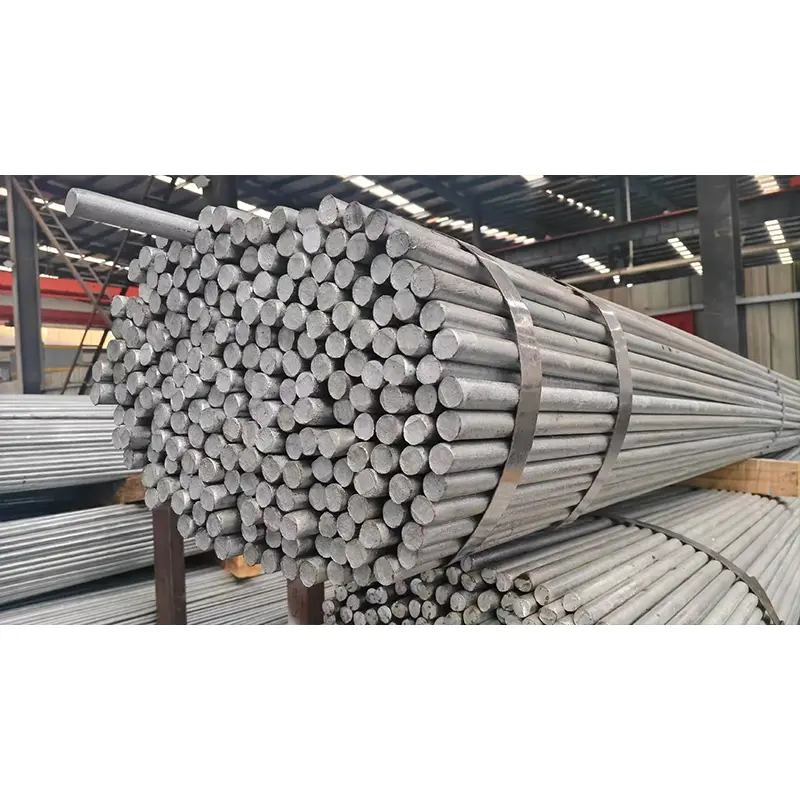
| Packing | Bundles with steel straps, waterproof wrap optional | Custom packing for export available |
These values are not just numbers on a sheet. They translate directly into how the bar behaves when a welder strikes an arc, when a post driver hits the top, or when a threaded end is tightened into a bracket. The balanced combination of strength and ductility means the bar can absorb shock loads without fracturing, while the thick zinc layer prevents corrosion from weakening the surface before the core ever feels the effects of the environment.
The galvanized round steel bar serves a remarkably wide audience because it is both simple and versatile. General contractors appreciate having one material that can be used for railings, bollards, fence posts, anchor rods, and support frames without needing special paints or coatings. The material arrives ready to install, which speeds up job site work and reduces the need for extra labor. Since Tianjin YuJie Steel Pipe Trading Co., Ltd. maintains a steady stock, contractors can often get the bars they need without waiting for a mill run, which keeps their schedules intact.
Fabrication shops find the bar useful for making gates, furniture, racks, exhaust hangers, and custom hardware. The galvanized layer has to be considered when welding, but with proper ventilation and surface preparation, welds can be made cleanly and then touched up with zinc-rich paint or spray. For many fabricators, the benefit is that they can deliver a finished product with built-in corrosion resistance without having to send parts out for post-fabrication galvanizing. This shortens lead times and reduces the number of vendors in the supply chain.
Agricultural operations rely heavily on metal that can stand up to sun, rain, animal waste, and fertilizer. A galvanized round steel bar bent into a U-shaped anchor or used as a pivot pin for farm equipment resists rust far longer than untreated steel. It can be stored outside in a yard without immediate degradation, which is a practical advantage on a busy farm where indoor storage space is limited. The bar’s round cross-section also means it can be gripped easily by clamps, collars, and set screws, making it a natural fit for adjustable or modular equipment.
Infrastructure and municipal projects use round steel bar in light poles, sign supports, guardrail components, and water treatment equipment. These projects often have strict specifications for coating thickness and test certificates. The hot-dip galvanized round steel bar can be supplied with mill test reports and third-party inspection documents from agencies such as SGS or BV. This documentation helps engineers and purchasing managers verify that the material meets the required standards and will perform as expected over the structure’s design life.
Even homeowners and small-scale makers find value in this product. A raised garden bed frame, a clothesline post, a custom plant trellis, or a sturdy handrail for a front step can all be built from galvanized round bars. Because the material arrives with a protective coating already applied, the homeowner does not need to deal with rust-converting primers, topcoats, or messy drying times. A quick wipe-down and the bar is ready to use. The professional look of the galvanized surface also adds a clean, modern touch to outdoor projects.
When a customer replaces bare steel or thinly coated bars with a hot-dip galvanized round steel bar, the first thing they often notice is how much time is saved on surface preparation. There is no need to set up a painting station, wait for primer to dry, apply a topcoat, and then wait again before installation. The bar comes out of the bundle ready to be cut, drilled, and placed. This simplification may seem small, but across a large project with hundreds of bars, the labor savings can be substantial.
The second change is more emotional but just as real: confidence. A welded frame assembled from galvanized round bar looks the same after a year of rain as it did on the first day. The owner does not have to budget for annual scraping and repainting. The end client does not call back complaining about rust bleeding out of joints. This reliability turns into referrals and repeat business for contractors and fabricators who use the material consistently.
From an engineering perspective, the round shape offers predictable mechanical behavior. There are no sharp corners to act as stress risers under bending loads. This makes the bar ideal for applications that experience vibration, repeated loading, or impact. A trailer hitch pin, a hinge rod, a gate stop, or a conveyor shaft can all benefit from the uniform stress distribution of a round section. When that round section is coated with zinc, the surface remains smooth and free of corrosion pitting, which further preserves fatigue life.
The galvanized round steel bar also changes how projects are specified. Instead of writing a specification that calls for bare steel plus field painting, an architect or engineer can require hot-dip galvanized round bar in the appropriate diameter and grade. This shifts the corrosion protection into a controlled factory process rather than leaving it to the variability of field labor and weather conditions. The result is a more consistent coating thickness, better edge coverage, and longer service life without relying on touch-up paint after installation.
Many suppliers offer round steel bar, and many offer galvanized steel tube or pipe. A true galvanized round steel bar with consistent diameter, straightness, and coating quality is less common. Tianjin YuJie Steel Pipe Trading Co., Ltd. focuses on this specific product category because it understands the difference between a bar that is simply dipped and one that is properly prepared, dipped, and inspected. The company works with galvanizing lines that monitor bath temperature, immersion time, withdrawal speed, and cooling conditions to produce a clean, uniform coating without excessive drips or lumps.
Another key difference is the company’s willingness to support custom needs. Some projects require bars cut to exact lengths with chamfered ends. Others need threading on one or both ends before galvanizing. Still others need packaging that protects the bars during sea freight to remote locations. Rather than insisting on standard 6-meter bundles only, the team at Tianjin YuJie Steel Pipe Trading Co., Ltd. can arrange cutting, punching, threading, marking, and custom bundle sizes. This reduces the customer’s downstream handling and keeps the material moving efficiently from port to project site.
The supply chain also benefits from the company’s location and relationships. Based in a major steel production and trading hub, the company has access to mills, galvanizing facilities, and freight forwarders that can move material to domestic and international destinations. For buyers who need a steady monthly supply of galvanized round steel bar, the company can establish a rolling order schedule that balances inventory costs with delivery reliability. That kind of partnership is valuable when project timelines are tight and material shortages on site can stop progress.
Every batch of galvanized round steel bar goes through a sequence of checks before it leaves the warehouse. The base steel is verified against the mill test certificate for chemical composition and mechanical properties. Dimensional checks cover diameter, length, straightness, and ovality. After galvanizing, the coating is measured with a magnetic thickness gauge at multiple points along the bar. Visual inspection identifies bare spots, lumps, sharp drips, or damaged ends. If a bar does not pass, it is set aside for rework or removal from the shipment.
The coating thickness requirements depend on the bar’s diameter and the applicable standard. For a bar of 16 mm diameter, a typical minimum average coating thickness may be around 70 µm under ISO 1461, while larger bars may achieve over 85 µm. The exact values can be confirmed at the time of quotation, and the company can provide a detailed inspection report for each lot. For projects that require third-party verification, inspection by SGS, BV, or a client-appointed surveyor can be arranged before loading.
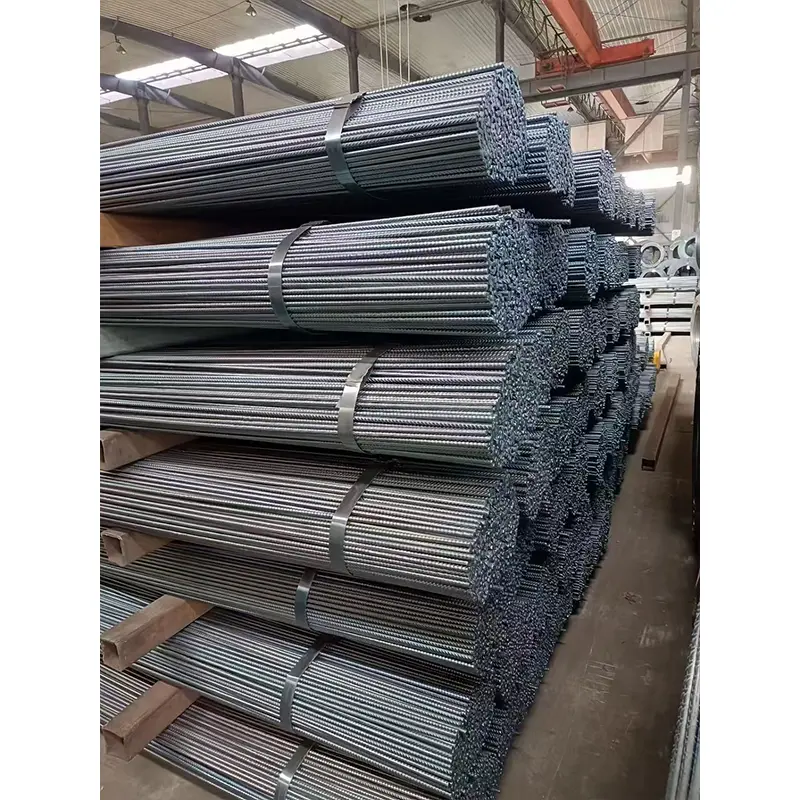
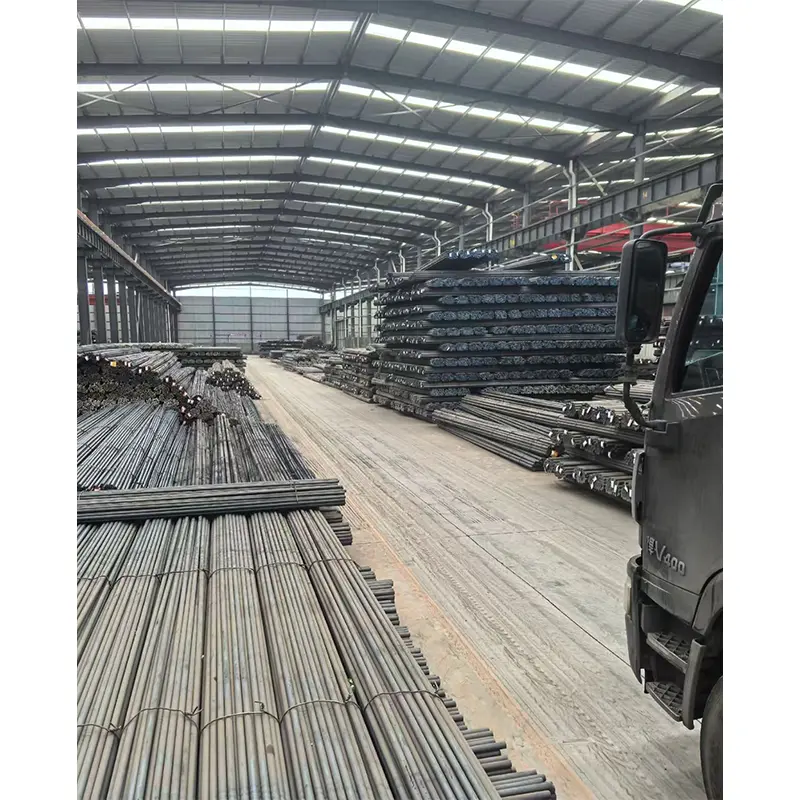
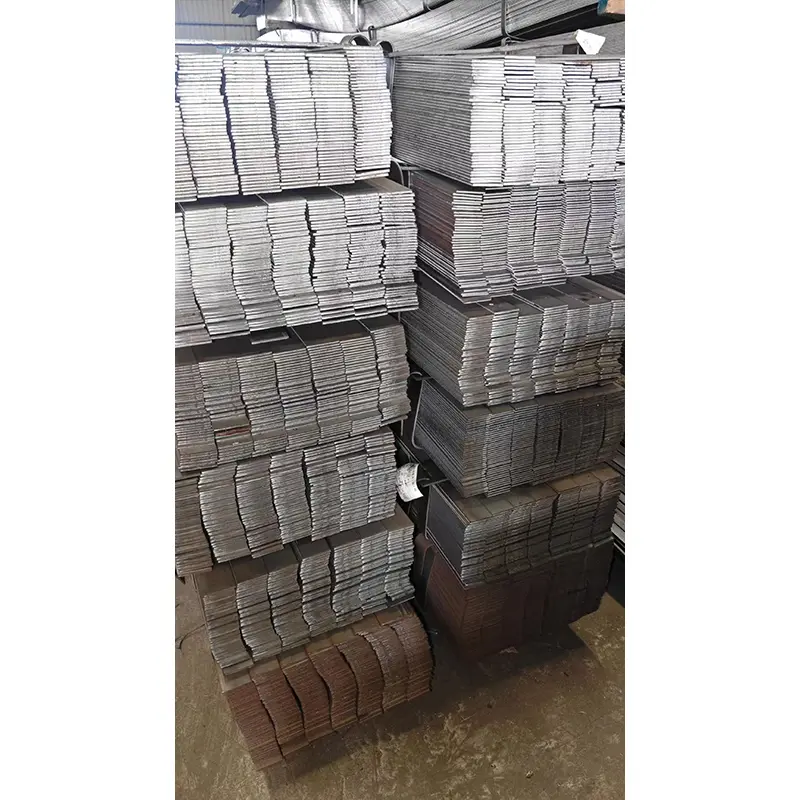
Proper storage and handling are also part of quality. The bars are bundled with steel straps to keep them straight and tight during transport. Wooden or plastic separators may be used to protect the coating from abrasion between layers. For export shipments, bundles can be wrapped with waterproof material or placed on fumigated wooden pallets. Each bundle is clearly tagged with size, grade, heat number, and coating standard for easy identification at the destination.
Q: What is the difference between hot-dip galvanized round steel bar and electro-galvanized round bar?
A: Hot-dip galvanizing immerses the bar in molten zinc, creating a thick, metallurgically bonded coating typically 45 µm to 120 µm or more. Electro-galvanizing uses an electric current to deposit a much thinner layer of zinc, usually under 20 µm. The hot-dip product provides far better corrosion resistance and is suitable for outdoor, buried, and structural applications. The electro-galvanized product is better suited for indoor or cosmetic uses where the bar will not face aggressive conditions.
Q: Can the galvanized round steel bar be welded after coating?
A: Yes, it can be welded, but the zinc layer should be removed in the weld area first to reduce porosity and zinc fume exposure. After welding, the affected area should be cleaned and touched up with zinc-rich paint or spray to restore protection. Proper ventilation and personal protective equipment are essential because zinc fumes can be hazardous during welding.
Q: What if the bars get scratched during transport or installation?
A: Small scratches and abrasions are generally protected by the surrounding zinc through cathodic action. The steel at the bottom of the scratch will not rust quickly because the nearby zinc corrodes first. For larger damaged areas, a zinc-rich touch-up compound can be applied. The hot-dip coating’s thickness gives a substantial reserve compared with paint or thin platings.
Q: Are custom lengths and diameters available?
A: Yes. While standard diameters from 6 mm to 100 mm and standard lengths from 3,000 mm to 12,000 mm are kept in stock, Tianjin YuJie Steel Pipe Trading Co., Ltd. can arrange custom cutting, chamfering, threading, and special diameters based on order volume. Longer or shorter lengths can be discussed depending on the production run and shipping constraints.
Q: How is the bar packaged for export?
A: Bars are normally bundled with steel straps and may include edge protectors, wooden separators, or waterproof wrapping. For container loading, bundles can be arranged to maximize space and prevent shifting. Custom packaging such as individual tubes, pallets, or rust-inhibiting wrapping is available for special requirements.
Q: What standards does the coating meet?
A: The hot-dip galvanized coating is produced to meet ASTM A123/A153, ISO 1461, and BS EN ISO 1461 requirements. The specific standard can be confirmed at the time of order, and inspection certificates can be provided to verify compliance.
Q: How long will the galvanized round steel bar last outdoors?
A: Service life depends on the environment. In mild rural conditions, a hot-dip galvanized coating can protect steel for 50 years or more. In coastal or industrial environments, the service life may be shorter, typically 20 to 30 years, depending on coating thickness and exposure conditions. The cathodic protection continues to work even as the coating slowly weathers.
Q: Can the bars be bent or formed after galvanizing?
A: Mild bending is possible if the bend radius is large enough to avoid cracking the zinc layer. Sharp bends may cause the coating to flake or crack at the outer surface. For applications requiring severe forming, it is often better to bend the bar first and then galvanize it. The team can advise on the best sequence based on the intended shape.
Q: Do you provide material certificates?
A: Yes, mill test certificates showing chemical composition and mechanical properties are available for each batch. Coating inspection reports, third-party testing, and certificates of origin can also be provided to support customs clearance and project documentation.
Q: What is the minimum order quantity?
A: Minimum order quantities depend on the size, grade, and whether the item is in stock or requires custom production. For standard sizes, smaller trial orders can often be arranged. For non-standard diameters or special processing, a larger quantity may be necessary to cover production time and cost. It is best to discuss requirements directly with the sales team.
Working with galvanized round steel bar does not require exotic tools or special skills, but a few simple practices will preserve the coating and extend service life. Use padded slings or nylon straps when lifting bundles to avoid cutting into the zinc layer. Avoid dragging bars across rough concrete with heavy pressure, as this can gouge the surface. Store bars off the ground on wooden dunnage and allow air circulation to prevent trapped moisture. If the bars will be stored for a long time, keep the original wrapping in place until just before use.
When cutting the bar, use a chop saw or band saw with a blade suitable for steel. The cut edge will expose a small ring of bare steel. In many outdoor applications, this edge will be protected by the nearby zinc through sacrificial action. However, for maximum protection, especially in aggressive environments, apply a zinc-rich spray or brush-on compound to all cut edges after cutting. This restores the coating at the cut face and helps prevent localized rust.
If drilling holes, the same principle applies. The inside of the hole will be bare steel after drilling. A small amount of zinc-rich touch-up compound smeared into the hole before inserting a bolt can help protect the surface. For structural connections, use galvanized fasteners to avoid creating a galvanic couple between the coated bar and unprotected hardware.
When welding, remove the zinc layer from the area to be welded with a grinder or wire brush. A clean, shiny steel surface gives the best weld quality. After welding, grind the weld smooth and touch up with zinc-rich paint. Never weld in a confined space without proper ventilation. Zinc fumes can cause flu-like symptoms and should be taken seriously.
The reason a galvanized round steel bar resists corrosion so well comes down to the electrochemical relationship between zinc and iron. Zinc is more active than steel, which means it gives up electrons more easily. When moisture and oxygen are present, the zinc corrodes slowly while the steel remains protected. This sacrificial action is why galvanizing works even when the coating is scratched. The galvanic current flows through the moisture film on the surface, transferring protection to the exposed steel. Over time, the zinc layer gradually weathers and forms a patina of zinc carbonate, which is dense and tightly adhered. This patina further slows the corrosion rate and gives the surface its characteristic matte grey appearance.
The thickness of the galvanized coating is the primary factor in how long the protection lasts. In a benign rural environment, a standard hot-dip coating may lose only 0.5 to 1 µm of zinc per year. In a coastal environment, the loss rate may be 3 to 5 µm per year or more. This is why understanding the application environment is so important when selecting the right coating thickness. Tianjin YuJie Steel Pipe Trading Co., Ltd. can supply bars with heavier-than-standard coatings for projects near the sea, in chemical plants, or in other aggressive settings.
The base steel chemistry also influences how well the galvanizing adheres. Steels with too much silicon or phosphorus can develop a thick, brittle alloy layer that is prone to flaking. Reputable mills and galvanizers control these elements to produce a coating that is thick but not brittle. The company works with approved sources to ensure the steel composition is compatible with good galvanizing practice. This saves customers from the headache of bars that arrive looking fine but shed chunks of coating during handling.
When a customer sends an inquiry for galvanized round steel bar, the first step is to confirm the diameter, length, grade, coating standard, and required quantity. The sales team checks current stock or production schedules and provides a quotation with estimated lead time and shipping cost. If the customer needs a special feature such as threading, chamfering, or cutting to exact lengths, those details are included in the order confirmation to avoid any confusion later.
Once the order is confirmed, the bars are pulled from inventory or scheduled for galvanizing. If the bars require additional processing, that work is completed before galvanizing or after, depending on the operation. For example, threading is typically done after galvanizing to avoid filling the threads with zinc that would then need to be chased. Cutting is often done before galvanizing so that both ends receive a complete coating. The team at Tianjin YuJie Steel Pipe Trading Co., Ltd. understands these sequencing details and plans each order accordingly.
Before loading, the bars are inspected, bundled, tagged, and wrapped as required. For domestic shipments, they may be loaded onto flatbed trucks or containerized for rail or sea transport. For export, the company prepares all necessary shipping documents, including packing lists, certificates of quality, and bills of lading. Customers can track the shipment from the factory to the port and onward to the destination. Clear communication at every stage helps prevent delays and misunderstandings.
One of the quiet advantages of working with a dedicated trading company is the flexibility to adjust when schedules change. A contractor may discover they need 50 more bars of a certain diameter two weeks into a project. If the stock is available, it can be dispatched quickly. If not, the company finds the fastest production route and keeps the customer informed. This responsiveness is built on years of experience in moving steel products efficiently through complex supply chains.
Not all galvanized bars look the same, and appearance can be misleading. A smooth, shiny surface is not necessarily better than a matte grey one. The cooling rate after galvanizing affects the surface finish. Fast cooling tends to produce a brighter, shinier surface, while slower cooling may produce larger spangles or a more matte texture. Both surfaces can provide excellent corrosion protection. What matters more is the coating thickness, adhesion, and coverage. A visual inspection can catch gross defects such as bare spots, lumps, drips, or rough deposits. A magnetic thickness gauge gives quantitative data on coating thickness at multiple points. Adhesion can be tested with a stout knife or a bend test on sample bars.
For critical projects, the customer may request a coating thickness map showing measurements along the length of each bar. This level of documentation is sometimes required by consulting engineers who need to verify that the supplier’s coating process is consistent. Tianjin YuJie Steel Pipe Trading Co., Ltd. can arrange this testing and include the results with the shipment. The goal is not just to meet the minimum standard but to demonstrate that the product will perform for the intended service life.
Another aspect of coating quality is the absence of sharp drips or heavy runs on the bottom end. Because the bar is dipped vertically or near-vertically, excess zinc can accumulate at the lowest point. A good galvanizer manages withdrawal speed and uses air knives or centrifuges, if applicable, to control the coating thickness. The bars are then inspected and lightly dressed if necessary to remove any sharp protrusions that could make handling unsafe or interfere with fit-up.
Some projects consider stainless steel as an alternative to galvanized carbon steel. Stainless steel offers excellent corrosion resistance but at a much higher cost and with different mechanical properties. For many structural and general fabrication applications, hot-dip galvanized round steel bar provides the best balance of strength, corrosion resistance, and economy. The initial cost is lower than stainless, and the service life in most environments is more than adequate. Repairs and field modifications are also simpler with galvanized carbon steel because standard welding and cutting procedures apply.
Powder-coated steel is another common comparison. Powder coating can look very attractive and offer good protection as long as the film remains intact. However, powder coating is a barrier-only protection. Any chip, scratch, or pinhole exposes the steel and can lead to under-film corrosion that spreads invisibly. Hot-dip galvanizing is thicker and provides cathodic protection at small defects. For bars that will be embedded in concrete, buried in soil, or subjected to rough handling, galvanizing is usually the more robust choice.
Aluminum is sometimes considered for round bar applications because it does not rust. However, aluminum has much lower strength than steel and can be difficult to weld in the field. It also has a different coefficient of thermal expansion, which may cause problems in structures with mixed materials. The galvanized round steel bar offers the strength of steel with a proven corrosion protection system. It can be used in contact with concrete, wood, and most common building materials without special isolation.
Picking the correct diameter for a galvanized round steel bar depends on the loads it will carry and the span or unsupported length. For a fence post, a 20 mm or 25 mm bar may be sufficient for light tension wire, while a 40 mm or 50 mm bar is better for gates or cantilevered supports. For mechanical parts such as shafts or pins, the diameter is often dictated by bearing sizes, available stock, and required clearance. The round bar can be supplied in increments that match common imperial or metric sizes, and custom diameters can be arranged when needed.
The grade of steel matters when the bar will be welded, machined, or subjected to impact. Low-carbon grades like Q235B and A36 are easy to weld with standard procedures and do not require preheating in most cases. Medium-carbon grades may offer higher strength but can be more difficult to weld and may require preheat and post-weld heat treatment. For most general applications, the low-carbon structural grades are the best choice. If a project requires higher yield strength, the team can help select an alternative grade that still performs well in galvanizing.
For parts that will be hot-dip galvanized after machining, it is important to consider the effect of the galvanizing temperature on the steel’s mechanical properties. The temperature of the zinc bath is below the typical stress-relief temperature for carbon steel, so the effect on strength is minimal. However, cold-worked bars may experience some loss of strength due to the heating during galvanizing. This is usually small and can be discussed if the application is highly sensitive.
One of the biggest selling points of the galvanized round steel bar is that it requires almost no maintenance. There is no paint to peel, no surface treatment to reapply, and no need to schedule annual inspections for rust. The zinc coating weathers slowly and self-protects small scars. In most environments, the bar can be installed and forgotten about for decades. This low-maintenance characteristic is especially valuable in remote locations, offshore platforms, agricultural fields, and high-traffic public spaces where sending a crew to repaint is expensive and disruptive.
If the bar does get exposed to unusually harsh conditions, such as constant salt spray or chemical splash, a simple rinse with fresh water can help remove accumulated salts and extend the life of the coating. Avoid using harsh acids or abrasive cleaners that could remove zinc faster than normal weathering. For buried applications, the soil type affects corrosion rate. Acidic soils or soils with high organic content will consume zinc more quickly, so a heavier coating or a protective wrap may be advisable. The team can provide guidance on whether the standard coating is adequate or if a special thickness is needed.
Should a section need to be removed or replaced after many years of service, the galvanized round steel bar is fully recyclable. The zinc coating does not prevent the steel from being melted down and reused. Zinc is also a valuable secondary metal in the recycling stream. This environmental benefit is another reason why architects and builders choose hot-dip galvanized products for sustainable projects.
If you have never ordered galvanized round steel bar before, the process may seem intimidating, but it is actually straightforward. Start by defining what you need: diameter, length, quantity, and whether the bar will be used outdoors, buried, welded, or machined. From there, the sales team at Tianjin YuJie Steel Pipe Trading Co., Ltd. can suggest the appropriate grade and coating standard. Requesting a sample or a small trial order is a good way to verify that the product meets your expectations before committing to a larger quantity.
Be prepared for a slight difference in appearance between batches. Galvanizing is an industrial process, and minor variations in spangle, color, and texture are normal. These variations do not indicate a problem with corrosion resistance. If your project requires a very uniform appearance, mention this at the ordering stage so the team can select bars from the same production run or advise on what to expect.
Finally, think about how the bars will be handled on your site. If you need them cut to length before delivery, that can be arranged. If you need bundles that are light enough for a small crew to carry, the packaging can be adjusted. Clear communication about these practical details makes the whole experience smoother and reduces the chance of surprises at the receiving end.
Steel products are not all the same, even when they look similar on a specification sheet. The reliability of the supplier determines whether the bars show up on time, whether the paperwork is correct, whether the coating is consistent, and whether any problems are resolved quickly. Tianjin YuJie Steel Pipe Trading Co., Ltd. has built its reputation on being a supplier that responds, follows through, and understands the real-world needs of its customers. Whether you are purchasing a single bundle for a small shop project or arranging container loads for a large construction site, the company treats each order with the same attention to detail.
Long-term relationships with mills and galvanizers give the company the ability to secure material even when the market is tight. Inventory is monitored closely so that popular diameters are available when customers need them. If a special size is required, the company can tap into production capacity quickly. This combination of stock, sourcing power, and quality oversight makes a tangible difference when deadlines are pressing.
Customer support does not stop at delivery. If a question comes up about welding, coating repair, installation, or a missing document, the team is available to help. That after-sale support is part of the reason buyers return. They know they are not just purchasing a product; they are working with a partner who understands how the material fits into the bigger picture of their project.
Hot-dip galvanizing is widely recognized as an environmentally responsible method of protecting steel. The zinc used in the process is a natural element, and the galvanizing process can be designed to minimize emissions and waste. The long service life of galvanized steel means that less energy and raw material are consumed over time compared with steel that must be replaced or repainted frequently. At the end of its life, the steel and zinc can both be recycled without loss of properties.
On the job site, working with galvanized round steel bar is safe when normal precautions are followed. Use gloves when handling the bars, as edges can be sharp. Wear eye protection when cutting, grinding, or welding. Ensure good ventilation when welding galvanized steel to avoid breathing zinc fumes. These are standard practices for any steel fabrication work and help keep the work environment safe for everyone.
For projects that pursue green building certifications, using durable materials like hot-dip galvanized round steel bar can contribute to credits for material resource efficiency and reduced life-cycle impacts. The product’s longevity reduces the need for replacement materials, and its recyclability supports circular material flows. Specifying galvanized steel is a practical way to align structural performance with sustainability goals.
What often separates a good supplier from a great one is how they handle the difficult situations. A container delayed at the port, a batch that needs re-galvanizing, a last-minute change in project specs, a customer who discovers they ordered the wrong diameter. These are the moments when experience and communication become more important than price. The team behind Tianjin YuJie Steel Pipe Trading Co., Ltd. understands that steel procurement is not just a transaction; it is a process with many moving parts.
By working with the company, buyers gain a single point of contact for the galvanized round steel bar supply. They do not have to coordinate separately with a mill, a galvanizer, a cutting service, and a freight forwarder. The company manages that chain, giving the buyer one clear line of communication and one set of documents. This simplifies project management and reduces the risk of errors.
When a problem does arise, the company’s response is direct and solution-focused. Whether that means replacing a damaged bundle, expediting a short shipment, or providing additional test data for an engineer’s review, the goal is to keep the customer’s project moving. Buyers who have been burned by unresponsive suppliers appreciate this approach immediately.
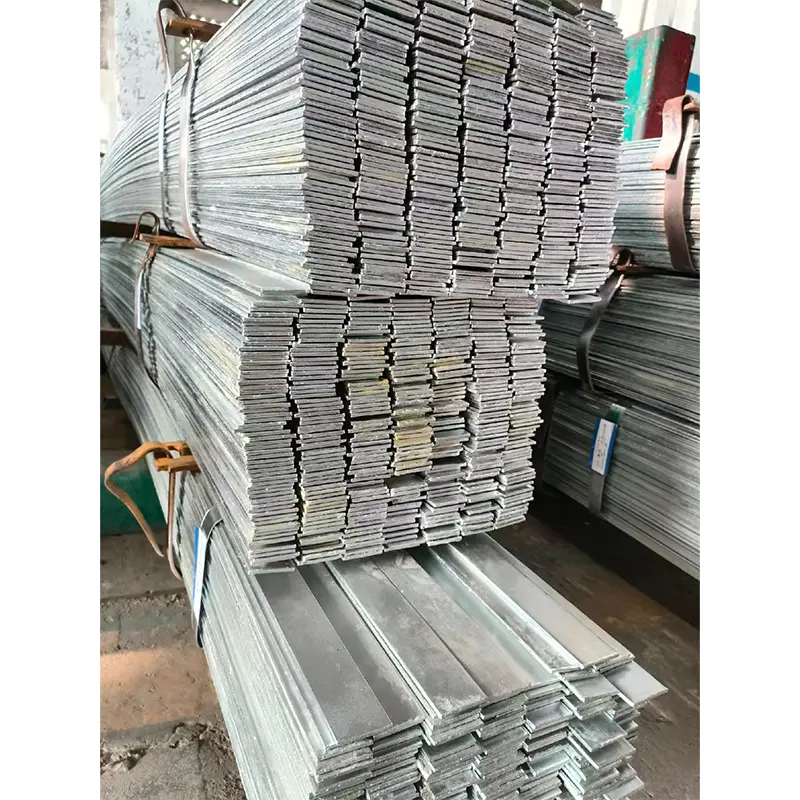
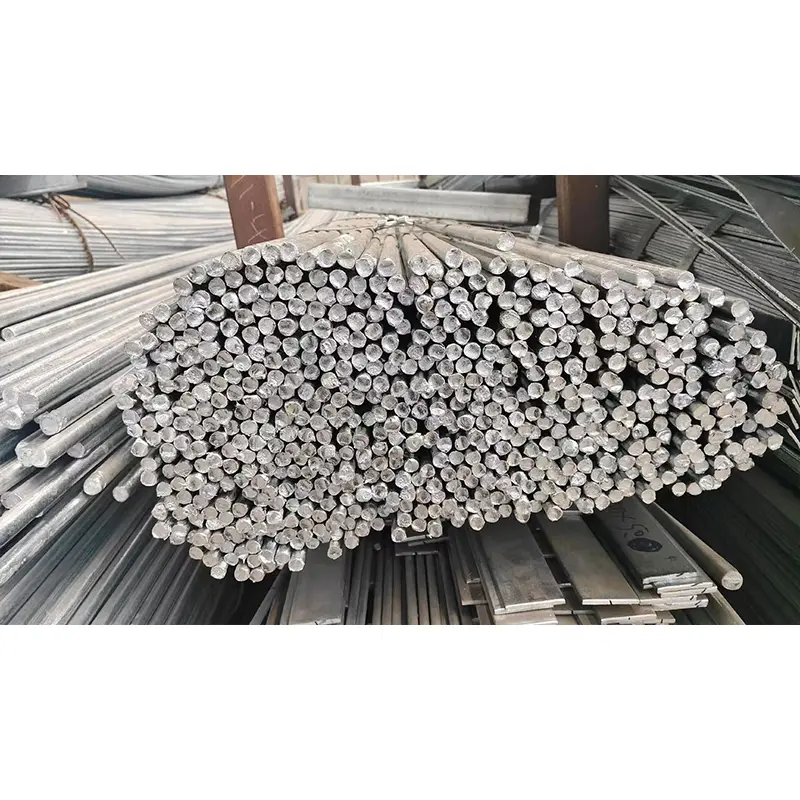
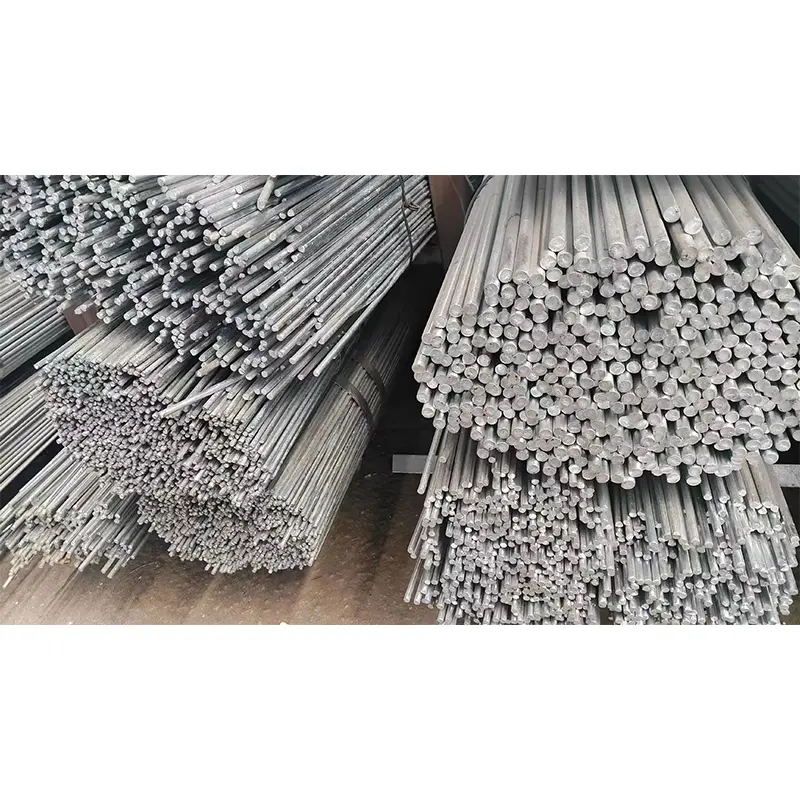
The galvanized round steel bar has a distinctive appearance that many users recognize at a glance. The surface is typically a uniform grey with a subtle metallic sheen. Depending on the cooling conditions, the surface may show a spangled pattern, similar to traditional galvanized roofing, or it may have a more matte, smooth finish. The bars are straight and round, with clean ends that are saw-cut or sheared according to the order specification.
In the hand, the bar feels solid and substantial. The coating is hard and not easily scratched by a fingernail. A firm tap with a metal tool produces a clear ring, indicating a sound, dense body without internal cracks. When placed next to a bare steel bar of the same size, the galvanized bar is slightly heavier per unit length due to the added zinc mass, but this difference is generally less than a few percent and does not affect structural design in most cases.
The straightness of the bar is controlled so that it can be fed through tube benders, drilled on a mill, or inserted into sockets without excessive force. Standard straightness tolerances apply, and tighter straightness can be achieved through additional straightening operations if required. For bars that will be used as axles or shafts, the straightness and roundness are particularly important, and the team can arrange additional inspection to verify these parameters.
When a customer sees a coating thickness number on a certificate, it represents the average thickness of the zinc layer across the measured surface. For hot-dip galvanized round steel bar, thickness can vary from one end to the other and from the middle to the edges, but the process is designed to keep this variation within reasonable limits. The minimum thickness values in ASTM A123, ISO 1461, and BS EN ISO 1461 differ slightly based on steel thickness and product category. Bars are generally grouped with other parts such as plates and structural sections, and the required minimum average thickness increases with the thickness of the base steel.
For a 12 mm diameter bar, a typical minimum average coating thickness under ISO 1461 might be around 65 µm. For a 30 mm bar, it could be around 85 µm. For a 60 mm bar, it could be over 100 µm. These are general figures; the exact requirement should be confirmed for each order. The sales team can provide a detailed coating thickness table based on the applicable standard and the specific bar size.
If a project requires a coating thickness higher than the standard minimum, the galvanizer can often achieve it by adjusting immersion time, withdrawal speed, or using a higher-zinc bath formulation. There is a practical upper limit, however, because excessively thick coatings can become brittle and may not provide additional proportional benefit. The goal is to match the coating to the expected environment and service life, not simply to chase a bigger number.
A highway contractor needed 3,000 pieces of 25 mm galvanized round steel bar to use as anchor rods for guardrail posts. The bars had to be cut to 1.5 meters with one threaded end. Tianjin YuJie Steel Pipe Trading Co., Ltd. arranged cutting and threading before galvanizing, then delivered the bars in wooden crates that could be unloaded quickly at the roadside. The contractor saved a full week compared with cutting and threading on site, and the galvanized coating prevented rust from forming between installation and final inspection.
A greenhouse builder ordered 16 mm galvanized round bars in 6-meter lengths to create arched supports for a series of commercial polytunnels. The bars were bent into hoops on site and driven into the ground. The galvanized coating resisted soil corrosion and fertilizer runoff, and the builder was able to offer a five-year rust-free warranty on the structure. That warranty gave the builder a competitive edge in a crowded market.
A machinery manufacturer used 40 mm galvanized round bar as conveyor shafting in a food processing plant. The roundness and straightness of the bars allowed them to be machined and fitted with bearings without excessive runout. The galvanized surface met the plant’s hygiene requirements and resisted cleaning chemicals. The manufacturer now specifies this product on all new conveyor lines.
A homeowner built a custom garden fence using 20 mm galvanized round bars. The bars were cut to size with a portable band saw, drilled for horizontal rails, and set in concrete footings. Two years later, the fence still looks new, with no signs of rust at the base of the posts. The homeowner’s total maintenance time has been zero.
These examples show the range of possibilities with one versatile product. From large infrastructure to small home projects, the galvanized round steel bar delivers consistent performance without requiring specialized knowledge or equipment.
Every order of galvanized round steel bar goes through a final checklist before it leaves the facility. The bundle tags are checked against the packing list to ensure the correct quantity, size, and grade are included. The bars are measured for length and diameter by random sampling. The coating is checked for thickness and visual defects. The bundling and wrapping are inspected to make sure they will survive the journey. Any required documents are prepared and attached to the shipment.
This final check is not just a formality. It is the last chance to catch problems before they reach the customer. A missing bundle tag or a loose strap can cause confusion at the destination. A bar with a bare spot can be replaced before it becomes a warranty issue. By taking a few extra minutes at this stage, the company avoids delays and disappointment later.
For the customer, this means the galvanized round steel bar arrives ready for work. There is no need to inspect every single piece with a micrometer; the supplier has already done that. There is no need to apply primer or paint; the coating is already in place. There is no need to chase down paperwork; the documents are in the packet. That is the kind of quiet professionalism that keeps projects moving.