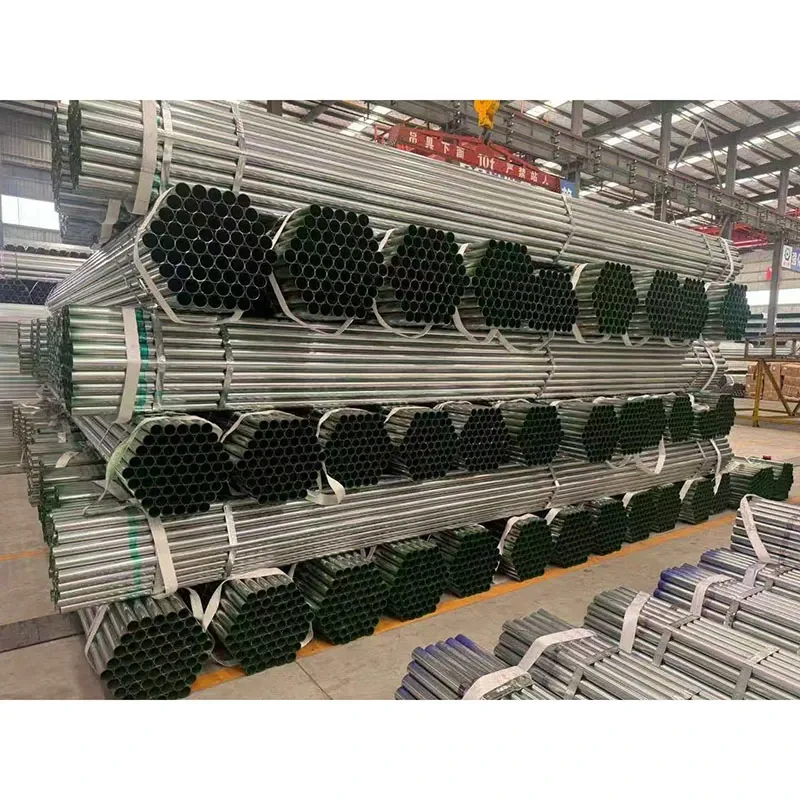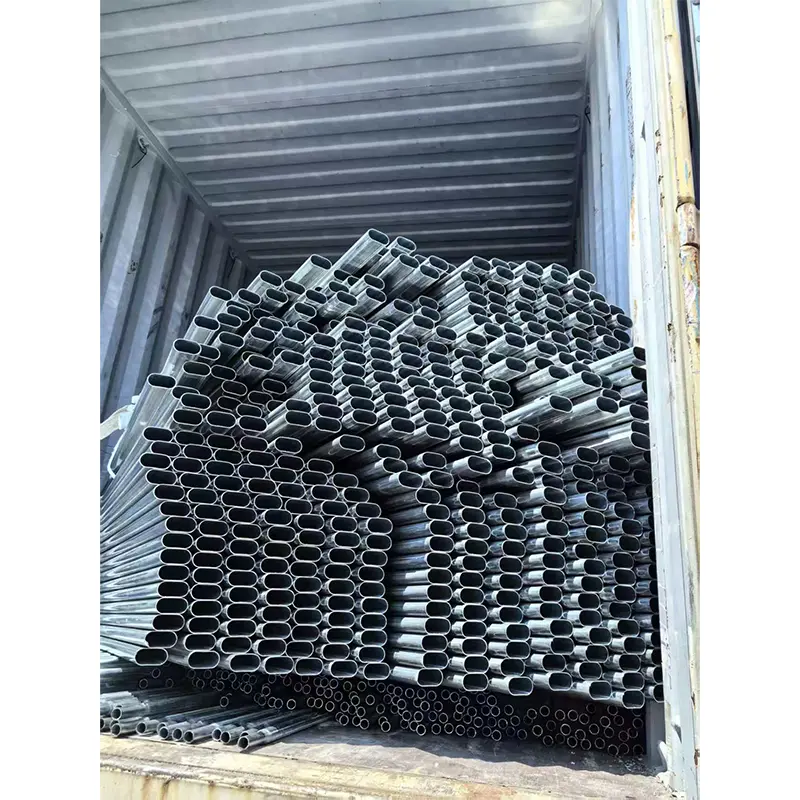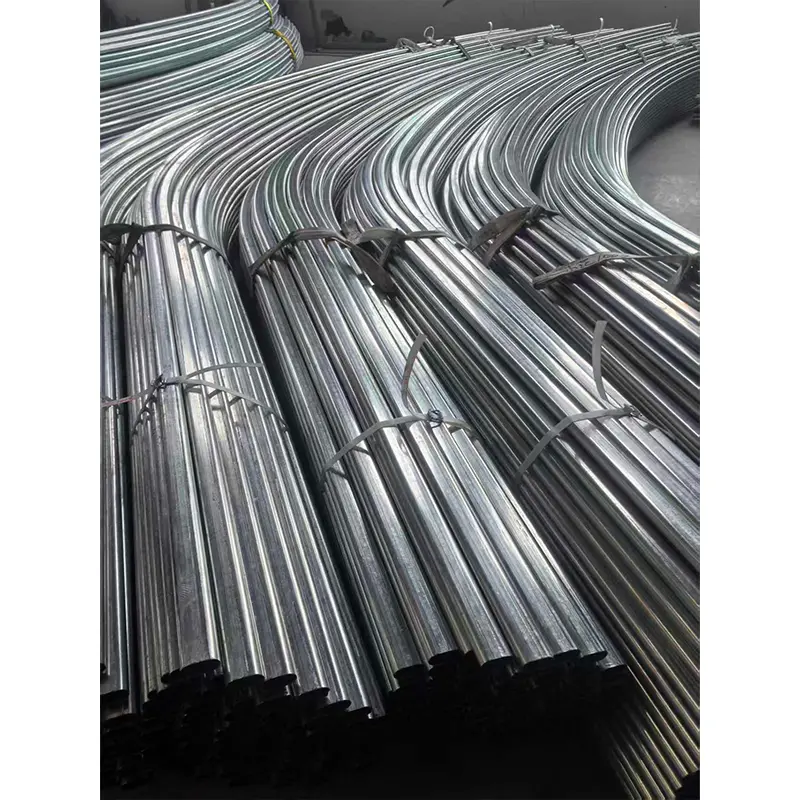
Straight Seam Welded Steel Pipe,Steel Profiles,Portable Container Houses,Cold-Rolled Seamless Steel Pipe,Hot-Rolled Seamless Steel Pipe,Spirally Welded Steel Pipe
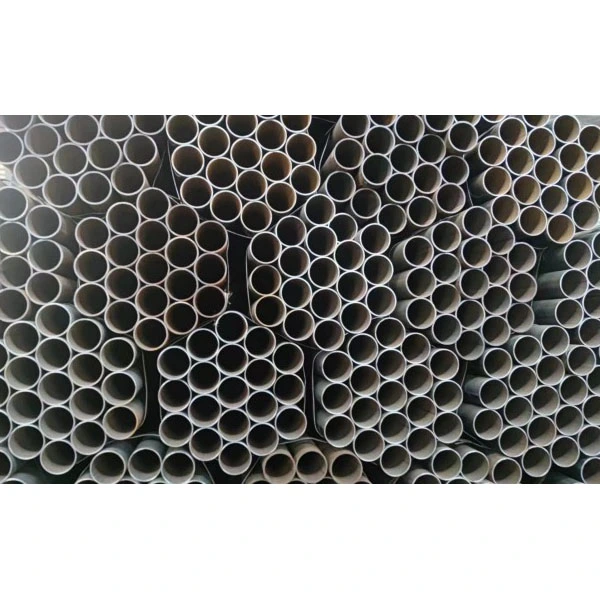
When a structural engineer specifies a steel pipe for a deep foundation, an offshore platform bracing system, or a high-pressure transmission line, there is no room for compromise. The pipe must withstand immense internal and external forces, resist corrosion over decades, and arrive on site with dimensions that match the drawings to the millimeter. This is exactly where the Thick Wall Longitudinal Welded Steel Pipe from Tianjin YuJie Steel Pipe Trading Co., Ltd. proves its worth every single day.
At Tianjin YuJie Steel Pipe Trading Co., Ltd., we understand that thick wall pipe is not a commodity purchase. It is a critical engineered component. Our longitudinal welded variant is produced by forming high-quality steel plate or coil into a cylindrical shape and welding the seam along the length of the pipe. The result is a pipe with uniform wall thickness, excellent straightness, and a dependable longitudinal weld that can be tested and verified using multiple non-destructive methods. This process allows us to offer diameters and wall thicknesses that often exceed the practical limits of seamless pipe, making it the go-to choice for heavy-duty structural and mechanical applications.
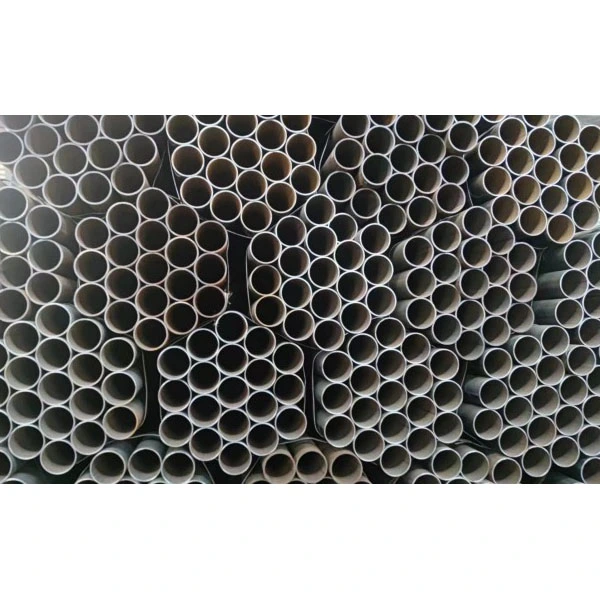
From piling pipes driven into challenging soil to high-pressure fluid transport in demanding industrial settings, this product family delivers strength that you can calculate, weldability that your fabrication team will appreciate, and dimensional consistency that speeds up installation. The thick wall cross-section provides an extra margin of safety against buckling, internal pressure, and external loads, while the longitudinal welding process keeps lead times shorter and costs more predictable than many alternative manufacturing routes.
A Thick Wall Longitudinal Welded Steel Pipe is not simply a rolled tube with a seam. It is an engineered product built from carefully selected steel plates. The plate is first edge-prepared, then formed through a series of rollers or a press brake process into an open-seam cylinder. The longitudinal edges are brought together and welded, typically using submerged arc welding, which produces a deep, high-integrity weld with excellent mechanical properties. After welding, the pipe undergoes sizing, straightening, and a range of inspections before it leaves the factory.
Because the wall thickness is created from plate rather than being pierced and elongated like seamless pipe, the longitudinal welded method allows for much greater control over wall uniformity. This translates into fewer weak spots, more predictable stress distribution, and a pipe that behaves consistently under load. For thick wall applications, this is a decisive advantage. Tianjin YuJie Steel Pipe Trading Co., Ltd. supplies these pipes in a wide spectrum of steel grades, from common carbon steels like Q235B and S235JR to higher-strength grades such as Q355B, S355J2H, API 5L X42 through X70, and ASTM A53 Gr.B. The longitudinal weld is full penetration, and the pipe can be supplied with or without additional heat treatment depending on the application.
One of the practical benefits of choosing a longitudinal welded pipe is its availability in large diameters and heavy wall thicknesses. While seamless pipe production becomes technically challenging and cost-prohibitive above certain dimensions, welded pipe can be produced in diameters up to 3000 millimeters or more, with wall thicknesses that can exceed 50 millimeters in some cases. This opens up design possibilities for infrastructure projects where large-diameter, thick-wall pipe is the only viable solution.
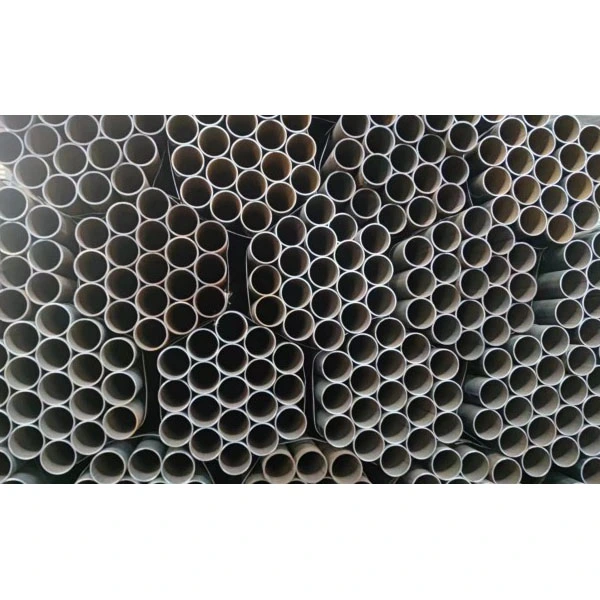
The journey of every Thick Wall Longitudinal Welded Steel Pipe we deliver begins with raw material inspection. Steel plates are checked for chemical composition, mechanical properties, and surface defects before they are ever cut. This initial step eliminates variability that could compromise the finished pipe. At Tianjin YuJie Steel Pipe Trading Co., Ltd., we work with established steel mills that provide traceable mill test certificates, so every pipe can be traced back to its original heat number.
Once the plate is approved, it is cut to the exact width required for the target pipe diameter. The edges are beveled to ensure proper weld penetration, and the plate is then fed through a forming machine. Different forming methods may be used depending on the diameter and thickness. For very thick wall pipe, a press brake or three-roll bending process may be employed to form the plate into a circular or slightly oval shape. The longitudinal edges are then aligned and tack welded to hold the geometry before the main welding pass.
The primary welding method used for thick wall longitudinal pipe is submerged arc welding, sometimes in combination with gas metal arc welding for tacking. Submerged arc welding creates a molten weld pool protected by a blanket of granular flux, which results in a clean, high-deposition weld with deep penetration. For thicker walls, multiple passes may be used, with welding performed from both the inside and outside to ensure complete fusion through the full wall thickness. This double-sided welding technique is a hallmark of quality longitudinal welded pipe and is one of the reasons it can match or exceed the performance of seamless pipe in many static and dynamic applications.
After welding, the pipe is inspected using ultrasonic testing or radiographic testing to verify internal weld integrity. Surface inspections are conducted visually and with magnetic particle or dye penetrant testing as required. Dimensional checks include outside diameter, wall thickness at multiple points, straightness, and end squareness. Hydrostatic testing may also be performed to verify that the pipe can withstand the specified internal pressure without leakage or deformation. These quality gates ensure that every pipe leaving our facility is fit for purpose.
The advantages of a Thick Wall Longitudinal Welded Steel Pipe from Tianjin YuJie Steel Pipe Trading Co., Ltd. go beyond basic strength. First, the thick wall itself provides exceptional resistance to internal pressure, external crushing loads, and buckling. In piling applications, a thick wall pipe can be driven into difficult soils without collapsing or deforming. In pressure service, the extra wall thickness allows for higher working pressures and a greater corrosion allowance, extending the useful life of the pipeline.
Second, the longitudinal weld is straight and continuous, which makes it easier to inspect than spiral welds in many cases. The straight seam also simplifies alignment during installation, especially when pipes must be welded end-to-end in the field. A consistent weld line means fewer fit-up problems and faster construction schedules. Third, the manufacturing process for longitudinal welded pipe allows for tight dimensional tolerances. We routinely supply pipe with outside diameter tolerance of ±1% and wall thickness tolerance of ±10% or better, depending on the applicable standard. This precision reduces the need for on-site correction and improves the fit of end connectors, flanges, and other fabricated components.
Another major advantage is cost-effectiveness. For large diameter, thick wall pipe, longitudinal welded production is significantly more economical than seamless alternatives. The raw material utilization is higher, and the production speed is faster, which translates into a lower price per ton without sacrificing quality. This makes thick wall longitudinal welded pipe the preferred choice for large infrastructure projects where budgets are tight but performance expectations are high.
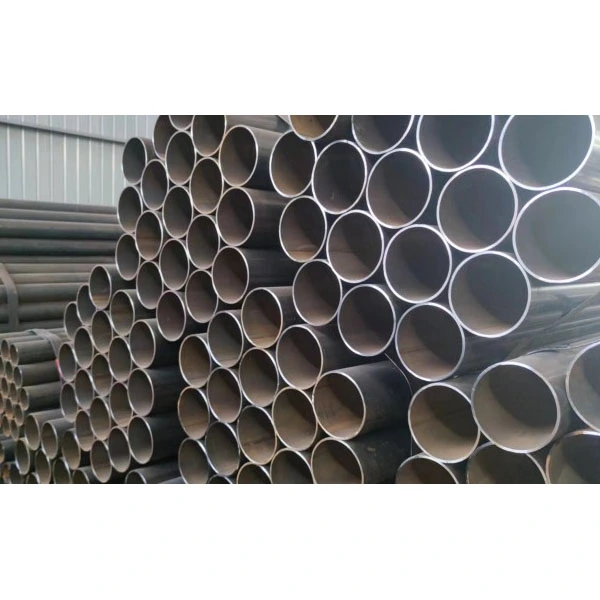
Imagine you are a project manager on a port construction site. The design calls for large-diameter steel pipe piles with a wall thickness of 25 millimeters to support a new quay wall. The geotechnical report shows dense sand layers and the marine environment demands excellent corrosion resistance. You need pipe that can be driven into the seabed without buckling, that can be welded quickly and reliably on a barge, and that arrives on schedule to avoid costly delays. This is a common scenario where our Thick Wall Longitudinal Welded Steel Pipe becomes the backbone of the project.
The pain point is clear: if the pipe is not perfectly round, the piling hammer may not fit properly, and the pile could wander during driving. If the wall thickness varies, the pile could develop a weak spot that causes local buckling under impact. If the weld is not full penetration, seawater could penetrate the seam and cause premature failure. Any of these issues could result in weeks of delay, expensive rework, and safety risks. Our solution addresses each concern directly.
By producing the pipe with a carefully controlled forming process and full penetration submerged arc welding, we deliver a product that is round, straight, and consistent. The wall thickness is checked at multiple points along the length, and the weld is inspected using ultrasonic testing to confirm full fusion. The ends are beveled in the factory to your specification, so the pipe is ready for welding as soon as it arrives on site. We can also apply a protective coating, such as fusion bonded epoxy or coal tar enamel, to guard against corrosion in saltwater environments. The result is a pile that drives straight, holds its shape, and provides decades of service.
Here is a typical specification to illustrate how the product fits into a demanding application:
| Parameter | Specification |
|---|---|
| Outside Diameter | 610 mm to 1422 mm |
| Wall Thickness | 12 mm to 50 mm |
| Steel Grade | Q355B, S355J2H, ASTM A252 Gr.3, API 5L X52 |
| Manufacturing Standard | ASTM A252, EN 10219, API 5L PSL2 |
| Weld Seam | Longitudinal, full penetration, double-sided submerged arc welded |
| End Finish | Plain end or beveled end, 30° bevel as standard |
| Length | 6 m, 9 m, 12 m, or custom fixed lengths |
| Coating | Black, varnish, epoxy, or coal tar enamel |
This table is not an exhaustive list but rather a starting point for a conversation. Our engineering team at Tianjin YuJie Steel Pipe Trading Co., Ltd. works closely with clients to match the exact grade, size, and testing requirements for each unique project. Whether you need a small batch for a structural retrofit or thousands of tons for a new marine terminal, the same level of care and consistency is applied to every order.
One of the key reasons customers choose our Thick Wall Longitudinal Welded Steel Pipe is the breadth of available sizes and grades. Unlike many suppliers that specialize in only a narrow band of dimensions, we offer a comprehensive range that covers most structural and mechanical needs. The table below provides a more detailed overview of our standard product capabilities.
| Attribute | Range | Remarks |
|---|---|---|
| Outside Diameter | 219 mm – 3048 mm | Custom diameters available on request |
| Wall Thickness | 6 mm – 60 mm | Thicker walls possible for special projects |
| Standard Length | 6 m, 9 m, 12 m | Random or fixed lengths, up to 18 m by special arrangement |
| Steel Grades | Q235B, Q355B, S235JR, S355J2H, A53 Gr.B, A252 Gr.2/Gr.3, API 5L X42-X70 | Other grades per customer specification |
| End Finish | Plain end, beveled end, grooved end | Bevel angle typically 30° or 35° |
| Surface Protection | Black, oiled, galvanized, painted, 3PE, FBE | Coating thickness per project requirement |
In addition to standard dimensions, we provide value-added services such as cutting to exact lengths, drilling holes, welding end plates, and attaching lifting lugs. This reduces the amount of work that must be done on site and ensures that the pipe arrives ready for installation. Every piece is marked with heat number, size, grade, and standard, making traceability simple and reliable.
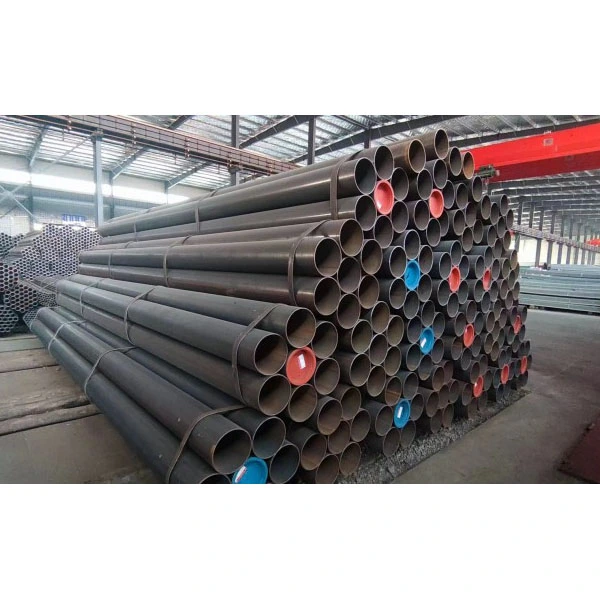
The versatility of Thick Wall Longitudinal Welded Steel Pipe makes it suitable for a wide array of industries. In civil engineering, it is commonly used for foundation piles in bridges, high-rise buildings, and port structures. The thick wall gives the pile the strength needed to be driven through hard soils and to carry heavy axial loads. The longitudinal weld provides a smooth, continuous surface that reduces friction during driving and allows for easy splicing if longer piles are required.
In the oil and gas sector, this pipe is used for high-pressure transmission lines, offshore risers, and conductor casings. The thick wall allows the pipe to withstand the high internal pressures encountered in deep wells and long-distance pipelines. The longitudinal seam is fully inspected to ensure it can handle the same pressure as the pipe body, which is critical for safety in these applications. We can supply pipe that meets API 5L PSL2 requirements, including additional testing for toughness and chemical composition.
For structural applications such as columns, trusses, and bracing members in stadiums, airports, and industrial buildings, thick wall longitudinal welded pipe offers an excellent strength-to-weight ratio and an aesthetically clean profile. The smooth exterior is ideal for visible architectural elements, and the pipe can be supplied with a variety of coatings to match the project's aesthetic and corrosion protection needs. In mechanical engineering, the pipe is used for rollers, shafts, bearing housings, and other machined components where a thick wall is needed for stiffness and wear resistance.
Every project manager knows the feeling of waiting for steel pipe deliveries while the construction schedule slips day by day. The cost of idle cranes, idled labor, and extended site overhead can quickly erode a project's contingency fund. When you work with Tianjin YuJie Steel Pipe Trading Co., Ltd., you gain more than a product; you gain a partner who understands the pressure of deadlines and the importance of reliability. Our production planning is transparent, our communication is prompt, and our logistics team coordinates shipments to arrive when you need them.
Beyond logistics, there is the confidence that comes from knowing the pipe you receive has been thoroughly tested and documented. In critical applications, this peace of mind is invaluable. You can focus on the larger picture of your project instead of worrying about material defects or dimensional discrepancies. Our customers often tell us that the consistency of our product allows their fabrication teams to work faster, because the pipe fits together without gaps or misalignment. That speed translates directly into saved time and money.
Choosing a Thick Wall Longitudinal Welded Steel Pipe from our company also means you are supported by a team of experienced professionals who can help you select the right grade and specification. Whether you need advice on weld preparation, coating options, or shipping constraints, we are here to assist. This level of service makes the procurement process smoother and reduces the risk of ordering mistakes that can be costly to correct later.
When compared to seamless pipe, the Thick Wall Longitudinal Welded Steel Pipe offers several distinct advantages for large-diameter, heavy-wall applications. First, seamless pipe production becomes increasingly difficult and expensive above diameters of around 24 inches. Welded pipe, by contrast, can be produced economically in diameters of 48 inches, 60 inches, or even larger. This makes it the only practical choice for many structural and piling projects. Second, the wall thickness of welded pipe is more uniform because it is formed from flat plate rather than being pierced and rolled. This uniformity means the pipe will behave more predictably under load and is easier to weld in the field.
Compared to spiral welded pipe, the longitudinal weld offers a straighter seam that is easier to inspect and align. Spiral welds create a helical seam that can complicate field welding and may require more careful fit-up. The longitudinal weld is also shorter for a given length of pipe, which reduces the total weld length and the associated testing and inspection effort. For thick wall pipe, the longitudinal submerged arc welding process can achieve excellent mechanical properties, including high toughness and ductility, which is essential for structures subject to dynamic loading or low-temperature service.
At Tianjin YuJie Steel Pipe Trading Co., Ltd., our manufacturing partners use advanced forming and welding equipment that is specifically designed for thick wall pipe. This specialization results in tighter tolerances and more consistent quality than general-purpose pipe mills. We also maintain strong relationships with raw material suppliers, which allows us to secure the specific steel grades you need without long lead times. This combination of technical capability and supply chain strength is a significant differentiator in the market.
Quality for a Thick Wall Longitudinal Welded Steel Pipe is not something that can be verified with a simple visual check. It requires a systematic approach that starts with raw material selection and continues through forming, welding, heat treatment, straightening, and final inspection. Our manufacturing process is managed under a quality management system that aligns with international standards such as ISO 9001. We can also support projects that require specific certifications, including EN 10204 3.1 or 3.2 inspection certificates, third-party inspection by SGS, BV, TÜV, or Lloyd's Register, and additional testing such as Charpy impact tests, hardness tests, and chemical analysis of the weld metal.
Every shipment includes a full set of documentation, so you know exactly what you are receiving. This includes mill test certificates showing the chemical composition and mechanical properties of the steel, dimensional reports, hydrostatic test results if applicable, and non-destructive testing reports for the weld seam. This level of documentation is essential for industries such as oil and gas, marine construction, and nuclear power, where traceability is a regulatory requirement. Having these documents readily available also simplifies the approval process with your own quality assurance team or client representatives.
We understand that some projects require a higher level of testing than standard. For these cases, we can arrange for additional ultrasonic testing of the entire weld length, magnetic particle inspection of the bevel ends, and full body ultrasonic testing if needed. These tests can be witnessed by your appointed inspector at the factory, or we can engage an independent third party to conduct the inspections and issue reports. This flexibility ensures that the pipe meets not only the standard requirements but also any project-specific requirements you may have.
No two projects are identical, and the best pipe supplier is one that adapts to your needs rather than forcing you into a standard product. At Tianjin YuJie Steel Pipe Trading Co., Ltd., we offer a range of customization options that make our Thick Wall Longitudinal Welded Steel Pipe fit seamlessly into your project. We can provide pipe in custom diameters and wall thicknesses, cut to the exact lengths you need, and beveled to your specified angle. If you require drilled holes for connections or lifting, we can perform that work in our facility before shipping, saving you the time and effort of doing it on site.
Corrosion protection is another area where customization matters. Depending on the service environment, we can supply pipe with a simple oil coating for temporary protection, a shop primer for structural applications, hot-dip galvanizing for long-term atmospheric exposure, or sophisticated coatings such as three-layer polyethylene or fusion bonded epoxy for buried and submerged service. The coating is applied under controlled conditions in the factory, which ensures uniform coverage and adhesion that is difficult to achieve with field-applied coatings.
We also understand that logistics can be a challenge for large-diameter, heavy-wall pipe. That is why we work with experienced freight forwarders who specialize in oversized and heavy cargo. We can arrange shipping by sea, rail, or truck, and we will coordinate the loading and securing of the pipe to ensure it arrives in perfect condition. For projects with tight site access, we can provide pipe in shorter lengths or in bundles that are easier to handle. Our goal is to remove as much friction from the supply chain as possible, so you can focus on the work at hand.
What is the difference between longitudinal welded and spiral welded thick wall pipe?
Longitudinal welded pipe has a weld seam that runs parallel to the pipe axis, while spiral welded pipe has a seam that spirals around the pipe. For thick wall applications, longitudinal welding generally provides better dimensional accuracy and easier field alignment. The straight seam is also shorter for the same pipe length, which reduces the total weld area that must be inspected. Additionally, the forming process for longitudinal pipe typically introduces less residual stress, which can improve performance under certain loading conditions. However, spiral welded pipe can be more cost-effective for very long pipelines in certain diameter ranges. Our team can help you choose the right type based on your specific project requirements.
Can thick wall longitudinal welded steel pipe be used for high-pressure gas transmission?
Yes, absolutely. Provided the pipe is manufactured to the appropriate standard, such as API 5L PSL2, and passes the required non-destructive testing, it can be used for high-pressure gas transmission. The thick wall gives a higher pressure rating for a given diameter and grade, and the longitudinal weld, when made by submerged arc welding with full penetration, has mechanical properties that match the base metal. We can supply pipe with additional testing such as Charpy impact tests at low temperatures and full-body ultrasonic inspection to ensure safety in gas service. It is important to specify the right steel grade and testing requirements at the time of order to ensure compliance with the applicable pipeline code.
How do you ensure the weld seam is as strong as the rest of the pipe?
The weld seam is produced using a full penetration welding process, typically double-sided submerged arc welding, which fuses the entire wall thickness from both the inside and outside. After welding, the seam is inspected using ultrasonic testing or radiographic testing to detect any internal flaws such as lack of fusion, porosity, or cracks. The weld metal chemistry is controlled to match the base metal properties, and in many cases, the pipe is heat treated to relieve residual stresses and improve toughness. The result is a weld seam that can withstand the same stresses as the surrounding steel, and in some cases, the weld metal is actually stronger than the base metal due to the alloying elements in the welding consumables.
What is the maximum wall thickness you can produce?
In our standard production range, we can supply Thick Wall Longitudinal Welded Steel Pipe with wall thicknesses up to 60 millimeters. For special projects, we may be able to arrange production with even thicker walls, depending on the diameter and steel grade. The practical maximum depends on the forming capacity and the welding process. Very thick walls may require special edge preparation and multi-pass welding to ensure full fusion. If you need a wall thickness beyond our standard range, we encourage you to contact our engineering team with your specific dimensions, and we will evaluate the feasibility and provide a quotation.
Do you offer pipe with protective coatings for underground or marine use?
Yes, we offer a range of protective coating options to suit different service environments. For underground or marine use, we can supply pipe with fusion bonded epoxy coating, three-layer polyethylene coating, or coal tar enamel coating. These coatings provide excellent corrosion resistance and are applied under factory-controlled conditions to ensure uniform thickness and adhesion. We can also provide galvanized pipe for atmospheric exposure or a simple shop primer for structural applications where the pipe will be painted on site. If you have a specific coating specification from your project, we can work with our coating partners to meet it.
What are the standard lengths available for thick wall longitudinal welded steel pipe?
The standard lengths we supply are 6 meters, 9 meters, and 12 meters. However, we can also provide pipe in random lengths, typically ranging from 6 to 12 meters, or in fixed custom lengths up to 18 meters by special arrangement. The choice of length depends on your installation method and transportation constraints. Longer pipes reduce the number of field welds required, but they may be more difficult to handle and transport. We work with you to determine the most practical length for your project and can cut the pipe to exact specifications before shipping.
What information do I need to provide to get a quote?
To provide an accurate quotation for Thick Wall Longitudinal Welded Steel Pipe, we need the following information: outside diameter, wall thickness, length, steel grade, manufacturing standard, end finish, surface coating, and quantity. If you have specific testing or documentation requirements, such as third-party inspection or additional non-destructive testing, please include those as well. The more detail you provide, the faster and more accurately we can respond. You can also send us your project specification or drawing, and our engineers will help you translate it into a pipe specification that meets all applicable codes.
Can you supply pipe that meets ASTM A252 for piling applications?
Yes, we regularly supply Thick Wall Longitudinal Welded Steel Pipe that meets ASTM A252 grades 2 and 3 for piling applications. This standard covers welded and seamless steel pipe piles and specifies requirements for chemical composition, tensile strength, and elongation. The pipe is typically supplied in large diameters with thick walls, making it ideal for driven piles in marine and foundation construction. We can also provide pipe that meets other piling standards, such as EN 10219 or JIS A 5525, depending on your project location and specifications.