Straight Seam Welded Steel Pipe,Steel Profiles,Portable Container Houses,Cold-Rolled Seamless Steel Pipe,Hot-Rolled Seamless Steel Pipe,Spirally Welded Steel Pipe
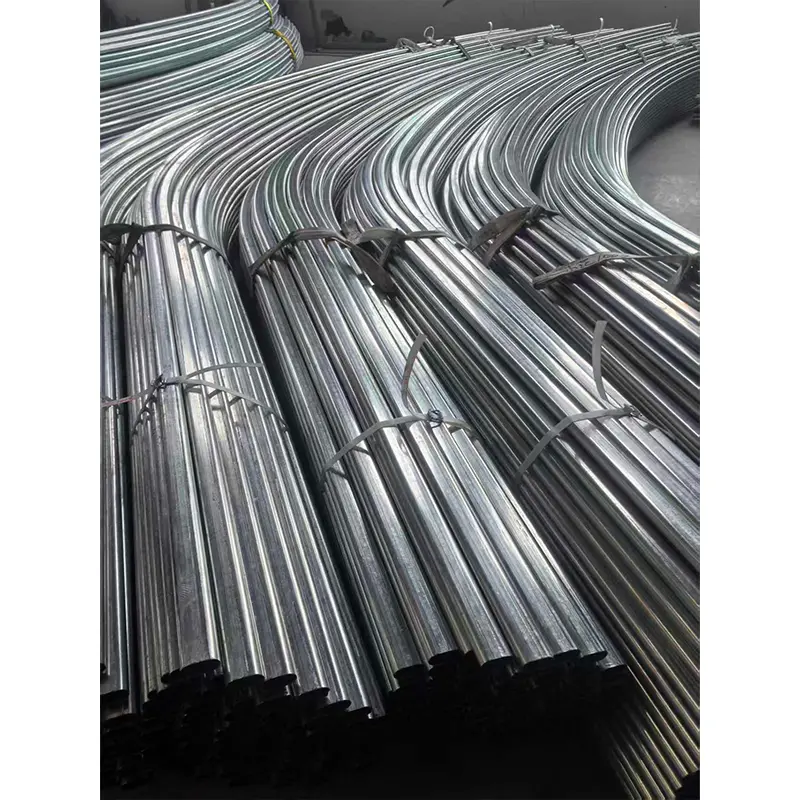
Every structural decision you make carries weight—literally and figuratively. A handrail that feels secure, a greenhouse frame that survives storm season, a vehicle component that resists years of road spray, a furniture base that looks as good as it performs. These are not just material choices. They are promises you make to your clients, your installers, and the people who will live with the finished product for decades. The right steel tube does not merely hold a shape. It holds trust.
That is where the Hot Dip Galvanized Oval Steel Pipe from Tianjin YuJie Steel Pipe Trading Co., Ltd. enters the picture. It is not a generic round tube. It is not a sharp-cornered square section. It is a purpose-built profile engineered to solve the practical headaches that standard structural tubing often creates—rolling during fabrication, difficult alignment, water trapping, premature rust, and plain visual boredom. By combining an oval cross-section with a deeply bonded hot dip galvanized coating, this product gives you a material that works harder, lasts longer, and looks intentional from the first weld to the final coat of paint.
Whether you are a fabricator managing tight deadlines, an architect chasing clean lines, a procurement manager tired of corrosion claims, or a builder working in humid and coastal environments, this oval steel pipe is designed to simplify your process while strengthening your final structure. Let us walk through exactly what makes it different and why it is becoming the default choice for professionals who refuse to compromise on durability or design.
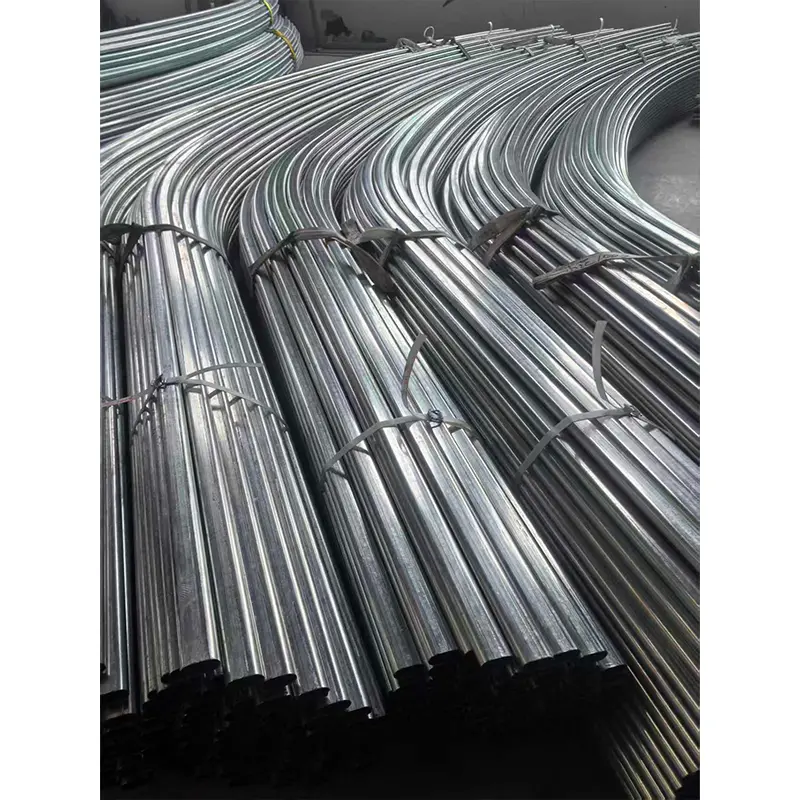 Hot Dip Galvanized Oval Steel Pipe showing smooth zinc surface and oval profile">
If you have ever worked with round steel pipe, you already know the first inconvenience: it rolls. On a sloped workbench, on the back of a truck, on a scaffold platform, round sections seem to have a mind of their own. That constant movement slows down cutting, complicates welding setups, and introduces small safety risks that add up over a long shift. When you need to drill a precise hole or mill a flat mounting surface, a round tube fights you because its surface is always curved. You end up using extra clamps, jigs, and time just to keep the workpiece stable.
Square and rectangular tubes solve the rolling problem, but they bring their own challenges. Sharp corners concentrate stress during loading, which can lead to cracking at welded joints under repeated force. From a corrosion perspective, corners are also where moisture, dirt, and road salts tend to collect. Even with a protective coating, the coating is often thinnest at the edges, making those sharp transitions the first places to show red rust. From a design perspective, square sections can feel heavy and industrial—sometimes that is appropriate, but often it clashes with modern architectural language that favors softer, more fluid profiles.
Then there is the coating issue. Many steel pipes on the market are pre-galvanized, meaning the zinc layer is applied to the steel coil before the tube is formed. The problem is that the weld seam and any cut edges are left exposed, creating weak points where corrosion can begin almost immediately. In outdoor applications—fences, greenhouses, solar panel frames, handrails—those unprotected areas become visible rust spots within the first season. Hot dip galvanizing solves this by dipping the fully formed, fully welded tube into molten zinc, so the entire surface, including the weld seam, the inside of the wall, and every cut edge, is sealed under a metallurgically bonded zinc layer. But not every supplier controls that process with precision. Poorly cleaned steel, incorrect immersion times, or poor drainage can result in lumps, bare spots, or uneven coating that undermines the whole point of galvanizing.
These are not hypothetical frustrations. They show up as rejected deliveries, rework costs, scheduling delays, and unhappy end users. When you choose a structural tube, you should not have to fear that the material will undercut your work. You need a product that addresses these issues directly.
The Hot Dip Galvanized Oval Steel Pipe is engineered to remove those frustrations at the source. The oval profile itself eliminates the rolling problem because its flattened sides give it a natural resting plane. That makes it far easier to clamp, drill, weld, and align than round tubing. At the same time, the smooth elliptical curve avoids the sharp stress risers of square or rectangular sections. Loads flow more evenly around the profile, which can improve fatigue resistance in dynamic applications such as vehicle frames, exercise equipment, and architectural features exposed to wind loads.
The shape also drains water better than rectangular sections. Rain, condensation, and wash-down water tend to run off the curved surfaces rather than pooling at sharp corners. This small geometric advantage translates into fewer corrosion hot spots over the life of the product. For outdoor installations like greenhouse frames, livestock fencing, and solar tracker systems, that means less maintenance and a longer service life even before the zinc coating is factored in.
And the zinc coating is the true backbone of this material. The full hot dip galvanizing process used by Tianjin YuJie Steel Pipe Trading Co., Ltd. cleans the steel thoroughly, fluxes it, and then immerses the finished tube in molten zinc. The result is a coating that bonds to the steel at the molecular level, not merely a paint that sits on the surface. This creates both a barrier and a sacrificial anode. If the coating is scratched or cut, the surrounding zinc continues to protect the exposed steel through galvanic action. That is the kind of self-healing behavior you want when your structure is installed hundreds of miles from the nearest maintenance crew.
From a visual standpoint, the oval section has a refined, contemporary appearance. It works beautifully in architectural railings, furniture legs, decorative fencing, and structural supports where the material is meant to be seen. The silvery zinc finish is uniform and clean, and it can be left as-is for an industrial aesthetic or powder coated for custom colors. Because the zinc layer is tightly bonded and the oval surface is smooth, paint and powder coatings adhere exceptionally well.
The table below outlines the standard production range. Custom sizes and tolerances are available for qualified projects, and the engineering team at Tianjin YuJie Steel Pipe Trading Co., Ltd. can work from detailed drawings to match your exact requirements.
| Parameter | Typical Range / Options |
|---|---|
| Outer dimensions (width × height) | 20×40 mm, 25×50 mm, 30×60 mm, 40×80 mm, 50×100 mm, 60×120 mm, 80×160 mm, and custom oval sizes |
| Wall thickness | 0.8 mm – 6.0 mm |
| Length | 5.8 m, 6.0 m, 6.4 m, 12 m, or exact custom cut lengths |
| Zinc coating weight | ≥ 200 g/m², standard options up to 600 g/m² on request |
| Steel grade | Q195, Q235, Q355, S235JR, S355J2H, ASTM A500 Grade A/B/C |
| Production standards | ASTM A500, EN 10219, GB/T 6728, BS 1387, customer-specific specifications |
| Surface treatment | Hot dip galvanized, pre-galvanized optional, powder coated after galvanizing optional |
| Section profile | True oval, flat oval, elliptical |
| End finishing | Plain ends, chamfered ends, threaded ends, welded flanges, drilled holes |
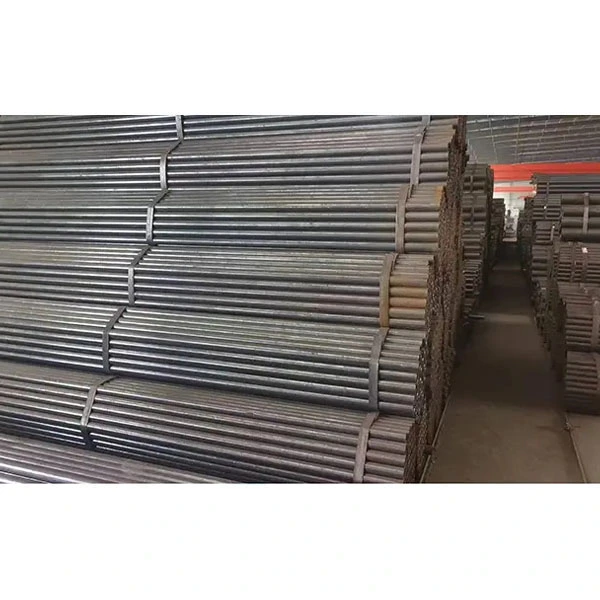
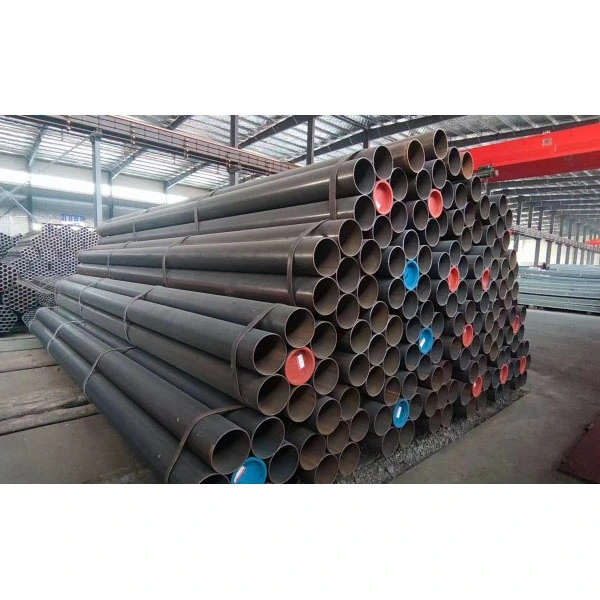
| Packing | Steel straps, waterproof cloth, wooden pallets, loose bundles, corner protectors |
| Minimum order quantity | Flexible based on size; small trial orders welcome for new customers |
| Lead time | Typically 10–25 days after drawing confirmation, depending on quantity and customization |
Beyond the dimensional range, the mechanical performance of the base steel determines how confidently you can design with it. The values below represent typical results from standard production grades. Independent third-party testing is available on request, and mill test certificates are supplied with every shipment.
| Grade | Minimum Yield Strength (MPa) | Minimum Tensile Strength (MPa) | Elongation (%) |
|---|---|---|---|
| Q195 / S195T | 195 | 315–430 | ≥ 20 |
| Q235 / S235JR | 235 | 370–500 | ≥ 22 |
| Q355 / S355J2H | 355 | 490–630 | ≥ 20 |
| ASTM A500 Grade B | 315 | 400 | ≥ 18 |
| ASTM A500 Grade C | 345 | 425 | ≥ 17 |
Fabrication efficiency depends on consistency. When every length arrives within a narrow tolerance, your cutting, drilling, and welding jigs stay reliable. The production line at Tianjin YuJie Steel Pipe Trading Co., Ltd. uses digitally controlled sizing rolls and continuous online inspection to keep the oval shape stable from the first tube to the last in a batch.
| Dimension | Standard Tolerance |
|---|---|
| Width and height of outer profile | ± 1.0 mm for sizes up to 80 mm; ± 1.5 mm for larger sections |
| Wall thickness | ± 10% of nominal thickness |
| Length | ± 5 mm for standard cut lengths; tighter tolerances on request |
| Straightness | ≤ 0.15% of total length |
| Twist | ≤ 2 mm per meter |
| Weld seam bead height | ≤ 0.25 mm |
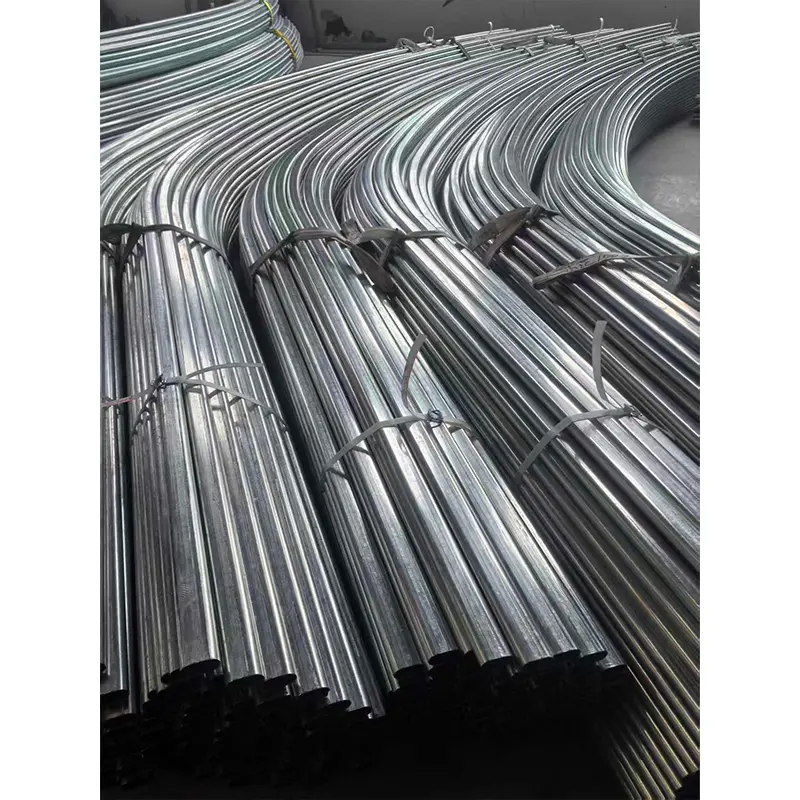
Corrosion is not a single event. It is a slow negotiation between steel, oxygen, water, and time. In that negotiation, zinc acts as a negotiator that sacrifices itself so the steel does not have to. Hot dip galvanizing creates a series of alloy layers—zinc-iron intermetallic phases—topped by a relatively pure zinc layer. The bond strength of these alloy layers is measured in thousands of psi, which means the coating will not peel or flake even under moderate impact or bending.
This is a major advantage over paint, electroplating, and many pre-galvanized options. Painted steel can look good on day one, but a single pinhole allows moisture to creep underneath and lift the paint film. Pre-galvanized steel often has excellent coating thickness on the flat surfaces, but the heat-affected weld line remains vulnerable. Hot dip galvanizing on a fully formed oval pipe eliminates that vulnerable weld line because the entire welded assembly is submerged. The zinc flows into the inner cavity, over the weld, and around the ends. When the tube is cut later, the cut end is exposed steel, but the surrounding zinc layer still provides cathodic protection to that cut edge. This is why hot dip galvanized structures can last for decades in rural environments, 20–50 years in urban areas, and even 15–30 years in many coastal or industrial atmospheres.
For a buyer, this means fewer warranty claims, less site touch-up, and a cleaner handover. It also means your project can meet strict corrosion protection specifications without the complicated layered systems that paint-only coatings often require. The silvery finish is consistent because the tube is withdrawn vertically from the zinc bath and air-blown to remove excess zinc, preventing the drips and spikes that can occur with sloppy manual dipping.
At Tianjin YuJie Steel Pipe Trading Co., Ltd., the galvanizing line is calibrated to the oval profile’s specific drainage requirements. Oval tubes have a natural path for zinc to flow out of the hollow section during withdrawal. This reduces the risk of zinc accumulation inside the tube, which can otherwise add unnecessary weight and reduce the effective bore. The result is a tube that is fully protected inside and out, yet still dimensionally clean and ready for fabrication.
Why choose an oval instead of a circle or a rectangle? The answer lies in how forces act on a closed profile. A round tube is isotropic—it has equal strength in all directions—but it is difficult to clamp and its round surface makes joinery more complex. A rectangular tube has strong orthogonal axes, but its corners create stress concentrations. An oval tube combines the best of both: it has flattened sides that make mounting, drilling, and welding easier, while the continuous curvature distributes stress smoothly around the section. This leads to excellent performance under bending when the load acts along the major or minor axis, and it gives designers a distinctive look without compromising structural efficiency.
For greenhouse and hoop house applications, the oval profile offers an interesting advantage over round pipe. When used as roof purlins or side posts, the flat side creates a broader glazing contact surface. This can simplify polycarbonate or film attachment, reduce point loads on the covering material, and provide a more finished appearance at connection points.
The versatility of the Hot Dip Galvanized Oval Steel Pipe means it shows up in a wide range of industries. It is not a niche product limited to one type of project. Instead, it is a practical upgrade anywhere you currently use round or rectangular galvanized tube but wish you had a profile with better handling, smarter drainage, and a cleaner look.
Humidity, soil moisture, fertilizers, and constant temperature swings make agricultural environments relentlessly corrosive. The hot dip galvanized coating protects the steel for years, while the oval profile reduces moisture pooling and provides stable surfaces for attaching polyethylene film, shade cloth, or polycarbonate sheets. Farmers and greenhouse builders appreciate that the tube does not roll during assembly, which speeds up on-site construction and improves worker safety.
Residential and commercial fencing projects demand a balance of security, longevity, and appearance. The oval section looks more refined than a plain round pipe and lacks the harsh edges of square post. For handrails along walkways, balconies, and ramps, the oval shape fits comfortably in the hand and offers a smooth, continuous surface that is easy to keep clean. The hot dip galvanized coating provides years of rust-free service even in coastal or poolside environments.
Architects and designers often specify steel profiles that are visible in the finished structure. The elliptical geometry of this tube creates elegant shadows and highlights, especially when combined with glass, timber, or concrete. It can be used for balustrades, stair stringers, awnings, pergolas, privacy screens, and furniture. The galvanized surface can be left exposed for an industrial chic look or powder coated in any RAL color.
Vehicle frames, trailer components, bike racks, wheelchair ramps, and agricultural equipment all benefit from the oval section’s strength-to-weight ratio and its resistance to road salt and moisture. The shape is also more aerodynamic than a square section, which is useful for exterior parts. Hot dip galvanizing ensures that exposed areas such as undercarriages, mounting brackets, and coupling points remain protected even after years of stone chips and abrasion.
Solar farm and rooftop solar projects demand components that can withstand outdoor exposure for 25 years or more. The oval steel pipe offers high bending strength, a clean profile for rail connections, and long-term corrosion resistance. Because the tube drains well and has no sharp corners to trap water, it is particularly suited to ground-mount and tracker systems installed in humid or coastal regions.
Desks, tables, shelving systems, and gym equipment all require tube that can be cut, welded, and finished efficiently. The oval shape gives furniture a contemporary silhouette, while the uniform galvanized surface accepts powder coating with excellent adhesion. The stable flat surfaces make drilling and assembly fixtures more reliable, which reduces scrap and labor costs.
Irrigation systems, drainage structures, bus shelters, sign supports, and street furniture often specify hot dip galvanized steel for its durability in public environments. The oval section’s smooth profile is easy to clean and less likely to accumulate dirt or standing water than rectangular forms. It also presents a friendlier, less industrial appearance in pedestrian areas.
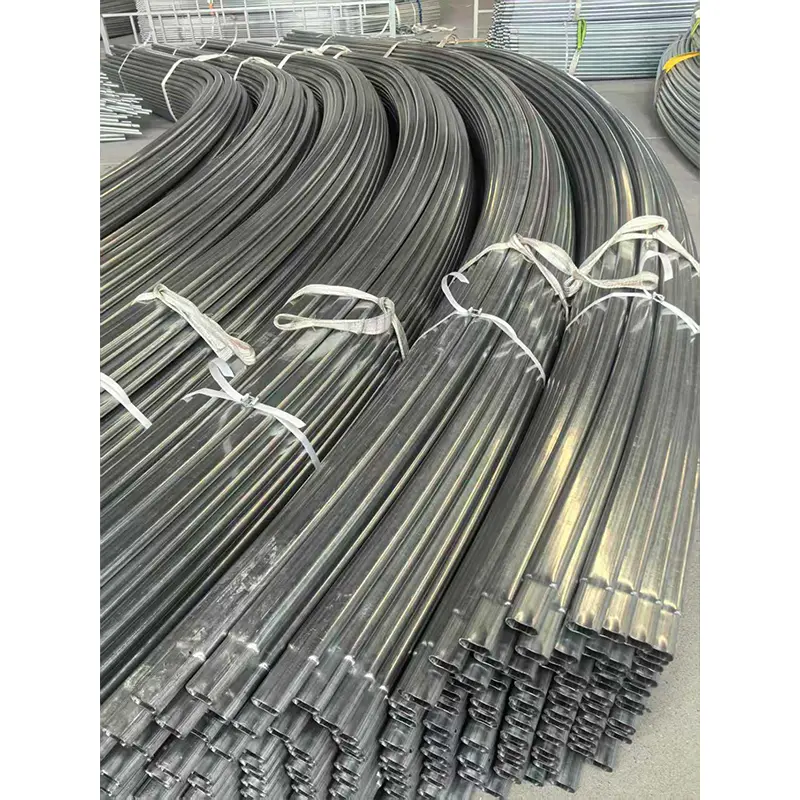
Consistency does not happen by chance. It comes from a production system that checks the material at every stage, from incoming steel coil to final loading. The company’s quality team combines visual inspection, dimensional measurement, destructive testing, and third-party verification to ensure that every batch of Hot Dip Galvanized Oval Steel Pipe meets or exceeds the applicable standard.
The process begins with raw material selection. High-quality steel coil from approved mills is checked for chemical composition, tensile properties, and surface condition. Only coils that meet the specification for the requested grade are released to the forming line. The steel strip is then progressively rolled into the oval shape through a series of precisely machined rollers. High-frequency electric resistance welding fuses the seam without adding filler metal, creating a joint that is as strong as the parent material. After welding, the inside and outside weld beads are conditioned to ensure a smooth surface for galvanizing.
Next comes sizing and straightening. The tube passes through additional roll sets that maintain the oval profile within tight tolerances. Online eddy current testing detects any discontinuity along the weld seam. If a flaw is found, the affected section is cut out and scrapped. After sizing, the tube is cut to length and moved to the galvanizing line. The surface is thoroughly cleaned through degreasing, pickling, and fluxing so the zinc will bond evenly. The cleaned tube is then immersed in molten zinc at approximately 450°C. Immersion time, withdrawal speed, and air wiping pressure are all controlled according to tube size and wall thickness.
After galvanizing, each tube is cooled and inspected. The zinc coating thickness is measured with a magnetic gauge at specified points along the length. Adhesion is checked using a heavy hammer or bend test on sample pieces. Dimensional conformance is verified on a calibrated inspection table. Only tubes that pass all checks are sorted, banded, and prepared for shipment. Mill test certificates and third-party inspection reports are available for every order, giving buyers full traceability from melt number to finished bundle.
Standard sizes cover many requirements, but custom projects often need something slightly different. Tianjin YuJie Steel Pipe Trading Co., Ltd. understands this and provides flexible manufacturing services that go beyond simply cutting a stock length. If your drawings call for a non-standard oval dimension, a specific wall thickness, a tighter straightness tolerance, or a particular zinc coating weight, the team can produce it without forcing you to accept a near-match that complicates your design.
Customization options include:
This customization does not require enormous minimum quantities. The factory is set up for both high-volume production runs and smaller trial batches, allowing you to test the product in a single prototype run before committing to a full order. Engineering support is available to help you optimize the oval profile for your specific load and span requirements.
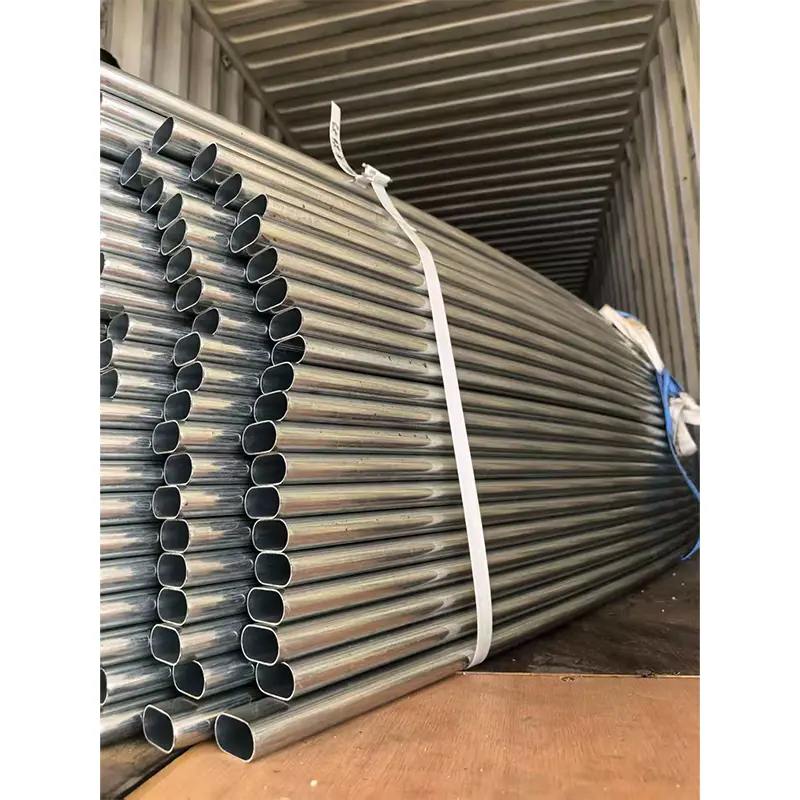
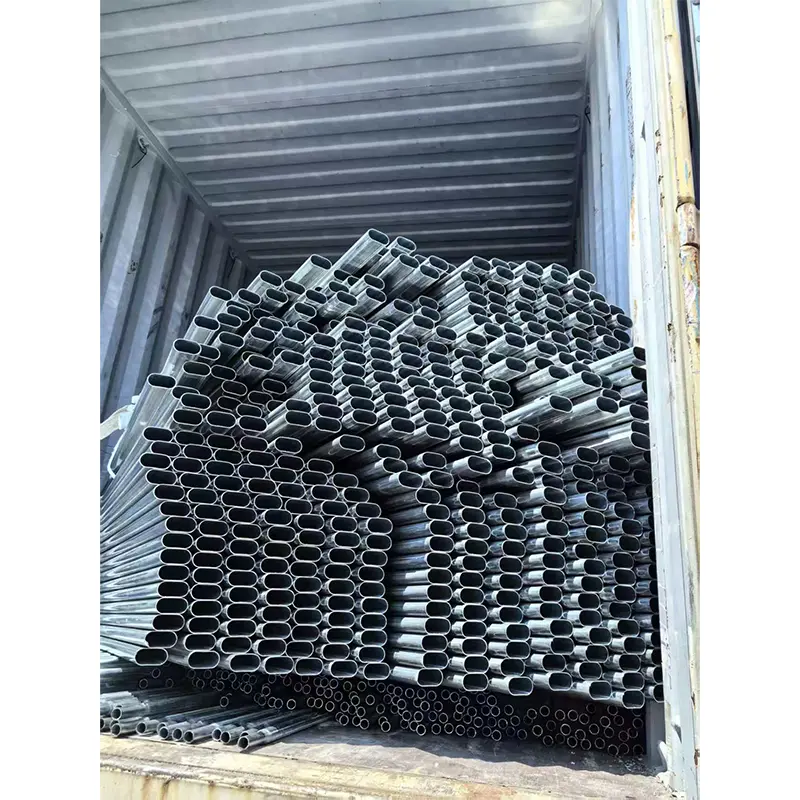
Shipping steel across the world requires more than just strong material. It requires careful packing that prevents damage, minimizes rust, and simplifies unloading at your facility. Each bundle of Hot Dip Galvanized Oval Steel Pipe is secured with steel straps and, where required, wrapped in waterproof cloth or placed on wooden pallets. Corner protectors are used to prevent the straps from biting into the coating. For export orders, the bundles are loaded in a way that maximizes container space while protecting the tube ends from impact during transit.
The oval shape actually offers a packing advantage over round pipe. Because the tubes nest more tightly when placed side by side with their flat faces touching, more product can be loaded into a given container volume. This can reduce freight cost per meter and lower the overall landed cost for buyers. The company can provide detailed container loading plans, including the number of bundles, piece counts, and estimated weights, before the order ships.
Every shipment includes clear bundle tags with size, length, heat number, and zinc coating weight. This makes it easy to match the material to your receiving documents and maintain traceability on site. If you require special labeling, barcoding, or color-coded tags, those can be arranged as well.
Think about the moment you hand over a finished project. The client runs a hand along the railing. They walk through the greenhouse. They inspect the frame of the solar array. In that moment, what they feel is not just the shape or the color. They feel the absence of concern. No flaking paint, no rust streaks, no sharp edges, no wobble. That sense of security is what the Hot Dip Galvanized Oval Steel Pipe delivers.
For the fabricator, this material reduces the friction that slows down a job. It does not roll. It does not need constant touch-up painting after every cut. It welds cleanly because the zinc coating is controlled and the steel chemistry is consistent. It aligns easily in fixtures. It arrives straight and true. When you are working against a deadline, those small efficiencies add up to hours saved per project.
For the end user, the benefit is even simpler: the structure stays strong and good-looking for years. A hot dip galvanized coating means no scheduled repainting, no expensive corrosion repairs, and no early replacement. The oval profile means no water pooling, no sharp corners to snag clothing or skin, and a look that stays current. In agricultural, coastal, and industrial settings, that longevity is not a luxury—it is a requirement.
To understand why this product performs so well, it helps to see it side by side with the alternatives.
| Feature | Hot Dip Galvanized Oval Steel Pipe | Round Galvanized Pipe | Square Galvanized Pipe |
|---|---|---|---|
| Rolling resistance during fabrication | Excellent—flat sides prevent rolling | Poor—constantly rolls | Excellent—flat sides prevent rolling |
| Stress distribution | Smooth elliptical, no sharp corners | Uniform but curved surface complicates joinery | Sharp corners concentrate stress |
| Water drainage and coating retention | Very good—water runs off | Good—round shape drains well | Fair—water collects at corners |
| Visual appearance | Modern, refined, organic | Industrial, plain | Heavy, boxy |
| Full-surface zinc coverage after welding | Yes—fully formed tube is hot dipped | Yes if hot dipped after forming, no if pre-galvanized | Yes if hot dipped after forming, no if pre-galvanized |
| Ease of drilling and bolting | Excellent—stable flat contact surface | Difficult—curved surface needs center punching | Excellent—stable flat contact surface |
| Typical corrosion hot spots | Minimal due to smooth profile | Cut ends and scratches | Sharp corners and weld zones |
| Overall fabrication friendliness | Very high | Moderate | High |
A truly protected steel pipe requires more than a quick dip. The hot dip galvanizing process is a carefully controlled sequence of surface preparation, fluxing, galvanizing, and finishing. At Tianjin YuJie Steel Pipe Trading Co., Ltd., each step is monitored to ensure the zinc coating is dense, uniform, and tightly bonded.
The formed and welded oval tubes enter the pre-treatment area, where oil, grease, and forming residues are removed. A clean surface is the foundation of good galvanizing. If any contaminant remains, the zinc will not bond properly and bare spots can appear.
After degreasing, the tubes are immersed in an acid bath to remove mill scale and rust. This step creates a chemically clean steel surface that is fully receptive to the flux. The bath concentration, temperature, and immersion time are controlled to avoid over-pickling, which can roughen the steel surface.
The cleaned tubes are dipped in a flux solution, typically zinc ammonium chloride. The flux removes any remaining oxide film and prevents flash rusting before the tube enters the zinc bath. It also promotes the formation of the zinc-iron alloy layers during galvanizing.
The fluxed tubes are immersed in molten zinc at around 450°C. The steel reacts with the zinc to form a series of intermetallic layers—gamma, delta, and zeta—topped by a layer of pure zinc. Because the oval tube is hollow, proper drainage during withdrawal is essential. The production team angles the tube so excess zinc flows out smoothly, avoiding internal buildup.
The galvanized tubes are air-cooled or quenched, then inspected for coating thickness, adhesion, and surface defects. A uniform, spangle-free finish is the target. Tubes that show excessive roughness, bare spots, or zinc lumps are rejected or reworked according to standard procedures.
For additional protection against white rust during storage and transport, a thin passivation layer can be applied. This is especially useful for tubes that will be exposed to humid conditions before installation.
How long will a Hot Dip Galvanized Oval Steel Pipe last? The answer depends on the environment, but the data collected from decades of galvanized steel use provides a reliable guide. Independent studies of hot dip galvanized steel show service life estimates ranging from more than 70 years in rural atmospheric conditions to 25–40 years in industrial and coastal environments. The exact figure depends on coating thickness, exposure to chlorides, and the presence of industrial pollutants.
For a zinc coating weight of 200 g/m² (approximately 28 µm thickness), you can expect meaningful corrosion protection for many years. For more aggressive environments, a heavier coating of 400 g/m² or 600 g/m² can be specified. The company can also recommend duplex systems, where the galvanized surface is further protected with a powder topcoat. Duplex systems typically last 1.5 to 2 times longer than the sum of the individual coating lives because the galvanized layer prevents underfilm corrosion that ordinarily destroys painted finishes.
Salt spray testing on hot dip galvanized oval pipe samples from the production line is available on request. Typical results show no red rust after hundreds of hours in a neutral salt spray chamber, depending on the coating thickness. The real-world advantage is even greater because hot dip galvanized steel develops a stable zinc patina that slows further corrosion over time.
One of the reasons professionals choose hot dip galvanized steel is that it requires very little maintenance. However, thoughtful installation can extend the life even further. When cutting the Hot Dip Galvanized Oval Steel Pipe on site, the cut ends expose bare steel. While the surrounding zinc will protect those edges through cathodic action, a quick application of zinc-rich paint or cold galvanizing spray adds an extra layer of defense for cut ends, drilled holes, and any areas that have been welded.
For welded connections, it is best to remove the zinc coating only in the immediate weld area, then repair the joint with a high-zinc primer or thermal zinc spray after welding. This maintains the continuous corrosion barrier across the connection. Avoid using standard steel wool or aggressive abrasive tools on the galvanized surface during cleaning, as this can remove the zinc. A soft brush, mild detergent, and clean water are usually enough to remove dirt and organic deposits.
If the tubes are stored outdoors before installation, keep them off the ground, stacked at a slight angle to allow drainage, and separated with spacers to promote air circulation. White rust—a powdery zinc corrosion product—can form if galvanized surfaces remain wet in tightly stacked bundles for extended periods. The passivation treatment offered by Tianjin YuJie Steel Pipe Trading Co., Ltd. reduces this risk significantly. If white rust does occur, it can often be cleaned with a stiff brush and checked for remaining coating thickness before installation.
For architectural applications where the galvanized surface is exposed and visual uniformity is important, a clear lacquer or powder coating can be applied after installation. The smooth oval surface provides an excellent base for such finishes. Many designers intentionally leave the natural zinc finish visible because its soft gray tone works well in modern and industrial settings.
What exactly is a hot dip galvanized oval steel pipe?
A hot dip galvanized oval steel pipe is a hollow structural steel section with an elliptical or oval cross-section that has been immersed in molten zinc after the tube is fully formed and welded. This creates a thick zinc coating on the inside and outside surfaces, including the weld seam and cut ends, providing long-term corrosion protection. The oval profile offers a stable flat side for fabrication while maintaining smooth curved edges for strength and aesthetic appeal.
How does hot dip galvanizing compare to pre-galvanizing for oval pipes?
Pre-galvanized oval pipe is made from steel coil that is zinc coated before the tube is formed. The coating is usually thinner and, critically, the weld zone and any cut edges remain unprotected because they are created after the coating is applied. Hot dip galvanizing is done after the tube is fully formed and welded, so the entire surface receives a thick, metallurgically bonded zinc layer. This provides much better protection at the weld seam and cut edges, which are common starting points for rust. Hot dip galvanized oval pipe generally offers longer service life in outdoor and corrosive environments.
Can this oval steel pipe be cut to custom lengths?
Yes. Standard lengths include 5.8 m, 6.0 m, 6.4 m, and 12 m, but custom cut lengths are available. You can specify exact lengths to reduce on-site cutting and scrap. For export orders, length tolerance can be tightened for applications such as pre-fabricated structures or assembly-line manufacturing. Please provide your required lengths and tolerances when requesting a quote.
What standards does Tianjin YuJie Steel Pipe Trading Co., Ltd. follow for production?
The company produces hot dip galvanized oval steel pipe according to ASTM A500, EN 10219, GB/T 6728, and BS 1387 standards, among others. If your project requires compliance with a specific national or international standard, the technical team can confirm applicability and provide mill test certificates with each shipment. Third-party inspection services such as SGS, BV, and TUV can also be arranged.
Is the oval steel pipe suitable for outdoor greenhouse structures?
Absolutamente. In fact, greenhouses and agricultural structures are among the most common applications for this product. The hot dip galvanized coating resists the constant humidity, condensation, and fertilizer exposure found inside growing environments. The oval profile sheds water efficiently, reducing damp spots that encourage corrosion and algae growth. The flat side also provides a convenient surface for attaching polycarbonate sheets, shade cloth, and film using self-drilling screws or channel profiles.
What zinc coating thickness should I choose for coastal environments?
For coastal or marine environments, it is wise to specify a heavier zinc coating. A minimum coating weight of 400 g/m² is typically recommended, and 600 g/m² is available for especially aggressive salt-spray conditions. The heavier coating extends the protective life of the steel by providing more sacrificial zinc. If the oval pipe will be installed in direct splash zones or near the high tide line, you should also consider a duplex system with a marine-grade powder coating on top of the galvanized layer for maximum protection.
Do you offer custom oval dimensions and wall thicknesses?
Yes. Custom oval dimensions and wall thickness combinations are available. The production line can be configured for non-standard width-to-height ratios and special elliptical profiles. Engineers can work from your drawings to confirm manufacturability, tolerances, and minimum order quantities. Custom tooling may require a small development fee, but for ongoing production runs that fee is often waived or credited against the first order.
How is the pipe packed for export and what is the minimum order quantity?
For export, the pipe is typically packed in hexagonal bundles secured with steel straps, wrapped in waterproof cloth, and loaded on wooden pallets or steel frames. Corner protectors are used to prevent strapping damage to the zinc finish. The minimum order quantity is flexible. Small trial orders are accepted for new customers who wish to evaluate the product first. For custom sizes, minimum quantities may be higher due to the need for dedicated roll tooling and galvanizing setup.
How do I inspect the quality before shipment?
You can request a pre-shipment inspection at the factory before the goods are released. The quality team will provide samples for visual and dimensional checks, zinc coating measurement, and if required, destructive testing such as flattening or bend tests. Third-party inspection agencies can also be invited at your cost. Digital photos of the production, packing, and loading process are often provided for customer approval before shipment.
What are the best practices for welding hot dip galvanized oval steel pipe?
Before welding, remove the zinc coating from the weld area using a grinder or chemical stripper. This prevents zinc vapor from contaminating the weld and reduces porosity. Use welding parameters suitable for the base steel grade. After welding, clean the slag and apply a zinc-rich repair coating to the weld and surrounding area. This ensures the finished joint has corrosion resistance equal to or better than the rest of the pipe. Avoid welding directly through heavy zinc unless you have local exhaust ventilation, because zinc fumes can be hazardous to health.
When you order from Tianjin YuJie Steel Pipe Trading Co., Ltd., you are not just buying steel. You are buying a more predictable fabrication process. The oval shape sits on your workbench. It does not spin when the saw blade touches it. A drill bit hardly wanders because the surface is stable under the work clamp. A welder can set a joint with one hand instead of two, because the tube is not fighting to rotate out of alignment. These are the kinds of small wins that experienced fabricators immediately recognize and appreciate.
The zinc finish is smooth and even, with no sharp spikes or drips that catch on gloves and cause injuries. The tube ends are cut square and cleaned, ready for immediate layout. Because the zinc extends through the interior, you do not have to worry about internal corrosion starting in a hollow cavity you cannot see. That internal protection is especially important for outdoor frames that are sealed at both ends but still experience temperature cycles and condensation.
Another benefit is consistency between batches. If you order the same size tube six months later, it will fit the same jigs, the same brackets, and the same customer drawings. This repeatability comes from strict process control and is something that high-volume manufacturers, repeat fabricators, and original equipment manufacturers depend on.
The product also supports sustainable building practices. Galvanized steel is fully recyclable at the end of its life, and the long service life means fewer replacements and less material consumption over time. Choosing a durable profile reduces maintenance-related travel, coatings, and waste. For projects pursuing green building certifications, specifying hot dip galvanized steel can contribute to durability and material conservation credits.
A smooth purchase is about more than the product itself. It is about what happens before you order and after the steel leaves the factory. The team at Tianjin YuJie Steel Pipe Trading Co., Ltd. includes technical sales engineers who can review your drawings, suggest profile orientations, recommend steel grades, and help you avoid over-specification that drives up cost without adding value. If your project has unusual loads, tight deflection limits, or strict corrosion requirements, those details can be incorporated into the production plan from the beginning.
During production, the factory can send progress updates, photos, and inspection data so you always know where your order stands. If changes need to be made—a length adjustment, a revised delivery date, an additional size—the communication lines stay open. This is particularly valuable for buyers managing multiple suppliers across long lead times.
After delivery, the support does not end. The company can provide guidance on storage, welding, touch-up, and powder coating compatibility. If you encounter an unexpected issue in the field, the technical team can help diagnose the problem and recommend a solution. That level of responsiveness is why many customers return for repeat orders and refer colleagues to this specific product line.
If you are tired of fighting round tube that rolls off the cart, or replacing square tube that rusts at the corners, the Hot Dip Galvanized Oval Steel Pipe is worth a serious look. It combines the practical handling of a flat-sided profile with the corrosion resistance of a fully immersed zinc coating. It is manufactured to tight tolerances, available in a wide range of sizes, and backed by a supplier that understands both high-volume production and custom fabrication.
When you are ready to specify or request a quote, have your drawings, quantities, and any special requirements ready. The team at Tianjin YuJie Steel Pipe Trading Co., Ltd. can provide pricing, sampling, and technical documentation quickly. For new applications, consider ordering a small test batch to run through your own fabrication line, check weld performance, and evaluate the finish. Once you experience how the oval profile handles, you may find it difficult to go back to ordinary round or square sections.