Straight Seam Welded Steel Pipe,Steel Profiles,Portable Container Houses,Cold-Rolled Seamless Steel Pipe,Hot-Rolled Seamless Steel Pipe,Spirally Welded Steel Pipe

 Galvanized Greenhouse Frame Structure standing in a field, manufactured by Tianjin YuJie Steel Pipe Trading Co., Ltd." style="max-width:100%;height:auto;margin-bottom:20px;">
Every grower knows the moment when a greenhouse stops being a collection of metal parts and becomes a living, breathing extension of the land. The frame is the quiet backbone of that transformation. It holds the curve of each season, braces against the wind that races down the valley, and carries the weight of snow without a whisper of complaint. The galvanized greenhouse frame structure from Tianjin YuJie Steel Pipe Trading Co., Ltd. is built for exactly this kind of quiet strength. It is not merely a skeleton of steel; it is a promise that the space inside will stay protected, warm, and ready for roots to reach deeper. Whether you manage a commercial operation with hundreds of rows or tend a smaller plot behind your home, the right frame changes how you grow. It turns a risky season into a reliable one, and it turns a temporary shelter into a lasting part of your property.
What follows is a thorough look at this galvanized greenhouse frame structure, from the raw steel that forms its bones to the zinc layer that shields it from rust, from the precise arc of each bow to the bolt holes that line up exactly as promised. You will find specifications, real-world scenarios, comparisons, and answers to the questions that matter most before you invest. This is not a lightweight overview; it is the kind of detailed exploration that helps you make a confident decision for years of growing.
At its core, a greenhouse frame has one job: to create a protected environment where plants can thrive beyond the limits of the open field. The galvanized greenhouse frame structure does this by combining a geometrically sound arch or gable design with steel that has been treated to resist the very conditions a greenhouse creates inside — humidity, condensation, and temperature swings. The primary function is simple to describe but demanding to execute. The frame must support glazing or film, withstand wind and snow loads, allow for ventilation and door openings, and hold its shape for decades without sagging or corroding. The galvanized greenhouse frame structure from Tianjin YuJie Steel Pipe Trading Co., Ltd. is engineered with all of these functions in mind.
Because the steel is hot-dip galvanized, the zinc coating bonds to the surface at a molecular level. This is not a paint that can chip away after one season; it is a metallurgical bond that sacrifices itself slowly over time so the steel underneath remains untouched. Inside a greenhouse, where drip lines and misting systems raise the relative humidity to ninety percent or more, untreated steel would begin to rust within months. Galvanized steel shrugs off that moisture. The frame stays smooth to the touch, safe for the film or polycarbonate panels that rest against it, and strong enough to carry the occasional bump from a wheelbarrow or a ladder without bending.
The structure is also designed with assembly in mind. Each pipe is cut to length, punched or drilled with precision, and marked for easy identification. When the pieces arrive, they can be laid out on the ground in logical order. The galvanized finish does not need touching up after cutting because the components are fabricated before galvanizing, which means every edge, every hole, and every weld is fully coated. This full-coverage protection is one of the reasons the frame performs so well in coastal areas, where salt-laden air accelerates corrosion on lesser products.
The galvanized greenhouse frame structure works across a wide range of covering materials. It pairs well with greenhouse polyethylene film, rigid polycarbonate sheets, shade cloth for nursery use, and even insect netting for propagation houses. The smooth surfaces and rounded profiles prevent tearing and abrasion, which is a common problem with frames that have sharp edges or poorly finished welds. You can stretch film tightly over the arches without worrying about punctures, and the film will last longer because it is not rubbing against rough or rusty spots.
For operations that need to expand, the modular nature of this frame is a significant advantage. You can start with a forty-foot length and add bays later without replacing the original structure. The end walls can be ordered with door openings, vent openings, or fully closed panels depending on your climate and crop. The structure adapts to your needs rather than forcing you to adapt to it.
There are many materials that can form the skeleton of a greenhouse. Wood rots, aluminum is expensive and sometimes too flexible, and bare steel rusts. Galvanized steel sits in a sweet spot that combines strength, longevity, and cost-effectiveness. The steel used in this galvanized greenhouse frame structure is chosen for its yield strength and formability. It can be bent into smooth arcs without cracking, and it springs back to hold its shape under repeated loads. When a gust of wind pushes against the side of the greenhouse, the frame flexes slightly and then returns, rather than taking a permanent set. This elastic behavior is critical in high-wind regions.
The zinc coating thickness is another differentiator. Cheaper frames may use a thin electro-galvanized layer that measures only a few microns. This frame is hot-dip galvanized, with a coating that typically reaches 40 to 85 microns or more, depending on the specification. That translates into decades of service, even in aggressive environments. The zinc does more than sit on the surface; it forms a series of alloy layers that are actually harder than the base steel. This means the frame is more scratch-resistant than you might expect. Minor nicks during installation do not expose bare steel because the zinc around the scratch provides cathodic protection, slowly sacrificing itself while keeping the steel intact.
Another advantage is the consistency of the pipe dimensions. When you build a greenhouse, small errors multiply. If one bow is a quarter-inch longer than the next, the whole roofline looks uneven and the film tension varies. This galvanized greenhouse frame structure is manufactured on automated lines that cut and punch with tight tolerances. Each bow matches the one before it. The purlins slide into place without forcing. The base plates line up with the anchors you set in the ground. This precision saves hours during assembly and reduces the need for on-site modifications.
The design also accounts for the realities of a working greenhouse. Door openings are reinforced so they do not sag after thousands of cycles. Ventilation openings can be placed high in the gable or along the sides to create natural airflow. The structure can support hanging baskets, irrigation lines, and supplemental lighting without requiring extra reinforcement. The steel pipe commonly used has a diameter of 32 mm, 42 mm, or 48 mm, with wall thicknesses ranging from 1.5 mm to 2.5 mm, depending on the span and load requirements. This range allows the frame to be scaled up for large commercial houses or scaled down for a backyard tunnel.
From a sustainability perspective, galvanized steel is fully recyclable at the end of its life. The long service life means fewer resources are consumed over time compared to replacing a wooden frame every few years. Many growers appreciate that the frame can be disassembled and moved to a new site if needed. The bolted connections allow for relocation without destroying the components, which is not possible with welded-only structures.
Picture a late February morning. The weather report called for a light dusting, but overnight the storm shifted. You wake up to six inches of wet, heavy snow pressing down on your greenhouse. The frame that looked fine in the summer sun now groans under the load. The hoops begin to flatten. A bolt hole tears. The film stretches and splits. By the time you get outside, the damage is done. The plants inside are exposed to freezing air, and the structure is a twisted mess. This is the pain point that many growers learn about the hard way. Cheap frames fail at the worst possible moment because they are designed for average conditions, not the extremes that actually happen.
The galvanized greenhouse frame structure from Tianjin YuJie Steel Pipe Trading Co., Ltd. addresses this scenario directly. The steel is selected for its ability to handle snow loads that far exceed the typical seasonal average in most growing regions. The arch geometry is calculated to shed snow efficiently, but even when snow accumulates and freezes, the frame remains stable. The connections are engineered to distribute stress rather than concentrate it at a single bolt. The base plates and anchors resist uplift, which is just as important as resisting downward force. When the wind tries to lift the greenhouse like a kite, the frame stays tied to the earth.
This is not a guess. The table below outlines some of the key parameters that define the structural performance of this galvanized greenhouse frame structure. These figures represent common configurations and can be customized to meet specific local building codes or crop requirements.
| Parameter | Standard Range | Notes |
|---|---|---|
| Main pipe diameter | 32 mm – 48 mm | Larger diameters for wider spans and higher loads |
| Wall thickness | 1.5 mm – 2.5 mm | Thicker walls increase stiffness and snow load capacity |
| Steel grade | Q195, Q235, or equivalent | Q235 offers higher yield strength for commercial use |
| Zinc coating | 40 – 85 microns (hot-dip galvanized) | Full coverage including cut edges and weld points |
| Frame span | 6 m – 12 m | Custom spans available upon request |
| Bay length | 2 m – 4 m | Shorter bays increase structural density and strength |
| Gutter height | 2.5 m – 4 m | Adjustable for crop clearance and ventilation |
| Peak height | 4 m – 6 m | Dependent on span and arch radius |
| Snow load capacity | Up to 120 kg/m² | Higher capacities with reinforced purlins and thicker pipe |
| Wind resistance | Up to 140 km/h | With proper anchoring and end wall bracing |
| Connection type | Bolted and swaged joints | Allows modular expansion and relocation |
| Warranty on frame | 10 – 15 years against structural failure | Subject to proper installation and normal use |
The pain scenario described above is real, but it is avoidable. The solution is not simply “more steel.” It is steel that is correctly shaped, correctly coated, and correctly connected. Every component of this galvanized greenhouse frame structure plays a role in that solution. The foundation anchors hold the base plates firmly in concrete or driven piers. The base plates are welded to the arches at the factory, not bolted on as an afterthought. The purlins run longitudinally to tie the arches together so that wind loads are shared across the entire structure. The diagonal bracing at the corners and in the end walls prevents racking. When all these parts work together, the greenhouse becomes a unified system rather than a collection of individual pipes.
The galvanized greenhouse frame structure fits a remarkably wide range of users. Commercial vegetable growers benefit because the frame can support large, multi-bay houses that cover several acres. The modular design allows them to add bays as their market grows, and the bolted connections make future expansion straightforward. In a commercial setting, downtime is expensive. The frame arrives ready to assemble, with no need for cutting, drilling, or welding on site. A small crew can erect a standard bay in a day, depending on the size and foundation prep.
Flower and ornamental plant nurseries benefit from the smooth interior surfaces that do not catch on shade cloth or snag the edges of hanging baskets. The frame can support overhead irrigation lines and misting systems without sagging. The high peak height allows for better air circulation, which reduces fungal pressure in dense plantings. Nursery operators often use the structure as a propagation house with insect netting as the covering, and the galvanized steel stands up to constant moisture from misting nozzles.
Home gardeners and hobbyists find that the smaller versions of this frame are easy to assemble over a weekend. The pieces are light enough to be handled by two people, yet sturdy enough to withstand winter storms. The frame gives a backyard grower the same level of protection that a commercial farm enjoys, just scaled down. It extends the growing season by several weeks in spring and fall, and in mild climates it can keep leafy greens productive all winter.
Research institutions and educational farms appreciate the predictability of the structure. When a university or a school builds a greenhouse, they need to know that the frame will meet safety standards and last for the life of the program. The galvanized greenhouse frame structure from Tianjin YuJie Steel Pipe Trading Co., Ltd. can be engineered to meet specific structural calculations, and the documentation is available for permitting. This makes it easier for publicly funded projects to get approval.
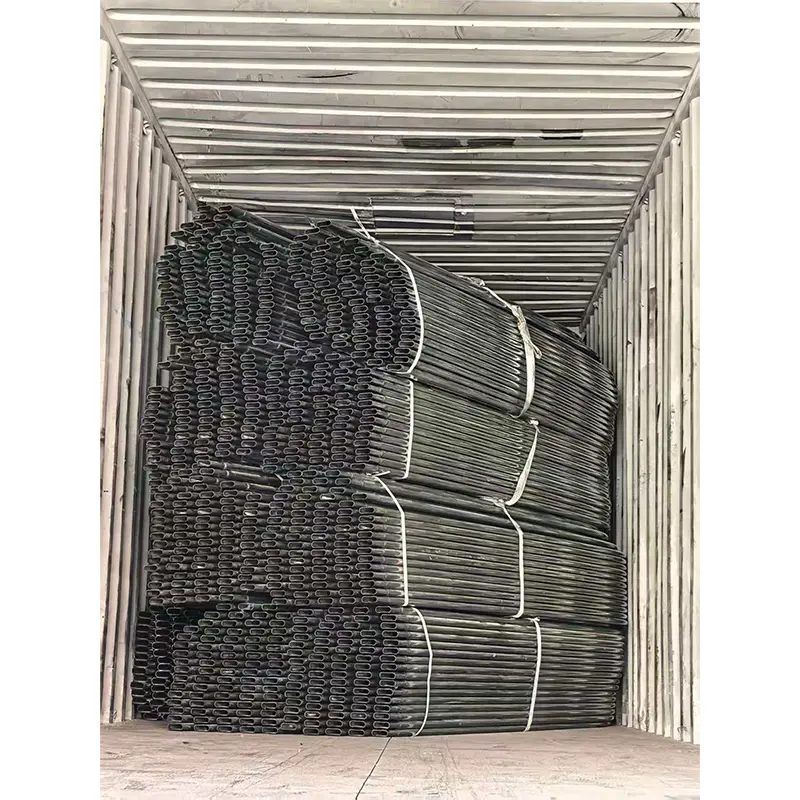
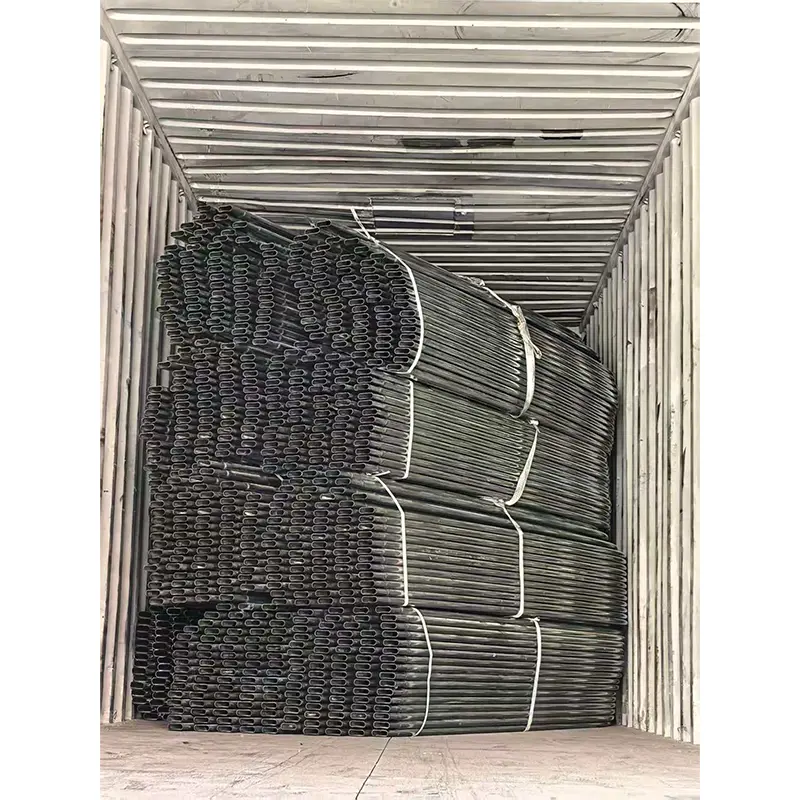
Another group that benefits is the greenhouse builder or contractor who installs frames for multiple clients. They need a supplier who can deliver consistent quality on schedule and provide technical support when questions arise. The company behind this frame has experience in international trade and understands the logistics of shipping long steel components without damage. Bundles are properly packaged, and the pipes are protected from abrasion during transit. Contractors can order a complete kit that includes all the fasteners, clamps, and brackets needed for installation, reducing the need to source parts from multiple vendors.
There is a particular feeling that comes when you walk into a greenhouse that is solid under your feet and solid over your head. The air is warm, the light is diffused, and the plants are doing exactly what they are supposed to do. That feeling does not come by accident. It comes from knowing that the structure around you will not fail when the weather turns. It comes from the absence of worry. The galvanized greenhouse frame structure provides this quiet confidence because it removes the most common reasons for greenhouse failure. You do not have to rush out in the middle of the night to knock snow off the roof. You do not have to tighten rusted bolts that have crumbled. You do not have to throw a tarp over a sagging ridge because the frame has lost its shape.
For a commercial grower, this confidence translates into better sleep. The crops that represent months of work and the livelihood of employees are protected by a frame that is designed to hold. The insurance of knowing that a late-season storm will not wipe out the entire investment is worth far more than the difference in cost between a quality galvanized frame and a flimsy imitation. For a home gardener, the confidence is more personal. It is the joy of picking fresh tomatoes in November while the neighbors are buying bland imports. It is the pride of showing visitors a greenhouse that looks as good as it functions.
The galvanized finish also has an aesthetic quality that is sometimes overlooked. The bright, silvery surface reflects light inside the house, which can increase the overall light levels available to the plants. Unlike dark, rust-streaked steel, galvanized pipes do not create shadows or discoloration on the covering. The structure looks clean and professional, which matters if the greenhouse is visible from the house or if customers visit the farm. A well-kept greenhouse sends a message about the quality of the operation, and the frame is the first thing people see.
Over time, the galvanized surface develops a thin, protective patina that actually improves its corrosion resistance. This is not rust; it is a stable zinc carbonate layer that forms when the zinc is exposed to air and moisture. The frame will gradually lose its bright shine and take on a matte gray appearance, but this is a sign that the protective layer is doing its job. Many growers actually prefer this matte finish because it reduces glare and blends more naturally into the landscape.
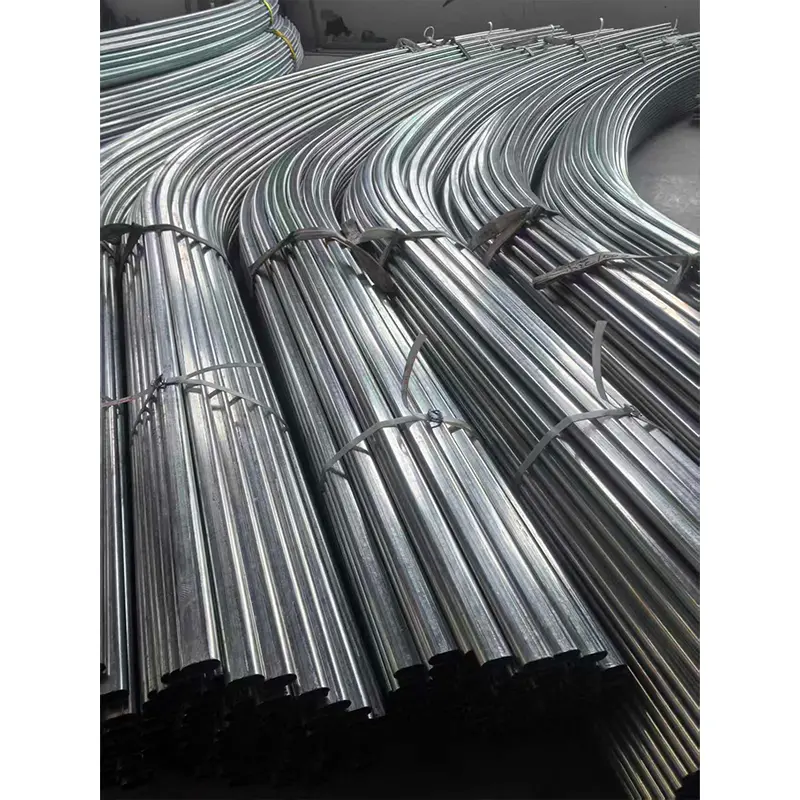
Not all galvanized greenhouse frames are created equal. The difference often lies in details that are not visible at first glance. One of the most important differentiators is the quality of the galvanizing itself. Some suppliers use pre-galvanized pipe, which means the steel is galvanized in sheet form before being rolled and welded into a tube. This leaves the weld seam uncoated and vulnerable to rust. The galvanized greenhouse frame structure from Tianjin YuJie Steel Pipe Trading Co., Ltd. is hot-dip galvanized after fabrication. Every pipe, every punched hole, every welded bracket is fully immersed in molten zinc. The result is a seamless coating that covers the welds just as thoroughly as the flat surfaces.
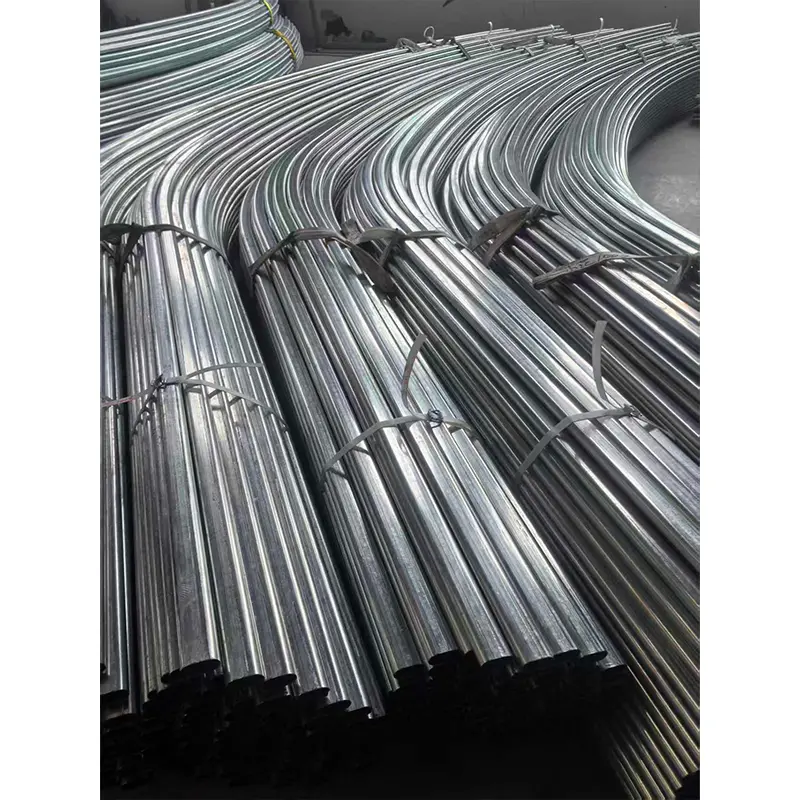
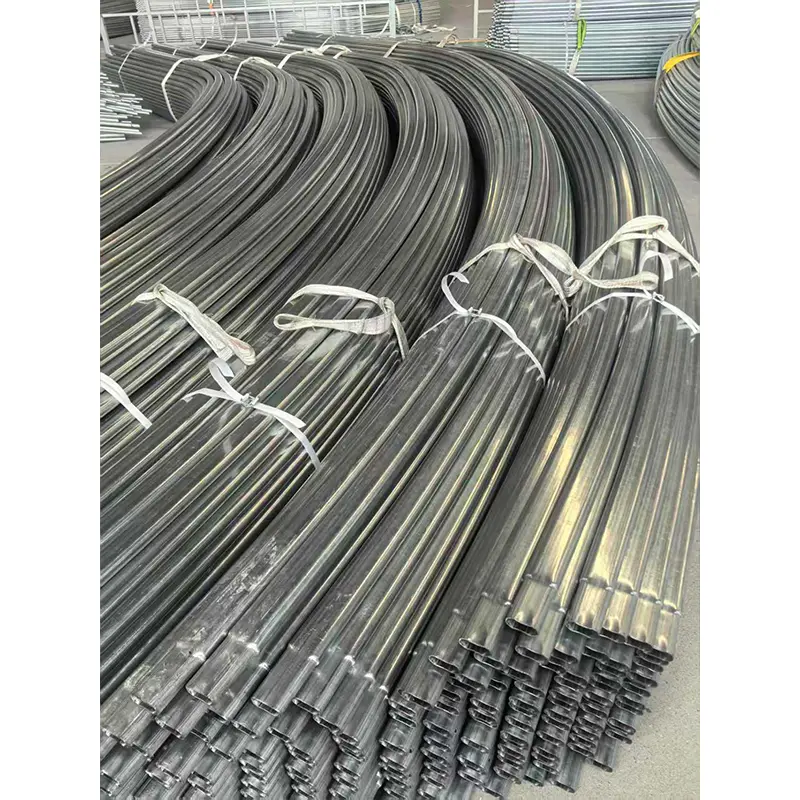
Another differentiator is the attention to structural details. The arches are not simply bent by hand or on a basic jig. They are formed on calibrated bending machines that ensure a consistent radius from one end to the other. This consistency is crucial for the film or panels to sit evenly. If an arch is slightly steeper on one side, the covering bunches or gaps, and wind can get underneath and tear it. The factory also performs dimensional checks on every batch, so the pipe ends fit snugly into the connectors without play.
The connection system is designed for both strength and ease of assembly. Swaged joints allow one pipe to slide inside another, creating a tight connection that transfers load efficiently. Bolted clamps hold purlins at the correct spacing without crushing the pipe. The hardware is zinc-plated or stainless steel, so it matches the corrosion resistance of the frame. You will not find cheap self-tapping screws that strip out after one season. The bolts are sized to the load, and the holes are pre-punched so there is no need to drill through the galvanized coating on site, which would compromise the protection.
Customization is another area where this frame excels. Many suppliers offer only a limited range of sizes and styles. This manufacturer can produce frames in arch, gable, and even sawtooth configurations. The arch is popular for film-covered tunnels because it sheds snow and rain naturally. The gable style offers more vertical sidewall space and is often used with rigid panels. The sawtooth design allows for continuous ridge ventilation in warm climates. Customers can specify the bay spacing, the pipe diameter, the wall thickness, and the type of end wall. This flexibility means the frame can be matched to the specific crop, climate, and covering material.
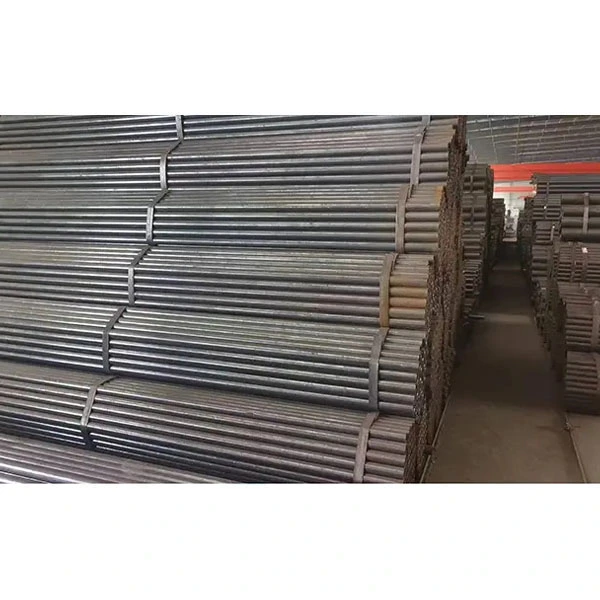
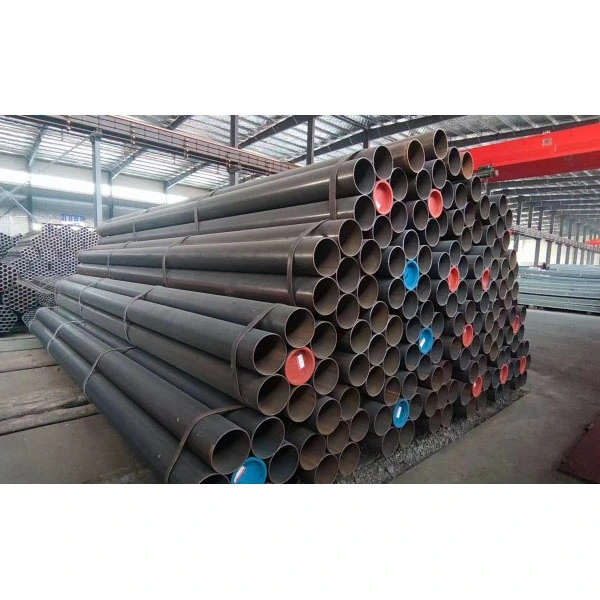
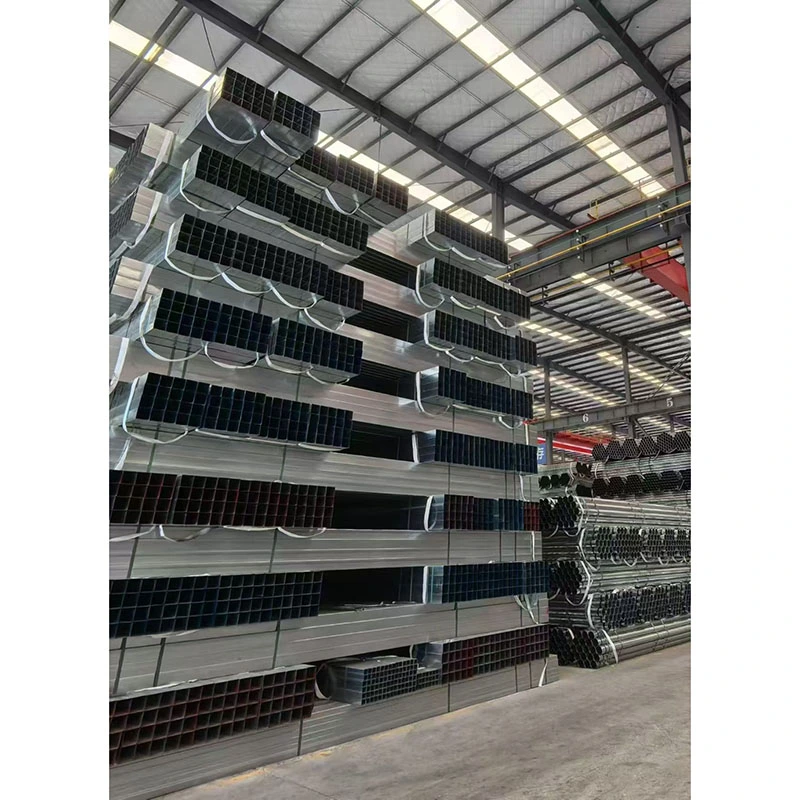
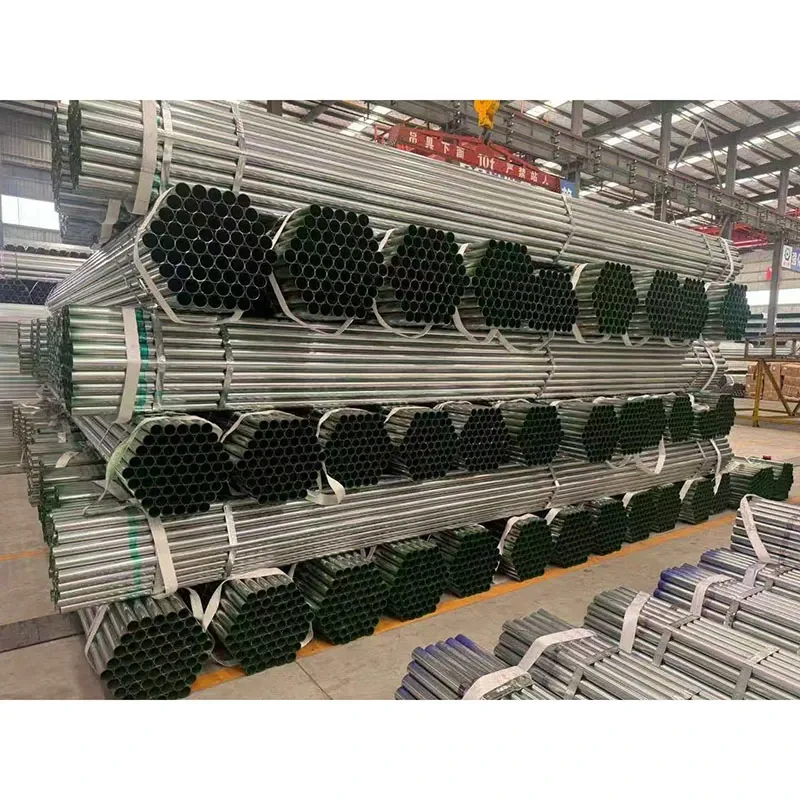
Logistics and packaging also set the product apart. Steel pipes are heavy and awkward to ship. The company bundles the pipes in groups that can be handled by forklift or crane, and they use protective wrapping at the ends to prevent damage to the galvanized surface. The bundles are labeled clearly, so the receiving crew can quickly verify that all components are present. For international customers, the company provides the necessary export documentation, including certificates of origin and material test reports. This level of professionalism removes the anxiety of ordering from overseas.
Installation of a galvanized greenhouse frame structure is a process that rewards preparation. Before the frame arrives, the site should be leveled and the foundation prepared. The most common foundation types are concrete footings with anchor bolts, driven ground posts, or a continuous concrete curb. The choice depends on the size of the structure and the local wind conditions. The frame’s base plates are predrilled to match standard anchor bolt patterns, but the manufacturer can also adjust the hole spacing to match custom foundation plans.
When the frame arrives, the first step is to lay out all the components in order. Because the parts are labeled, this takes less time than you might expect. The arches are typically shipped in sections for easier handling, and they are joined with swaged ends or internal connectors. A small team of three or four people can assemble a single bay in a few hours. The purlins are then clamped to the arches at the specified heights, and the diagonal bracing is added. The frame should be squared before the braces are fully tightened, using diagonal measurements to ensure the structure is true.
The roof and side purlins provide the attachment points for the covering. For film greenhouses, a channel and wiggle wire system is often used to secure the film without puncturing it. This system works well with the galvanized frame because the channels can be attached to the steel with self-drilling screws without worrying about rust. For polycarbonate or glass, aluminum glazing bars are often mounted on top of the steel arches, and the panels are inserted into the bars. The steel frame does not come into direct contact with the panels in this case, which prevents any reaction between the materials.
One of the common mistakes during installation is overtightening the bolts. The galvanized coating is tough, but it can be damaged if a power tool is set to maximum torque and the bolt is driven beyond the recommended tightness. A torque setting that is firm but not crushing is sufficient for the clamps to hold. The manufacturer provides assembly instructions with recommended torque values for the main connections. Following these guidelines preserves the integrity of the coating and extends the life of the frame.
After the frame is up, a visual inspection is recommended. Look for any scratches that may have occurred during handling. Although the galvanized coating provides cathodic protection, it is good practice to touch up deep scratches with a zinc-rich paint. This is a simple step that takes only a few minutes and restores the appearance. The frame should also be inspected after the first major storm, just to confirm that all connections remain tight. Over the years, the galvanized surface will require no painting or sealing, which is one of the main reasons growers choose this material.
Behind every galvanized greenhouse frame structure is a supply chain that starts with the steel mill and ends with the grower. Tianjin YuJie Steel Pipe Trading Co., Ltd. occupies a critical position in that chain. The company sources steel pipe from mills that meet recognized international standards, and they verify the material properties with each shipment. Tensile strength, yield strength, and elongation are tested to ensure the steel can be formed into arches without cracking and will perform under load. The galvanizing process is monitored for bath temperature and immersion time, and the zinc coating thickness is measured with a magnetic gauge on random samples.
The company’s experience in the steel pipe trade is evident in the consistency of the product. The pipes are stored under cover before and after galvanizing to prevent surface contamination. The galvanized surface is inspected for bare spots, lumps, and drainage spikes. While minor imperfections are normal in hot-dip galvanizing, the company works to keep them within acceptable limits and to avoid any sharp protrusions that could tear the greenhouse covering. The welds on brackets and base plates are checked for penetration and cleaned before galvanizing, which ensures the zinc bonds properly to the weld area.
For customers who require additional assurance, the company can provide material certificates and third-party inspection reports. This is particularly important for government-funded projects, organic certification programs, and growers who are insuring the structure. The documentation shows that the galvanized greenhouse frame structure meets the specified requirements and that the materials are traceable. This level of transparency is not always available from smaller suppliers, and it gives buyers confidence that they are purchasing exactly what is described.
The company also stands behind its product with a warranty that covers structural failure due to defects in materials or workmanship. The warranty period varies depending on the configuration and the specific conditions of use, but it typically ranges from ten to fifteen years. This is a clear signal that the manufacturer expects the frame to last far longer than the warranty period. In practice, a properly installed galvanized greenhouse frame can serve for twenty-five years or more with no major maintenance, which makes it one of the best long-term investments a grower can make.
Yes, it is specifically designed to handle high-wind conditions when properly anchored. The arch shape naturally deflects wind rather than presenting a flat face to it. The purlins and diagonal bracing distribute lateral forces across the entire frame, preventing one section from taking the full brunt of a gust. The bolted connections resist loosening under vibration, which is a common failure point in high-wind zones. For areas with frequent tropical storms or sustained winds above 120 km/h, the manufacturer recommends increasing the pipe wall thickness, reducing the bay spacing, and adding extra ground anchors. The wind resistance values in the specification table are based on standard configurations, and the frame can be customized to meet higher requirements. The base plates and anchor bolts should be embedded in concrete footings that are sized according to the soil conditions. A local engineer can help determine the correct footing dimensions for the specific wind zone.
The hot-dip galvanized coating on this frame is designed to last for decades, even in the high-humidity environment of a greenhouse. The zinc layer is 40 to 85 microns thick on standard components, which is significantly thicker than the electro-galvanized coatings found on many cheap frames. The rate of zinc corrosion depends on the environment, but in a typical greenhouse with intermittent condensation, the coating will lose only a few microns per year. That means the frame can easily provide 25 to 40 years of protection before the base steel is exposed. The key is that the galvanizing covers the entire component, including the inside of the pipes, because the steel is dipped after fabrication. This prevents the hidden rust that often starts inside the tubes of pre-galvanized products. Periodic washing of the frame with plain water to remove fertilizer salts can further extend the life of the coating, though it is not strictly necessary.
For smaller hobby or market garden sizes, two or three people can assemble the frame without professional help. The components are pre-cut, pre-punched, and labeled, and the connections are designed to fit together without welding or drilling. The manufacturer provides assembly instructions with diagrams showing the correct sequence and torque settings. For larger commercial multi-bay houses, a professional installation crew or contractor is recommended because the scale and the need for precise alignment and anchoring are greater. However, even commercial crews find the process straightforward because the frame is designed for efficient assembly. The swaged joints and bolted clamps go together quickly, and there is no need for special tools beyond common wrenches and a drill.
The foundation depends on the size of the structure, the soil type, and the local building code. The most common options are concrete footings with embedded anchor bolts, driven steel posts set in concrete, or a continuous concrete curb. For small tunnels, a simple ground post system works well and allows for easy relocation. For commercial houses, concrete footings at each arch provide the best resistance to uplift and settling. The frame’s base plates are predrilled to match standard anchor bolt patterns, and the manufacturer can adjust the hole spacing if the foundation plan requires it. Proper drainage around the base of the greenhouse is also important to prevent water from pooling and freezing against the steel, which can damage the coating over time.
The galvanized greenhouse frame structure is typically sold as a frame kit that includes all the steel components, fasteners, clamps, and brackets needed to erect the skeleton. The covering material, such as film, polycarbonate, or shade cloth, is not included because growers have different preferences and climatic needs. The manufacturer can provide the channel and wiggle wire system for film attachment as an option, and they can recommend compatible covering suppliers. Ventilation equipment such as roll-up sides, roof vents, and exhaust fans is also separate. The frame is designed with the necessary openings and reinforcement to accept these systems, so adding them later is straightforward.
Yes, the modular design makes expansion simple. The frame is built in bays, and each bay shares a common arch with the adjacent bay in a multi-bay configuration. To add a bay, the end wall is removed, the new arches and purlins are bolted to the existing structure, and the end wall is reinstalled on the new end. This can be done without cutting or welding if the original frame was ordered with expansion in mind. The manufacturer recommends mentioning future expansion plans when placing the order, so they can include the necessary connector plates and ensure the bolt patterns match. Many growers start with a small house and expand as their market grows, which is a practical way to manage capital costs.
Hot-dip galvanized pipe is fabricated first and then immersed in molten zinc, which coats every surface, including the inside of the pipe, the welds, and the punched holes. Pre-galvanized pipe is made from steel sheet that is galvanized before the pipe is formed and welded. The weld seam of a pre-galvanized pipe has no zinc coating, so it rusts quickly in a humid greenhouse. The zinc layer on pre-galvanized pipe is also generally thinner and less durable. Hot-dip galvanizing produces a thicker, harder coating that provides both barrier protection and cathodic protection. This is why the galvanized greenhouse frame structure from Tianjin YuJie Steel Pipe Trading Co., Ltd. uses hot-dip galvanizing for its arches, purlins, and brackets. The difference in long-term performance is dramatic, especially in moist or coastal environments.
The manufacturer can provide structural calculations and material certificates that demonstrate the frame’s capacity to handle specified snow loads, wind loads, and dead loads. These documents can be submitted to your local building department along with the foundation plan. In many areas, agricultural buildings are exempt from certain permitting requirements, but it is always wise to check with the local authority. The company has experience exporting to regions with strict building codes, and they can adjust the frame design to meet specific requirements. If you need a stamped engineering drawing, that service can be arranged through a local engineer who reviews the manufacturer’s calculations and adds the required site-specific details.