Straight Seam Welded Steel Pipe,Steel Profiles,Portable Container Houses,Cold-Rolled Seamless Steel Pipe,Hot-Rolled Seamless Steel Pipe,Spirally Welded Steel Pipe
Walk through any productive greenhouse at dawn and you will notice the same thing: the plants get the attention, but the structure does the real work. Every arched roof, every sidewall, every row of shelving depends on a framework that can handle moisture, temperature swings, wind pressure and the weight of hanging crops. A greenhouse is only as dependable as the steel that holds it together. That is where the Galvanized Greenhouse Steel Pipe from Tianjin YuJie Steel Pipe Trading Co., Ltd. proves its worth.
This is not a generic metal tube. It is a purpose-built component designed for the humid, warm and often demanding environment of a working greenhouse. The steel is formed to precise dimensions, then coated with a continuous layer of zinc to resist rust. The result is a pipe that installs cleanly, connects securely and keeps its structural integrity far longer than untreated or lightly coated alternatives.
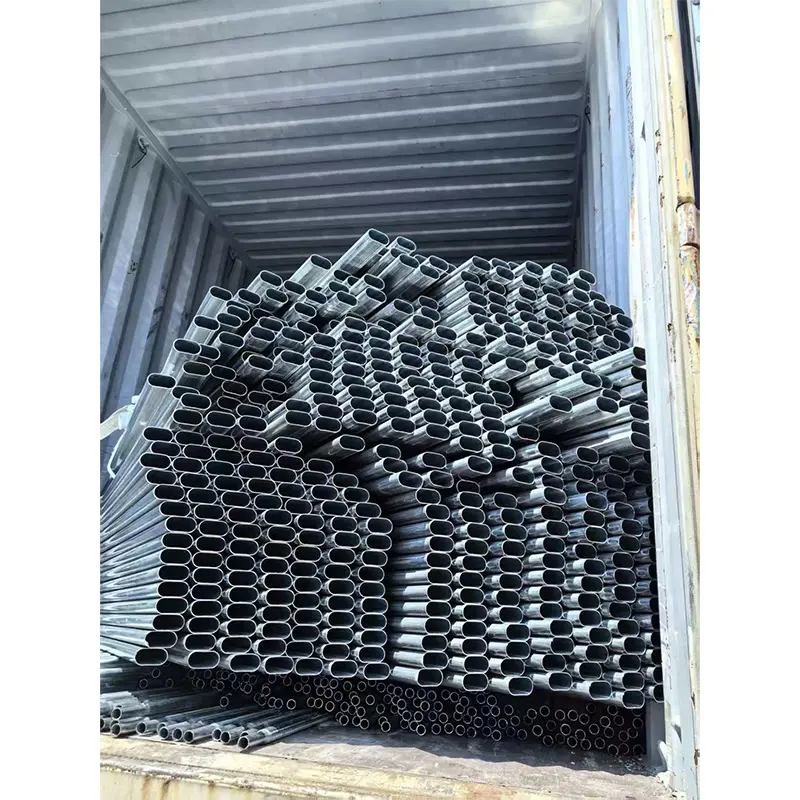
Whether you are putting together a compact backyard growing space or a multi-bay commercial operation, the quality of your frame affects everything from daily safety to long-term yield. A sagging arch can limit headroom. A rusted joint can fail during a storm. A poorly coated pipe can stain your covering material and force an early rebuild. Choosing the right pipe from the beginning removes these risks before they appear.
We will walk through the specific features, realistic scenarios, sizing details and practical answers that can help you decide if this pipe fits your next project. Along the way, you will see how a straightforward steel component becomes one of the smartest investments in the whole growing system.
At its core, the galvanized greenhouse steel pipe serves as the skeleton of the structure. It is used for hoops, purlins, posts, trusses, door frames, vent supports, shade cloth frames and even raised bed borders. The round profile distributes stress evenly, which makes it especially effective for arched or curved greenhouse designs. Compared with square or rectangular tubing, round steel pipe bends more predictably and resists buckling under vertical loads.
Inside a typical hoop house or gothic arch greenhouse, these pipes are anchored to ground posts or base plates, then connected with cross braces and ridge poles. The galvanized coating protects the steel from condensation, irrigation overspray, soil moisture and fertilizer salts. Because the interior of a greenhouse often stays above 70 percent humidity, untreated steel can start showing rust within the first season. Galvanized pipe breaks that cycle.
The pipe also supports non-structural elements such as irrigation lines, climate sensors, hanging baskets and crop wires. In vegetable production, growers frequently attach trellis cables and plant clips directly to the frame. A smooth, clean surface makes those attachments easier and prevents damage to nets or covers. The absence of sharp burrs and scale means you can handle the pipe without gloves and slide connectors into place without catching.
Many growers start with lower-cost tubing because the initial quote looks attractive. Months later, small orange stains appear at the cut ends. Joints begin to creak. A bent hoop changes the roof line and creates pockets where rainwater collects. The structure still stands, but the maintenance time and worry start to add up.
Other common problems include out-of-round pipe that does not fit connectors properly, wall thickness that varies enough to cause weak spots, and zinc coatings that flake off during transport or bending. Each of these issues forces extra labor, extra fittings and, eventually, an earlier replacement. In commercial operations, even a two-day repair shutdown can cost more than the upfront savings on cheap pipe.
There is also the safety angle. A greenhouse frame carries snow load in winter, wind load in storm season and the continuous weight of hanging plants. If one section corrodes or a joint slips, the failure can be sudden. The best way to avoid these scenarios is to start with a pipe made from a consistent steel grade and finished with a properly bonded zinc layer.
The pipe offered by Tianjin YuJie Steel Pipe Trading Co., Ltd. addresses these failure points directly. It begins with high-quality steel strip or coil, selected for uniform thickness and clean chemistry. The strip is roll-formed into a round shape and welded along the seam using high-frequency induction welding. The weld is then heat-treated and tested to ensure it behaves like the rest of the pipe body.
After forming, the pipe moves through a galvanizing process that applies a metallurgically bonded zinc coating. This coating acts as a sacrificial layer: if the surface is scratched, the surrounding zinc corrodes first and protects the steel underneath. That self-healing property matters a great deal in a greenhouse, where minor scratches from tools, clips or installation are almost unavoidable.
The final product has a smooth, spangled or matte zinc finish, depending on the exact bath conditions. The coating thickness can be specified to match the project environment. For most greenhouse applications, a standard coating of 220 to 275 grams per square meter delivers decades of service. For coastal or high-salinity locations, heavier coatings are available.
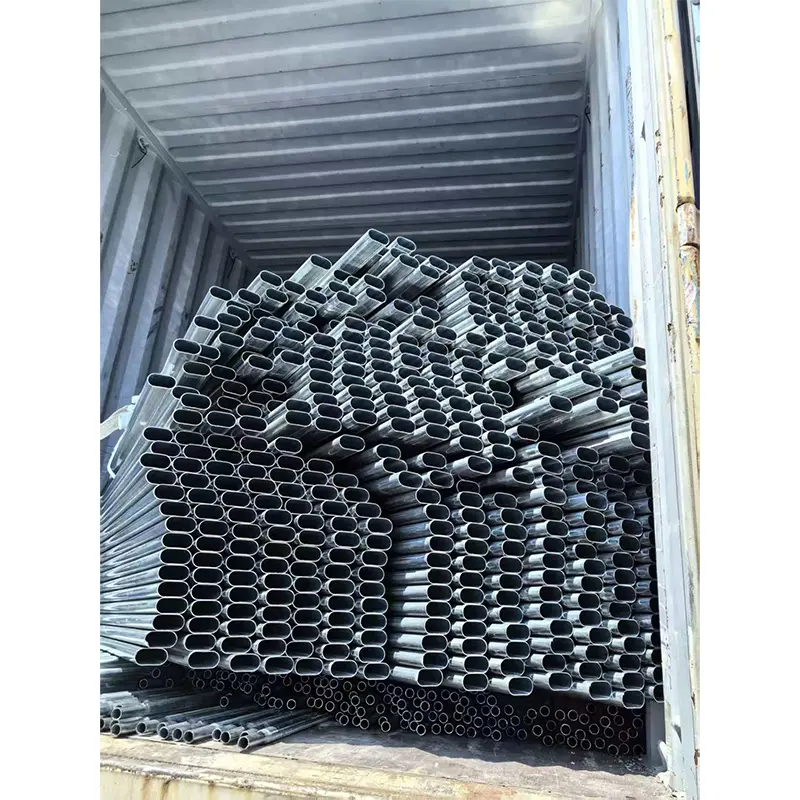
Because the coating is applied to both the outside and the inside of the pipe, cut ends and internal surfaces also resist rust. This full coverage is critical for greenhouse frames that are exposed to condensation on the inner walls. Many lightweight pipes only receive a thin exterior wash, leaving the interior vulnerable. That hidden corrosion eventually weakens the pipe from the inside out.
The base material is typically Q195, Q235, or equivalent structural steel grades. These grades offer a practical balance of strength and workability. They can be bent into hoops without cracking, drilled for bolt holes and welded with standard equipment. The yield strength is high enough to support typical greenhouse spans and crop loads, yet the material remains easy to handle on site.
Wall thickness options usually range from 0.8 mm to 3.0 mm, with common greenhouse sizes around 1.0 mm, 1.2 mm and 1.5 mm. The outside diameter can be produced from 20 mm up to 165 mm, covering everything from small bent sidewall hoops to heavy main columns. Lengths are generally available from 3 meters to 12 meters, and custom cutting is offered for projects that need exact dimensions.
Below is a typical reference table for galvanized greenhouse steel pipe available from our production range. These values can be adjusted according to your structural drawings and local climate requirements.
| Outside Diameter | Wall Thickness | Standard Length | Zinc Coating | Steel Grade | Typical Use |
|---|---|---|---|---|---|
| 20 mm – 33 mm | 1.0 mm – 1.5 mm | 3 m – 6 m | 220 – 275 g/m² | Q195 / Q235 | Hoops, purlins, small arches |
| 42 mm – 48 mm | 1.2 mm – 2.0 mm | 4 m – 6 m | 220 – 300 g/m² | Q235 | Main arches, side posts |
| 60 mm – 89 mm | 1.5 mm – 2.5 mm | 5 m – 8 m | 250 – 300 g/m² | Q235 | Columns, truss chords |
| 114 mm – 165 mm | 2.0 mm – 3.0 mm | 6 m – 12 m | 250 – 350 g/m² | Q235 / Q355 | Heavy structural supports |
Custom diameters, wall thicknesses and coating weights can be arranged for volume orders. The factory also offers plain ends, threaded ends, swaged ends or welded flange plates depending on how your greenhouse kit is assembled.
There is a clear difference between a pipe that has been fully immersed in molten zinc and one that has received a thin electro-galvanized layer. Hot-dip galvanizing forms several alloy layers between the steel and the outer zinc. These layers are hard, tightly bonded and capable of withstanding impact and abrasion during transport and installation.
In a greenhouse, the pipe is subjected to repeated temperature changes. Steel expands and contracts with each day-night cycle. A poorly bonded coating will crack at the interface and allow moisture to creep under the surface. Hot-dip galvanized pipe handles these thermal movements without losing adhesion because the zinc-iron alloy layers have a similar thermal expansion behavior to the base steel.
Another advantage is that hot-dip galvanizing covers the weld seam completely. In welded pipe, the seam is often the first place to rust if the coating is uneven. By dipping the entire pipe after welding, the seam receives the same protection as the rest of the circumference. This eliminates the weak point that many imported or lightly coated pipes have.
A greenhouse frame must resist several different forces at once. Snow builds up on the roof and pushes down. Wind hits the side and tries to twist the structure. Hanging baskets and trellised crops add constant dead load. The pipe must handle all of this without permanent deformation.
The round shape of the galvanized greenhouse steel pipe is excellent at resisting bending in all directions. Unlike angle iron or flat bar, round tubing has no weak axis. This symmetry allows greenhouse designers to use lighter, smaller-diameter pipe while maintaining the same structural strength as heavier alternatives. It also makes the pipe easier to bend into smooth curves for arched roofs, which naturally shed snow and water.
For growers who need extra carrying capacity, increasing the wall thickness is often more effective than increasing the diameter. A 42 mm pipe with a 1.5 mm wall can support significantly more than a 42 mm pipe with 1.0 mm wall, especially when used as a vertical post. Our team can help you determine the right combination based on your local snow load, wind speed and crop type.
One underrated benefit of well-made galvanized pipe is how much easier it is to work with. The pipe arrives straight, clean and free from excessive oil or mill scale. It can be cut with a standard pipe cutter or metal saw, drilled with common bits and joined using clamp-on greenhouse connectors, U-bolts or welded brackets.
The smooth galvanized surface allows connectors to slide over the pipe without excessive force. This matters when you are assembling dozens or hundreds of joints in a single day. A rough, pitted or distorted pipe slows down the crew and leads to misaligned frames. A consistently round pipe with accurate outside diameter solves that problem before it begins.
Because the pipe is available in a range of standard lengths, it can also reduce waste. If your greenhouse design uses 6-meter arches, you can order 6-meter lengths and avoid cutting every piece. If you need a mixed order of different lengths, the factory can bundle them separately and mark each bundle clearly. This saves time during unloading and keeps the job site organized.
Tianjin YuJie Steel Pipe Trading Co., Ltd. works with production lines that follow strict inspection routines. Each heat of steel is checked for chemical composition. Wall thickness is measured continuously during forming. The weld seam undergoes non-destructive testing to confirm it is free from cracks or voids. After galvanizing, coating thickness is verified with a magnetic gauge, and the surface is visually inspected for bare spots, excessive dross or sharp spikes.
Dimensional checks are performed on diameter, length, straightness and end finish. Pipes that do not meet the specified tolerance are removed before packing. This consistency is important for greenhouse projects because all arches, purlins and posts must line up correctly. Even small variations in outside diameter can cause joints to fit either too tight or too loose, which affects the whole frame.
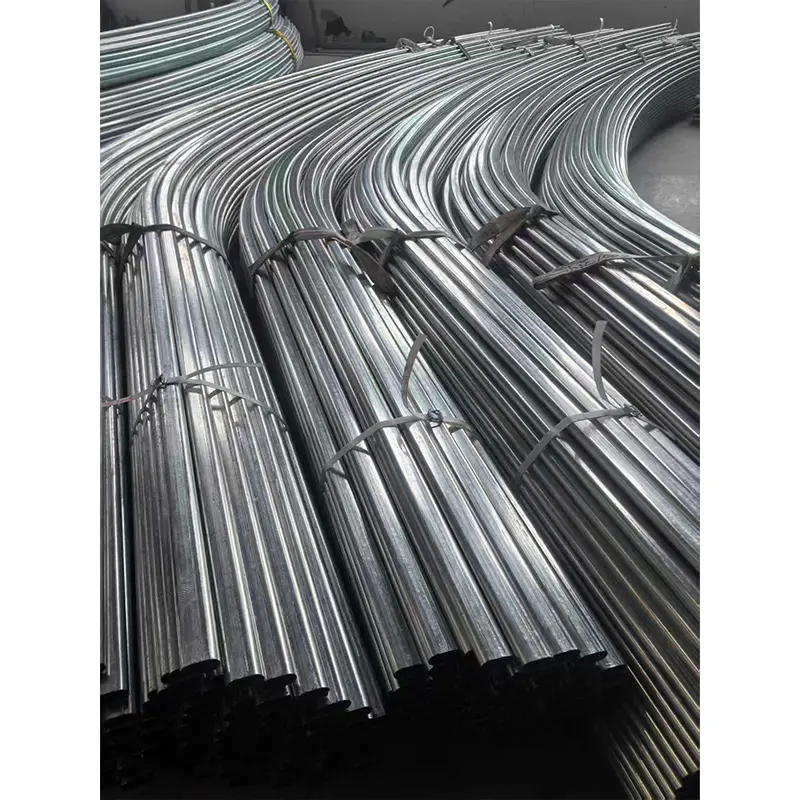
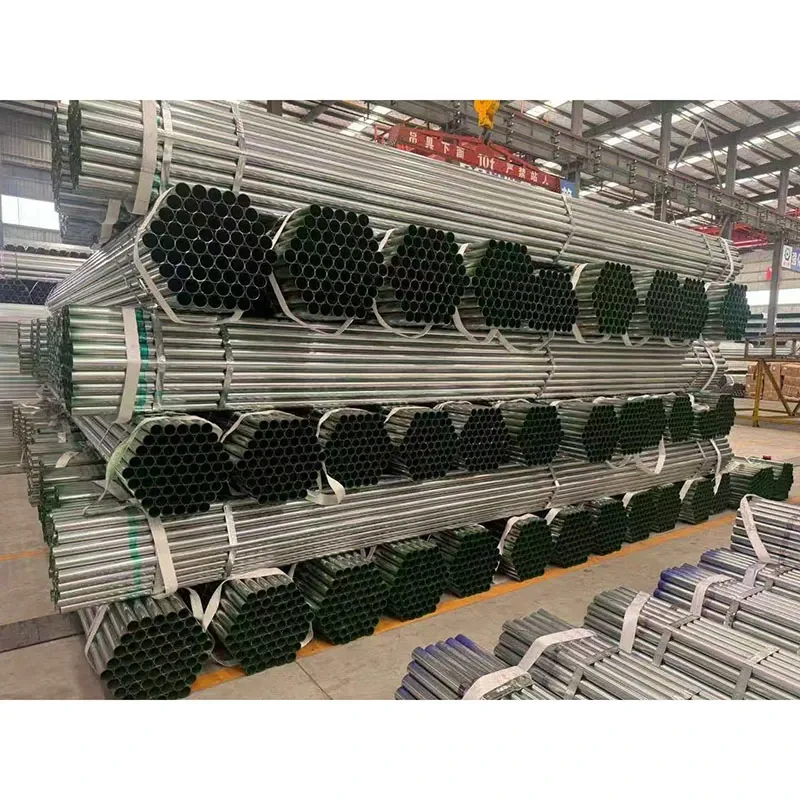
Before shipping, each bundle is secured with steel straps and protective end caps where needed. The pipes are then loaded into containers or onto trucks with proper spacing to avoid coating damage. If your order is destined for an overseas project, the packaging can be upgraded to saltwater-resistant wrapping for ocean freight.
The obvious users are commercial greenhouse operators who grow vegetables, flowers, herbs or cannabis in controlled environments. They need pipe that can support multiple growing cycles per year, stay clean enough for food safety audits, and survive humid conditions without flaking rust onto plants or equipment. For these growers, the cost of downtime is high, so a dependable frame is not optional.
Family-owned nurseries and garden centers also find this pipe practical. They often build display houses, shade structures and propagation benches that must look tidy and last through many seasons. A clean galvanized surface gives a professional appearance while requiring almost no maintenance.
Hydroponic and aquaponic operations use this pipe for both structural frames and support racks. The pipe resists the constant moisture and nutrient solutions that can quickly attack ordinary steel. In these systems, leaks and drips are common, so a rust-resistant frame keeps the entire facility safer and easier to clean.
Educational farms, community gardens and research stations value the pipe because it allows volunteers with basic skills to assemble a durable structure quickly. The predictable dimensions and easy joining methods reduce the learning curve. A well-built frame also keeps students and visitors safe, which is a top concern for public institutions.
There is a quiet satisfaction in walking into a greenhouse that does not demand constant repairs. When the frame is solid, you can focus on soil, light, irrigation and harvests instead of checking for rust spots and loose joints. That mental shift is often what turns a frustrating growing season into a productive one.
A galvanized greenhouse steel pipe frame gives you permission to plan long-term. You can invest in permanent irrigation lines, install automated vents, hang heavy fruit clusters and add a second layer of plastic without worrying that the structure will sag. The pipe quietly carries the load, year after year, while you concentrate on what happens at plant level.
For commercial owners, the confidence extends to employees and customers. A clean, well-built greenhouse signals professionalism and care. Buyers who visit your facility notice straight roof lines, secure doors and rust-free framing. Those details influence their impression of your produce and your brand.
Many factories produce round steel pipe. The difference lies in the details. Cheap pipe often uses thinner, inconsistently rolled strip. The weld may be visible and weak. The galvanized layer may be thin or patchy, especially inside the pipe. The ends may be left rough, making connections difficult. The bundles may be poorly packed, causing scratches and dents before the pipe even reaches your site.
Tianjin YuJie Steel Pipe Trading Co., Ltd. focuses on delivering the opposite experience. The pipe is produced with steady dimensional tolerance. The coating is checked for uniformity. The ends are cleanly cut or finished according to your assembly method. The packaging is designed to protect the product through handling and long-distance shipping.
Another differentiator is customization. Instead of forcing you to choose from a limited stock list, the company can produce specific diameters, wall thicknesses, lengths and coating weights to match your greenhouse drawings. This flexibility is especially useful for larger projects, where a single custom size can reduce cutting waste and speed up installation by days.
Q: What is the minimum order quantity for galvanized greenhouse steel pipe?
A: The minimum order depends on the specific size and whether it is a stock item or a custom production run. For standard greenhouse sizes such as 26.8 mm, 33.5 mm, 42.3 mm and 48.3 mm, smaller trial orders are often possible. For non-standard diameters or special coating requirements, production minimums may apply to keep the process efficient. It is best to share your required specifications and quantity with the sales team to receive an accurate quotation.
Q: Can this pipe be bent into hoops without cracking the galvanized coating?
A: Yes. The base steel and hot-dip galvanized coating are compatible with typical greenhouse bending operations. When bending is done using appropriate tooling and a controlled radius, the coating remains firmly bonded. The zinc-iron alloy layers can elongate without peeling. For very tight bends, it is recommended to use a pipe with a wall thickness suited to the bend radius, and the sales team can advise on the best combination for your design.
Q: How long will the galvanized coating last in a humid greenhouse environment?
A: In normal inland conditions, a coating weight of 220 to 275 grams per square meter can protect the pipe for 20 years or more. In coastal or high-humidity locations, a heavier coating of 300 grams per square meter or more may be recommended. The actual lifespan also depends on ventilation, exposure to fertilizer salts and whether the pipe is buried or in contact with soil. Regular cleaning and avoiding constant wet soil contact will extend the service life.
Q: Is the inside of the pipe also galvanized?
A: Yes. The hot-dip galvanizing process immerses the entire pipe in molten zinc, so both the outside and inside surfaces receive the coating. This is important because greenhouse pipes often collect condensation inside. If only the outside were coated, the inside would rust from day one. The full internal coverage is a major advantage of hot-dip galvanized pipe over pre-galvanized strip pipe, which leaves the inside seam and surface exposed.
Q: Can I order custom lengths and have the ends threaded?
A: Custom lengths are available. For threading, the factory can produce threaded ends according to your specified thread standard and length. This is common for greenhouse kits that use threaded connectors or base anchors. When ordering threaded pipe, it is helpful to provide a drawing or the exact thread dimensions to ensure proper fit with your fittings.
Q: What if my project is located near the ocean or in an area with high salinity?
A: For coastal and marine-adjacent environments, a heavier zinc coating is recommended. You can request a coating weight of 300 to 350 grams per square meter, which provides additional sacrificial protection. In extreme cases, a duplex system such as galvanizing plus a compatible exterior paint can be used, although this is rare for greenhouse frames. The sales team can suggest the most cost-effective coating based on your distance from the coast and local weather patterns.
Q: How should I store the pipe before installation to keep it in good condition?
A: Store the bundles off the ground on timber or steel supports to allow air circulation. If the pipe will be kept outdoors, cover it with a breathable tarp to reduce direct rain exposure while avoiding trapped condensation. Keep the ends open so any moisture inside can drain. Avoid stacking bundles too high, which can cause ovality or coating damage. Proper storage helps ensure the pipe arrives at the assembly stage in optimal condition.
Q: Can this pipe be welded after galvanizing?
A: Yes, it can be welded. After welding, the zinc coating near the weld will be burned off, so the welded area should be cleaned and protected with a zinc-rich paint or cold galvanizing compound. For structural connections that require welding, it is often better to weld first and then galvanize the finished frame, but for on-site adjustments, touch-up methods work well. Always follow local safety guidelines for welding galvanized steel, including proper ventilation.
Before placing an order, measure the key points of your greenhouse design: the diameter of your arches, the spacing between posts, the expected snow and wind loads, and the type of connectors you plan to use. Providing these details to the sales team allows them to recommend the most economical pipe size and wall thickness.
Common greenhouse diameters and wall thicknesses are kept in regular production, which shortens lead times. If you request a non-standard size, the factory can still produce it, but lead time may be longer. For large projects, consider ordering a small sample batch first to verify fit with your connectors and bending equipment. This simple step can prevent costly mistakes on a full container order.
The table above gives a general starting point for selection. Your final specification should be confirmed with a local engineer or experienced greenhouse builder, especially in regions with heavy snow or high wind. Once the size is locked in, the factory will arrange production, inspection and delivery according to your schedule.
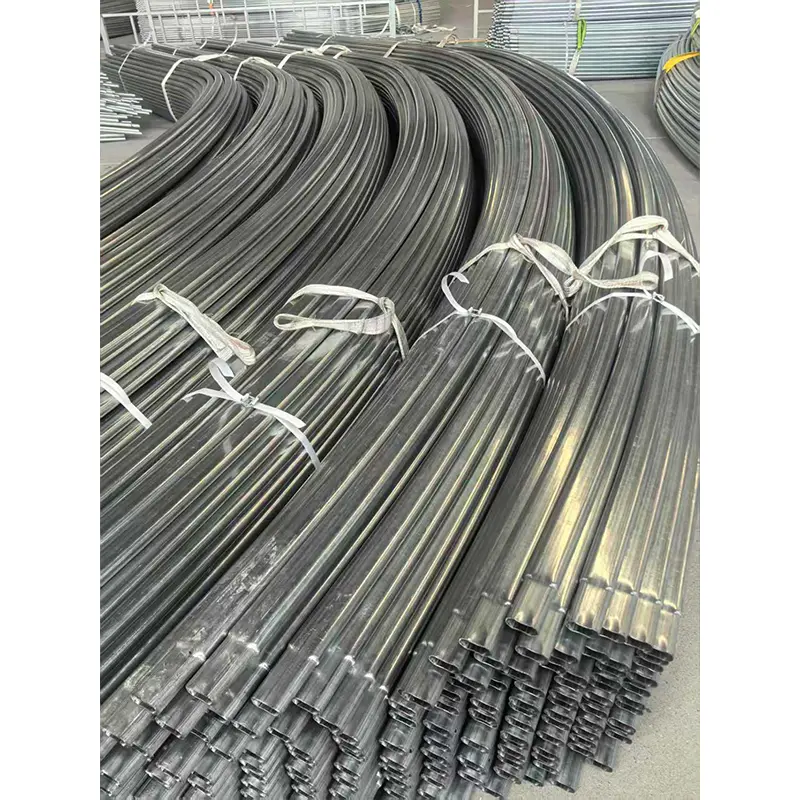
It is easy to compare two pipes by looking at the price per ton. But the real cost shows up over years. A pipe that needs replacement after five years costs more than twice as much when you factor in labor, disruption and lost production. A pipe that arrives with inconsistent dimensions adds hours of installation time. A pipe that rusts early can stain covering films, corrode connectors and weaken the entire building envelope.
Investing in well-made galvanized greenhouse steel pipe from Tianjin YuJie Steel Pipe Trading Co., Ltd. shifts the economics in your favor. The initial purchase price is competitive, but the lifetime cost is lower because the structure stays sound longer, requires less maintenance and protects the other components around it. For any serious grower, that is a decision that pays for itself.
When steel is dipped into molten zinc at around 450 degrees Celsius, a series of reactions occur. The outer layer is relatively pure zinc, which provides the familiar bright or matte finish. Beneath it are several alloy layers made of zinc and iron in different proportions. These alloy layers are actually harder than the base steel, giving the pipe improved resistance to mechanical damage.
The total coating thickness depends on how long the pipe stays in the bath and the steel chemistry. Silicon content in the steel influences the reaction rate and the final appearance. Some pipes develop a bright spangled finish, while others take on a matte gray tone when the zinc cools slowly. Both finishes provide the same protective function, though the matte finish may offer slightly better paint adhesion if you later decide to paint the frame.
For greenhouse use, the visual appearance is secondary to coating thickness and adhesion. The pipe will be largely hidden by covering materials, shade cloth and plant canopy. What matters is that the coating remains intact where the pipe is cut, drilled, scratched or clamped. Hot-dip galvanized pipe consistently delivers that protection.
Some suppliers offer pre-galvanized pipe made from steel strip that is galvanized before forming. This method is cheaper and faster, but it has a critical weak point: the weld seam. When the strip is formed into a round pipe and welded, the heat of welding burns away the zinc coating along the seam and on the inside near the weld. Unless the pipe is re-galvanized after welding, those areas remain exposed and rust quickly.
Hot-dip galvanized pipe, by contrast, is formed and welded first, then immersed in zinc. The entire surface, including the weld seam and the inside, receives the coating. This is the primary reason why hot-dip galvanized greenhouse steel pipe is preferred by serious growers and commercial builders. It costs more than pre-galvanized pipe, but it eliminates the seam rust that undermines the structure.
When comparing quotes, it is worth asking whether the pipe is “pre-galvanized” or “hot-dip galvanized after welding.” The answer will tell you a lot about how the pipe will behave after a few seasons in a humid greenhouse.
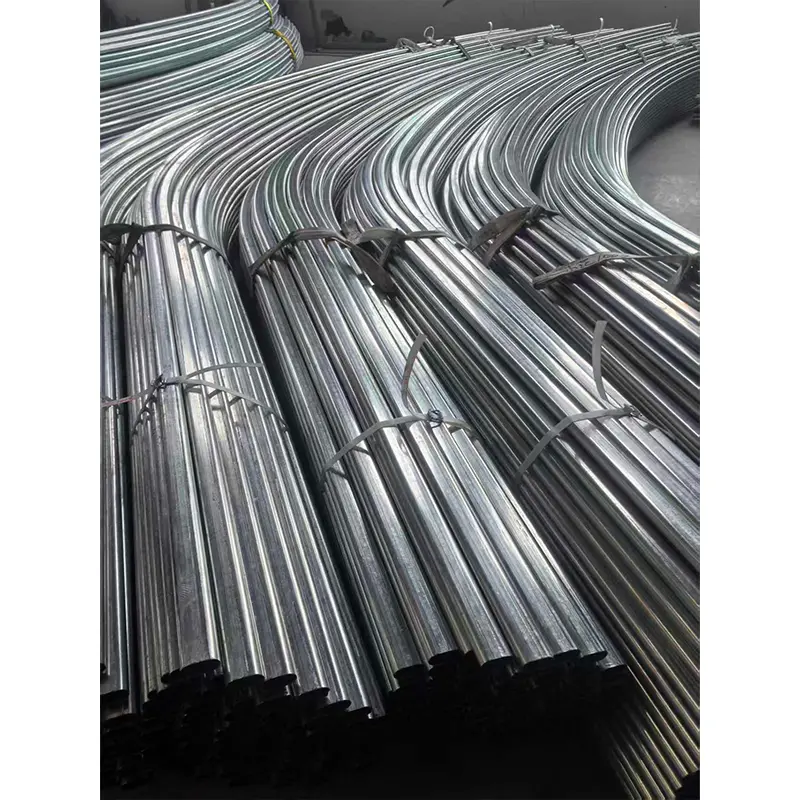
Quonset and hoop houses use continuous curved arches. For these designs, round pipe is the natural choice. The pipe is typically bent on a jig or roller bender to form a smooth arc. A diameter of 33 mm to 42 mm with a wall thickness of 1.2 mm to 1.5 mm works well for most small to medium spans. Wider houses or those with heavy snow load may step up to 48 mm or 60 mm diameter pipe.
Gothic arch greenhouses have a peaked roof that sheds snow more effectively. This shape often combines curved sidewalls with a steeper roof pitch. The pipe must be bent to tighter radii at the peak, so a more ductile steel grade and a slightly thicker wall may be required to prevent kinking. Our technical team can suggest bending radii and pipe sizes based on your frame drawings.
Venlo and glasshouse designs use many straight columns, gutters and roof bars. These structures often require a mix of round pipe for columns and square or rectangular sections for glazing bars. Round galvanized pipe may serve as the main structural columns and heating pipe supports. Because these houses are heavily engineered, exact dimensional tolerance is especially important.
Most greenhouse pipe connections use clamp-on fittings, U-bolts, cross connectors or welded brackets. Each method has its own effect on the galvanized coating. Clamp-on fittings are the least invasive because they simply compress around the pipe without drilling. They can be repositioned easily during assembly and do not expose bare steel.
U-bolts and saddle clamps require a small amount of tightening force and can leave minor impressions on the coating. This is generally not a problem as long as the zinc layer is thick enough. Drilling bolt holes exposes the steel at the hole edges. A light application of zinc-rich touch-up compound will protect those spots. If the design allows, consider using pre-punched connectors that do not require drilling through the pipe.
Welded connections create the strongest joints but require the most care. After welding, the damaged coating should be cleaned with a wire brush and recoated. If many welds are needed, it may be more efficient to fabricate the entire frame from uncoated pipe, then send it to a galvanizing plant for a single full immersion. This approach gives complete coverage on every joint and is commonly used for large commercial greenhouses.
In arid regions, the main threat to greenhouse frames is not moisture but intense UV radiation. The zinc coating itself is highly resistant to UV, unlike paints and polymer coatings that can chalk and degrade. A galvanized frame can sit under strong sun for decades without losing its protective properties. The metallic surface also reflects some heat, which can slightly reduce the thermal load on the structure.
In tropical regions, high humidity, heavy rainfall and warm temperatures create a constant corrosion risk. The galvanized coating handles these conditions well, especially if the greenhouse is ventilated properly. Avoid allowing soil or organic debris to accumulate around the base of the posts, as this can hold moisture against the pipe. Simple concrete footings or gravel collars solve the problem.
In cold climates, freeze-thaw cycles can force moisture into small cracks. Hot-dip galvanized pipe resists this because the coating is bonded metallurgically, not just painted on. There is no film to crack or peel when the steel expands and contracts. The pipe also remains tough at low temperatures, unlike some plastics or composites that become brittle.
A galvanized greenhouse frame does not require annual painting or rust treatment. In most environments, an occasional rinse with water to remove dust and fertilizer residue is enough. If you notice a scratch that reaches bare steel, apply a small amount of zinc-rich spray or liquid to the area. This touch-up restores the sacrificial protection and blends in visually.
Inspect the connections once or twice a year to make sure bolts and clamps have not loosened due to thermal movement. Tighten any loose fittings before they cause abrasion on the coating. If the greenhouse uses plastic film, check that the channel and wiggle wire are not rubbing against the pipe in a way that wears through the zinc. A small piece of tape or a plastic sleeve can eliminate the friction point.
For growers who use sulfur burners or other chemical treatments, be aware that some acidic residues can accelerate corrosion. Rinse the frame after using these products, especially near the ventilation openings where deposits tend to collect. These simple habits will extend the already long life of the galvanized coating.
Every greenhouse project has its own set of measurements. Some builders need 4.2-meter hoops with a specific bend radius. Others need 6.5-meter posts with threaded ends. Still others need a mix of 48 mm and 60 mm pipe for different parts of the structure. Custom orders are handled by translating your drawings or cutting lists into production instructions.
The process usually starts with a detailed inquiry that includes diameter, wall thickness, length, quantity, coating weight and any end finishing. The sales team confirms the feasibility and calculates the best way to bundle the pieces. The production team then adjusts the mill settings and galvanizing line to match the requirements. Each bundle is labeled with the size, length, heat number and inspection status.
For complex orders, a pre-production sample can be arranged. This sample allows you to check the fit with your connectors, perform a bend test and inspect the coating before full production begins. Sampling is a useful step when you are trying a new supplier or a new pipe size. It removes uncertainty and builds confidence in the order.
Galvanized pipe is heavy and strong, but the coating can be damaged by rough handling. To prevent this, bundles are tightly strapped with steel bands. Wooden or plastic spacers may be inserted between layers to reduce rubbing. In many cases, bundles are wrapped in water-resistant material for sea freight. Long lengths are loaded into containers with proper dunnage to prevent movement.
For small-diameter pipe, hexagonal or round bundles keep the pieces compact and easy to lift. For large-diameter pipe, individual pieces may be loaded in layers with padding between them. End caps or plastic plugs can be supplied to keep dirt and moisture out of the pipe interior during shipping and storage.
If your order includes multiple sizes, each size is bundled separately and clearly tagged. This avoids confusion on site and helps the installers pull the right pieces quickly. A detailed packing list accompanies each shipment, showing the number of pieces per bundle, the dimensions and the total weight.
Greenhouse operations rarely stay the same size. A grower who starts with one tunnel often adds a second and third as the business grows. Using the same pipe supplier for each expansion keeps the structure consistent. The new pipe fits the same connectors, bends to the same radius and matches the existing frame visually.
This continuity has practical benefits. If a pipe is damaged by accident, a replacement piece can be ordered in the same size and coating. If you want to build an attached propagation area or shade house, the materials will blend seamlessly. Over time, this consistency becomes a form of operational efficiency, reducing the number of spare parts and tools you need to keep on hand.
Many commercial growers also value the predictability of working with a supplier that understands greenhouse construction. They know the pipe will arrive straight, properly coated and ready to install. That reliability means fewer delays during the short building season and less time spent fixing problems on the ground.
The same galvanized greenhouse steel pipe that supports a modest 3-meter-wide backyard tunnel can be used in a multi-hectare commercial range. The difference is mostly in quantity and engineering. A small project may need only a few bundles. A large project may require multiple containers coordinated to arrive in sequence as the construction crew moves from one zone to the next.
For large facilities, the factory can produce high volumes while maintaining consistent dimensions. This is important because a 2 mm difference in pipe length may not matter for one hoop, but across a thousand hoops it can create alignment issues. The production process includes regular dimensional checks to keep all pieces within tolerance.
Logistics support is also available for large projects. The sales team can coordinate container loading, provide weight and volume estimates and advise on the most efficient shipping method. For destinations with limited unloading equipment, special bundling weights can be arranged so each bundle can be handled by a small crane or forklift.
Q: Can this pipe be used for both the frame and the heating system?
A: The pipe is primarily intended for structural framing, but some growers use galvanized pipe for low-pressure water or air distribution in greenhouse heating systems. However, for high-temperature or high-pressure systems, you should check the specific code requirements and the compatibility of the galvanized coating with the fluid. In general, galvanized steel pipe is suitable for many non-potable water and heating applications, but structural pipe may not have the pressure rating of dedicated plumbing pipe. If you plan to use the pipe for both purposes, discuss the operating conditions with the sales team to confirm suitability.
Q: Will the galvanized surface react with plastic greenhouse film?
A: No. The zinc surface is stable and does not release chemicals that degrade polyethylene or polycarbonate greenhouse coverings. Many growers have used galvanized frames with plastic film for decades without issue. The key is to ensure the pipe is clean and free from sharp edges before the film is applied. If there are any burrs or rough spots, they should be smoothed to prevent tearing of the film.
Q: How does the pipe perform in earthquake-prone areas?
A: Steel has excellent ductility, which allows it to deform slightly under seismic loads without failing suddenly. Round pipe, with its symmetrical cross-section, behaves predictably in all directions. The connections in a greenhouse frame are usually the most critical part in an earthquake. Using well-fitting connectors, adequate bracing and proper anchorage to the foundation will do more to improve seismic performance than increasing the pipe size alone. The galvanized coating does not affect the structural behavior of the steel.
Q: Can I paint over the galvanized coating for color or extra protection?
A: Yes, but the surface must be prepared correctly. New galvanized pipe has a smooth, sometimes shiny surface that may need to be cleaned and lightly profiled before painting. A wash primer or special galvanized metal primer is recommended, followed by a compatible topcoat. For greenhouse use, painting is generally not necessary for corrosion protection, but it can be done for aesthetic reasons or to match a brand color. Any scratches in the paint will still be protected by the underlying zinc layer.
Q: What is the difference between Q195 and Q235 steel for greenhouse pipe?
A: Q195 has a lower carbon content and is slightly easier to bend, making it suitable for small-diameter hoops and light-duty frames. Q235 has higher strength and is preferred for larger spans, heavier loads and main structural members. The choice depends on the engineering requirements of your greenhouse. The sales team can help you compare the two based on your specific diameter, wall thickness and load conditions.
When planning a greenhouse, the frame is often treated as a fixed cost that can be reduced by choosing cheaper pipe. But the frame is the one component that determines whether the structure stands for five years or twenty-five. A low-cost frame might save a few hundred dollars at the start, but it can lead to expensive consequences: collapsed roofs, torn coverings, damaged crops and lost revenue.
Consider the labor involved in replacing a rusted hoop. The covering must be removed, the damaged pipe cut out, a new pipe bent and installed, and the covering replaced. That process takes time and often damages the plastic. In a commercial operation, the disruption can affect an entire growing cycle. Choosing galvanized greenhouse steel pipe from a reliable source reduces the likelihood of such mid-season failures.
There is also the value of reduced insurance risk. A well-built greenhouse with a documented steel frame may be viewed more favorably by insurers than a structure made from unknown or poorly coated materials. Keeping purchase records and material specifications can help demonstrate the quality of your building.
When your shipment arrives, take a few minutes to inspect the bundles before signing the delivery receipt. Check that the number of bundles matches the packing list. Look for any obvious signs of damage such as crushed ends, deep scratches through the coating or bent pieces. Minor scratches are normal and can be touched up. Severe damage should be documented with photos and reported immediately.
Use a caliper or wall thickness gauge to spot-check a few pipes from different bundles. The diameter and wall thickness should match the order specifications within the manufacturing tolerance. If you have a coating thickness gauge, take readings on the outside and, if possible, near the ends to confirm the zinc coating meets the required weight. These quick checks provide confidence before the pipe is cut and installed.
If everything looks good, store the pipe as described earlier and begin installation when ready. If anything seems off, contact the sales team right away. A reputable supplier will work with you to resolve issues quickly.