Straight Seam Welded Steel Pipe,Steel Profiles,Portable Container Houses,Cold-Rolled Seamless Steel Pipe,Hot-Rolled Seamless Steel Pipe,Spirally Welded Steel Pipe
Every ambitious construction schedule, every demanding mechanical system, and every carefully engineered fabrication project shares a hidden dependency: the structural integrity of the round steel tubing that holds everything together. When that tubing fails, deadlines slip, costs multiply, and reputations suffer. That is why procurement teams and project engineers do not treat steel pipe as a simple commodity—they treat it as the backbone of their work.
At Tianjin YuJie Steel Pipe Trading Co., Ltd., we understand this reality because we have lived it for years. Our Black ERW Round Steel Pipe is designed to answer the most common frustrations in industrial and commercial supply chains: inconsistent wall thickness, weak weld seams, poor dimensional accuracy, and unreliable delivery schedules. By addressing these concerns at the manufacturing and distribution level, we give our customers a product they can specify with confidence and install without hesitation.
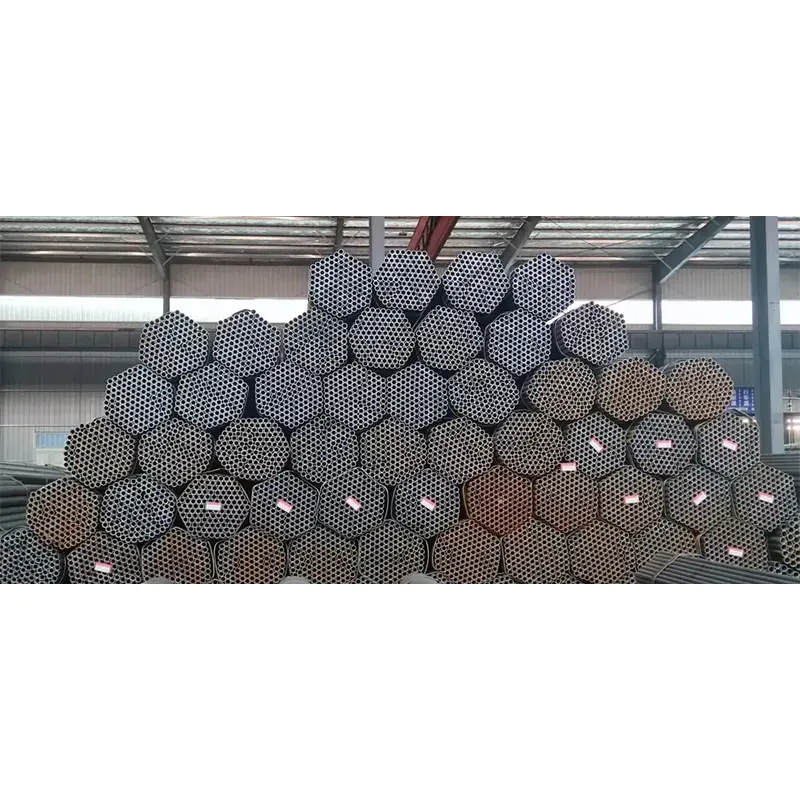
Electric resistance welding, commonly known as ERW, is a process that forms flat steel strip into a round shape and then welds the longitudinal seam using high-frequency electrical current. The result is a pipe with a uniform, clean weld that is often stronger than the base material itself when proper controls are in place. This Black ERW Round Steel Pipe features a dark, mill-scale surface finish that is ideal for applications where the pipe will be painted, powder coated, galvanized, or embedded in concrete. The black surface is not a coating—it is the natural oxide layer from the hot-rolling process, which provides a strong bonding surface for subsequent treatments.
The term “black” in the product name refers to this untreated, un-galvanized surface condition. Many fabricators prefer it because it offers a clean, oil-free base for welding and coating. The round profile distributes stress evenly, making the pipe suitable for structural columns, handrails, fencing, scaffolding, and mechanical tubing applications where torsional strength and load distribution are critical.
Before a single length of pipe reaches a job site, procurement managers face a series of recurring challenges. One of the most common is dimensional variation. When the outside diameter or wall thickness fluctuates beyond acceptable tolerances, fittings do not match, welds require excessive preparation, and assemblies become misaligned. Another frustration is weld seam weakness. A poorly executed ERW weld can create a hidden defect that only appears under stress, leading to catastrophic failure and costly rework. Surface defects such as slivers, laps, and excessive rust can also undermine coating adhesion and final appearance.
Supply chain unpredictability compounds these issues. When a supplier cannot meet promised quantities or delivery dates, projects stall. Having to source pipe from multiple vendors to compensate for shortages leads to inconsistent quality and documentation gaps. These problems are not theoretical—they occur every day on construction sites and in fabrication shops around the world.
The solution lies in a product that is manufactured under strict process controls, inspected at multiple stages, and delivered by a company that prioritizes transparency and reliability. Tianjin YuJie Steel Pipe Trading Co., Ltd. addresses each of these pain points by providing Black ERW Round Steel Pipe with tight tolerances, consistent weld quality, and dependable logistics support.
Specifying steel pipe requires more than a nominal diameter. Engineers need exact outside diameter, wall thickness, length, and material grade to ensure compatibility with their designs. The table below provides a representative range of dimensions and properties for this Black ERW Round Steel Pipe. Keep in mind that custom sizes and additional processing are available upon request.
| Parameter | Typical Range or Specification |
|---|---|
| Outside Diameter | 21.3 mm – 219.1 mm (1/2 inch – 8 inch) |
| Wall Thickness | 1.0 mm – 8.0 mm |
| Length | 5.8 m, 6.0 m, 11.8 m, 12.0 m, or custom cut |
| Material Grade | Q195, Q215, Q235, Q355, S235, S275, S355, ASTM A53, API 5L Grade B |
| Surface Treatment | Black mill finish, light oiled, or dry |
| End Finish | Plain ends, beveled ends, or threaded with couplings |
| Welding Standard | ERW (Electric Resistance Welding), high-frequency longitudinal seam |
| Test Pressure | Up to 5.0 MPa depending on size and wall thickness |
| Inspection | Hydrostatic testing, eddy current testing, visual inspection, dimensional check |
| Marking | Stenciled with size, grade, heat number, and manufacturer identification |
| Packing | Bare bundles, wrapped in waterproof cloth, or in crates |
These figures give a clear picture of the product’s capabilities. The combination of multiple material grades and size options means that one supplier can cover a wide spectrum of project requirements. Whether the order calls for thin-wall tubing for lightweight structures or heavy-wall pipe for high-pressure lines, the same attention to detail applies.
The raw material used in this pipe comes from reputable steel mills with stable chemical compositions. By controlling the carbon, manganese, silicon, and sulfur levels, the pipe achieves predictable tensile and yield strengths. This consistency allows engineers to design with confidence, knowing that the material will perform as expected under load.
The high-frequency electric resistance welding process creates a forge-welded seam without the use of filler metal. The edges of the strip are heated to fusion temperature and pressed together, producing a narrow, uniform weld bead. Post-weld heat treatment and inline ultrasonic testing further ensure that the seam is free from cracks, lack of fusion, and other discontinuities. This level of quality control reduces the risk of leaks in fluid-carrying systems and improves fatigue resistance in structural applications.
Outside diameter tolerance is maintained within ±0.5% or better, depending on size. Wall thickness variation is held to ±10% or less. These tolerances translate into easier fitting, faster welding, and fewer rejections on the assembly line. For projects that require exact cut-to-length pieces, the pipe can be delivered with square-cut ends and minimal burr.
The black oxide surface provides an excellent base for painting, powder coating, or hot-dip galvanizing. Because the surface is free from heavy rust and loose scale, preparation time is reduced. The pipe can be lightly oiled to prevent atmospheric corrosion during storage and transit, or supplied dry for clients that prefer a completely clean surface for immediate coating.
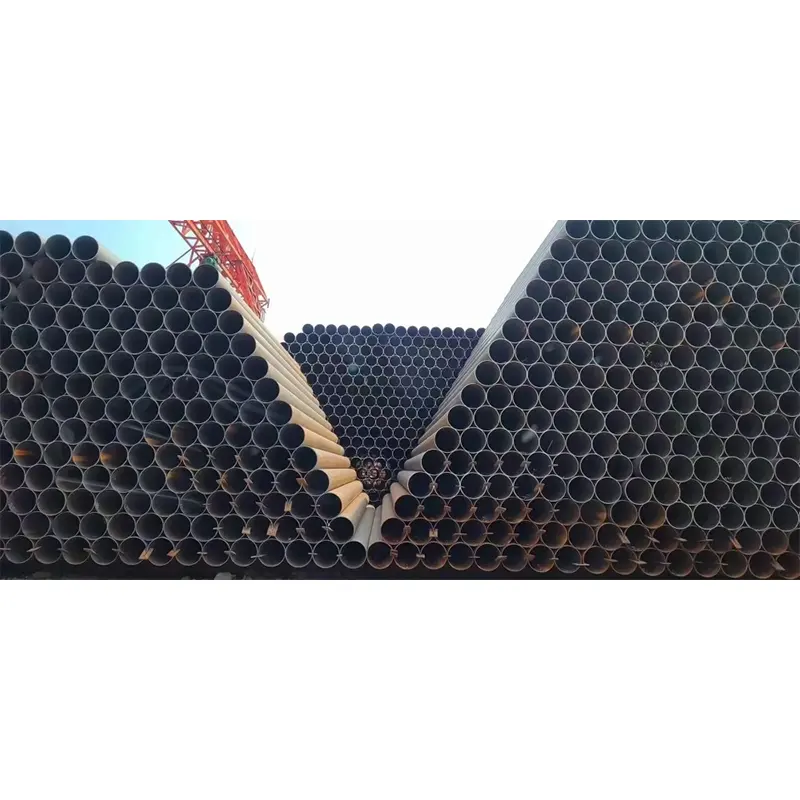
Different industries place different demands on steel pipe. A fence manufacturer cares about smooth weld seams and consistent ovality. A mechanical contractor values clean, burr-free ends for threading. A structural fabricator prioritizes tensile strength and dimensional accuracy. This Black ERW Round Steel Pipe has been proven in all of these contexts and more.
For scaffolding, temporary bracing, handrails, guardrails, and structural supports, this pipe offers the right balance of strength and workability. The round cross-section provides excellent resistance to bending and torsion, while the black surface accepts field coatings without special preparation. Contractors appreciate that the pipe is easy to cut, drill, and weld using standard equipment.
Modern furniture design often incorporates exposed steel tubing for legs, frames, and shelving supports. The clean, uniform appearance of the black ERW round pipe makes it a favorite among fabricators who want an industrial aesthetic without excessive finishing work. Light oiling protects the surface during storage, and a quick wipe-down is all that is needed before powder coating.
Fencing, gates, livestock handling equipment, and greenhouse structures require pipe that can withstand outdoor exposure and physical impact. The thick, consistent walls of this pipe resist denting and bending. The black mill finish is compatible with a wide range of protective coatings, from zinc-rich primers to heavy-duty enamel paints.
For low-pressure fluid conveyance, conduit protection, and mechanical tubing, the ERW weld seam provides a leak-resistant path. Threaded ends can be supplied for screw fittings, and the pipe can be grooved for mechanical couplings. Hydrostatic testing ensures that each length can hold the rated pressure without weeping.
Roll cages, chassis components, exhaust systems, and hydraulic line casings all rely on round steel tubing. The dimensional stability and clean weld seam reduce vibration-related failures and improve overall product longevity. Because the pipe is available in a wide range of diameters and wall thicknesses, designers can select the optimal weight-to-strength ratio.
There is a certain peace of mind that comes from opening a bundle of steel pipe and seeing consistent, clean lengths with straight walls and smooth weld seams. It means fewer surprises in the fabrication shop. It means not having to rework joints because the pipe was out of round. It means the project can move forward without the anxiety of hidden defects or late deliveries.
When you work with Tianjin YuJie Steel Pipe Trading Co., Ltd., you are not just buying metal; you are investing in predictability. You gain the confidence to promise your own clients a firm completion date. You reduce the time your team spends sorting, measuring, and rejecting substandard material. You create a smoother workflow that allows skilled workers to focus on their craftsmanship rather than compensating for material flaws.
The result is a project that stands up over time. A fence that remains straight and secure season after season. A structural frame that quietly carries its load without complaint. A plumbing system that delivers water without mysterious leaks. These outcomes are not dramatic, but they are the foundation of trust between builders and the people who use their structures.
At first glance, many black ERW round steel pipes look similar. They are round, dark, and heavy. The differences become visible only under scrutiny. This product distinguishes itself through the rigor of its manufacturing controls and the integrity of its supply chain.
Unlike some suppliers that source pipe from multiple unknown mills and simply resell it, Tianjin YuJie Steel Pipe Trading Co., Ltd. works closely with selected manufacturing partners that meet strict quality criteria. Every heat of steel is traceable to its mill certificate. Every production lot undergoes dimensional inspection, visual inspection, and mechanical testing. Samples are retained for future reference. This traceability is documented and provided to customers upon request.
The ERW weld seam receives special attention. Inline eddy current testing detects surface and near-surface defects, while hydrostatic testing verifies the pipe’s ability to withstand internal pressure. For critical applications, ultrasonic testing of the weld seam can be arranged. These tests go beyond the minimum requirements of many industry standards, giving buyers an extra layer of assurance.
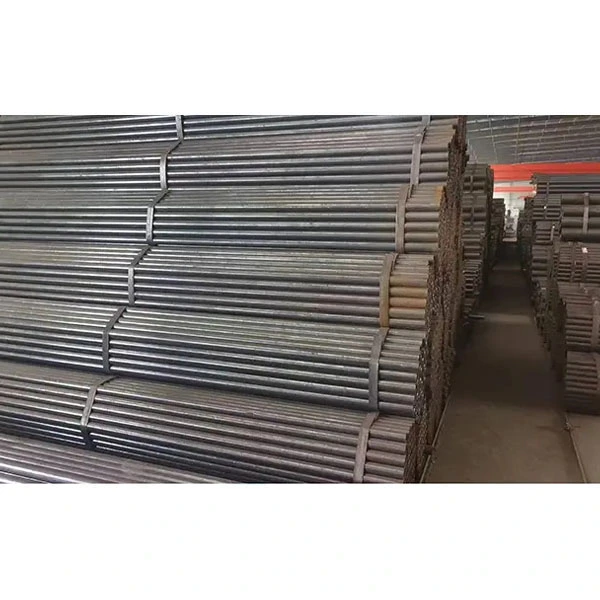
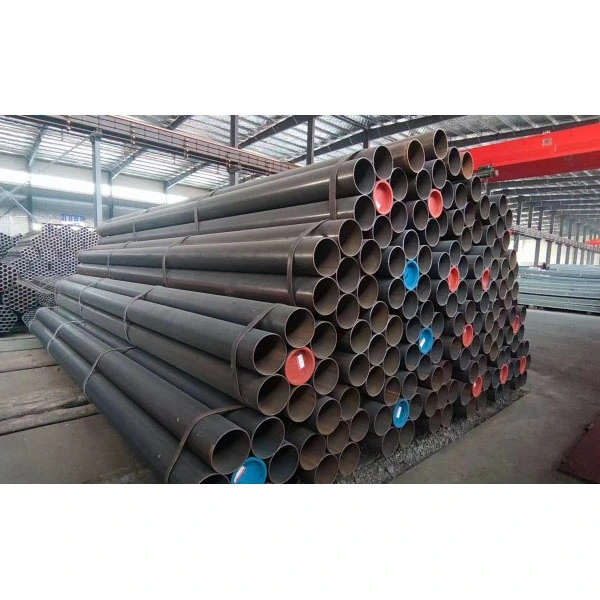
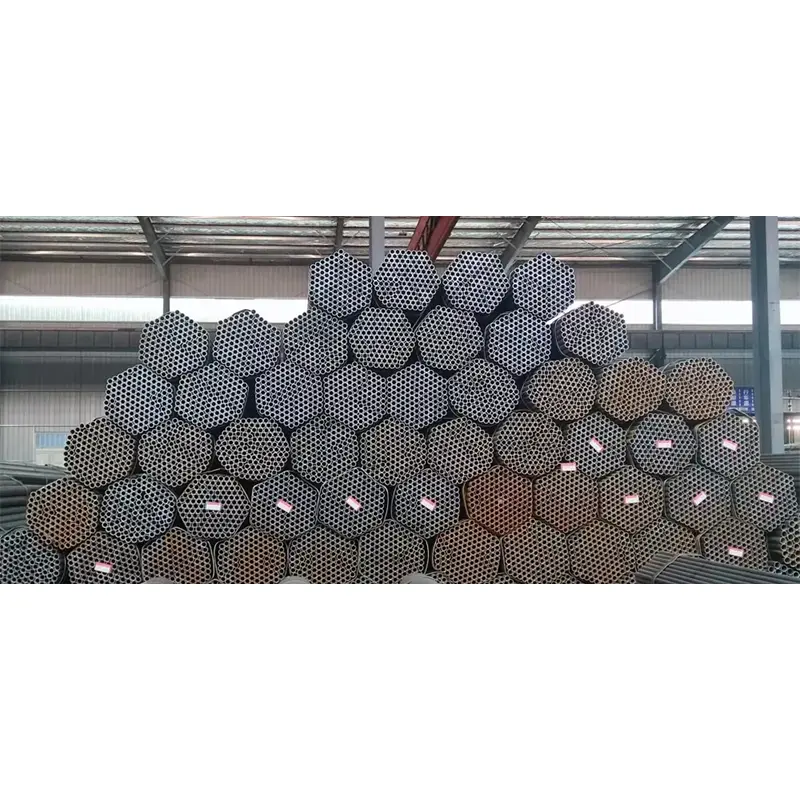
Packaging and logistics are another differentiator. The pipe is carefully bundled with steel straps and protective wrapping to prevent damage during transit. Mixed-size orders are clearly labeled, reducing confusion at the receiving end. The company’s location in Tianjin, a major steel trading hub in China, allows efficient access to port facilities for export shipments. Flexible loading options—bulk, containerized, or break-bulk—make it easier to optimize freight costs.
One size does not fit all in the steel pipe business. A client building a custom staircase may need a specific outside diameter and wall thickness that is not stocked by local distributors. A manufacturer of outdoor fitness equipment may need pipe cut to exact lengths with deburred ends. A contractor working on a high-profile architectural project may require a particular surface finish or the absence of oil residue.
This Black ERW Round Steel Pipe can be customized in several ways. Lengths can be cut to precise measurements, reducing scrap and saving labor at the job site. Ends can be beveled for butt welding, threaded for fittings, or grooved for mechanical couplings. The surface can be supplied lightly oiled for temporary corrosion protection or completely dry for immediate coating. Special packaging, such as individual plastic caps on pipe ends, can be arranged to protect threads and bevels.
For customers with repeat orders, Tianjin YuJie Steel Pipe Trading Co., Ltd. can maintain a rolling stock program to ensure that agreed-upon quantities are always available. This eliminates the boom-and-bust cycle of procurement and allows clients to plan their production schedules with confidence.
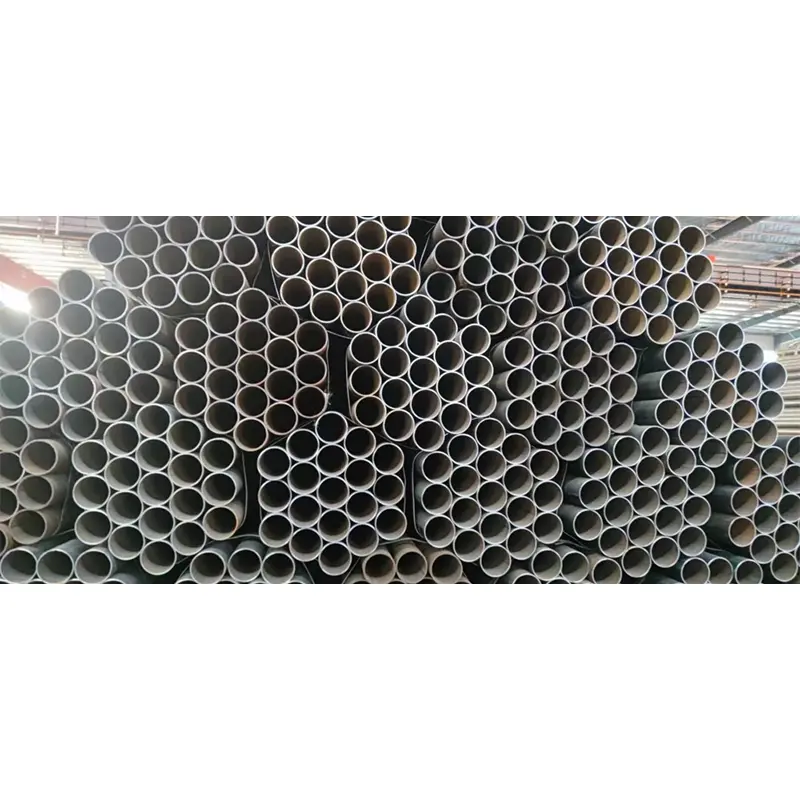
Selecting the right steel pipe involves more than picking a diameter. The following considerations can help you specify the product that will perform best in your application.
Wall thickness is the single most important factor for structural strength and pressure capacity. Thicker walls provide more strength but add weight and cost. Calculating the required wall thickness based on your load conditions and safety factors will ensure you do not over-specify or under-specify.
Material grade affects weldability, machinability, and corrosion resistance. For general structural use, Q235 or S235 grades are common. For higher strength requirements, Q355 or S355 may be appropriate. For pressure piping, ASTM A53 Grade B or API 5L Grade B is often specified. Discuss your application with our team to determine the most cost-effective grade.
Surface preparation matters if the pipe will be coated. A light oil film protects against rust during storage but must be removed before painting. If you prefer a dry surface, specify that at the time of order. If the pipe will be galvanized, a clean black surface free from heavy scale will produce a better zinc adhesion.
End finish should match your joining method. Plain ends are suitable for welding. Threaded ends work with standard pipe fittings. Beveled ends are required for full-penetration butt welds. Grooved ends are used with mechanical couplings in fire protection and plumbing systems.
Quantity and lead time are practical concerns. Large orders may require production scheduling, especially for non-standard sizes. Inquire about current stock levels and manufacturing lead times before finalizing your project timeline.
What does the “black” surface mean on this ERW round steel pipe?
The black appearance is the natural mill scale left on the steel after hot rolling. It is not a paint or coating. This surface provides an excellent base for subsequent treatments such as painting, powder coating, or galvanizing. It is called “black” to distinguish it from galvanized or pre-painted pipe. The surface is typically lightly oiled to prevent rust during storage and transit, but it can be supplied dry if requested.
Can this pipe be used for drinking water or potable water systems?
Black ERW round steel pipe is generally intended for structural, mechanical, and non-potable fluid applications. Because the black surface is untreated, it may corrode when in continuous contact with water. For drinking water systems, galvanized or epoxy-lined pipe is recommended. However, this pipe is suitable for closed-loop heating and cooling systems where corrosion inhibitors are used and where the water is not intended for human consumption.
How is the weld seam quality ensured?
The ERW process creates a longitudinal weld seam without filler metal. During production, the weld is monitored with inline eddy current testing, which detects surface and near-surface defects. Hydrostatic testing verifies the pipe’s ability to withstand internal pressure. For critical applications, ultrasonic testing of the weld seam can be performed. Each production lot is also visually inspected, and dimensional checks are carried out to confirm compliance with specifications.
What is the difference between ERW pipe and seamless pipe?
ERW pipe is formed from flat steel strip that is rolled into a round shape and welded along the longitudinal seam. Seamless pipe is formed from a solid billet that is pierced and rolled without a seam. ERW pipe is generally more cost-effective for smaller diameters and thinner walls, while seamless pipe is preferred for high-pressure, high-temperature, or critical applications. For most structural and general mechanical uses, ERW pipe offers an excellent balance of performance and economy.
Can you cut the pipe to custom lengths before shipping?
Yes, precise cut-to-length service is available. The pipe can be cut to any length you specify, with either square or beveled ends. Cutting before shipping reduces scrap at your facility and speeds up fabrication. Please provide the exact lengths and any special end finish requirements when placing your order.
What is the typical lead time for an order of Black ERW Round Steel Pipe?
Lead times depend on the size, grade, and quantity required. Stock items can often be loaded within a few days. Non-standard sizes may require production scheduling, which typically takes 15 to 30 days. For large export orders, allow additional time for ocean freight and customs clearance. Our team will provide a clear delivery schedule before you commit to an order.
Does Tianjin YuJie Steel Pipe Trading Co., Ltd. provide mill test certificates?
Yes, mill test certificates (MTCs) are provided with every shipment. The certificates include chemical composition, mechanical properties, hydrostatic test results, and dimensional inspection data. This documentation supports traceability and compliance with international standards such as ASTM A53, API 5L, and EN 10217. Third-party inspection by agencies like SGS or BV can also be arranged.
What are the typical applications for black ERW round steel pipe?
Common applications include scaffolding, structural columns, handrails, fencing, furniture frames, greenhouse structures, low-pressure fluid lines, mechanical tubing, and agricultural equipment. The round profile and consistent weld seam make it versatile across many industries. When properly coated or painted, it performs well in outdoor environments.